The Daily Mail reported on March 4 that U.S. Defense Secretary Pete Hegseth announced at a Pentagon press conference that a U.S. submarine fired torpedoes in the Indian Ocean and sank an Iranian warship. According to the Pentagon, this marked the first confirmed instance since World War II of a U.S. submarine sinking an enemy vessel using torpedoes.
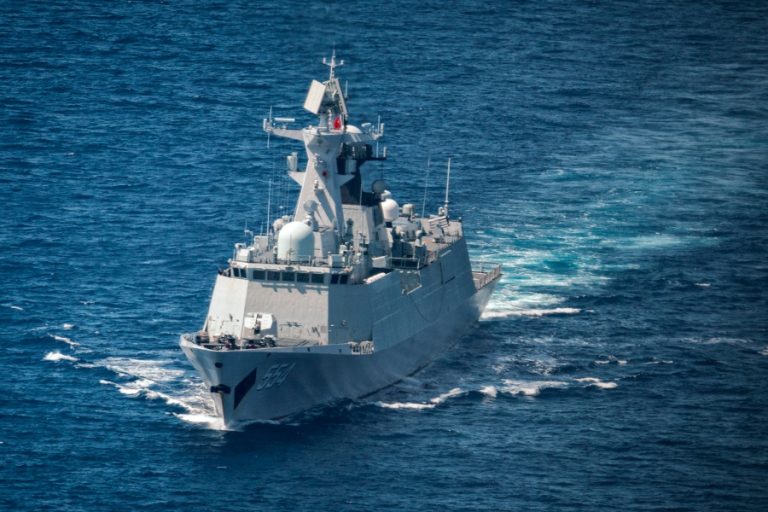
Hegseth said the Iranian vessel was operating in what it believed to be safe international waters when it encountered what he described as a “quiet and deadly” strike. The attack reportedly occurred Monday in the Indian Ocean. He did not disclose the ship’s name, although earlier reports indicated that an Iranian warship had sunk off the coast of Sri Lanka.
Video circulating online appears to show footage captured from a U.S. submarine. The recording shows the Iranian vessel rising sharply after being struck, followed by a large plume of smoke. The stern of the ship appears to lift partially out of the water after the torpedo impact.

Sri Lanka reports casualties as ‘Dena’ sinks
Sri Lanka’s Foreign Minister Vijitha Herath said the incident occurred at around 5 a.m. local time. Approximately 180 people were believed to be on board the vessel, identified as the Iranian warship IRIS Dena.
Sri Lanka dispatched its first naval vessel for rescue operations at 6 a.m., followed by a second at 7 a.m. to assist with search-and-rescue efforts.
Success
You are now signed up for our newsletter
Success
Check your email to complete sign up
Sri Lankan officials said at least 32 crew members had been rescued and transported to hospitals. Several others were reported dead, while earlier estimates suggested the death toll could reach as high as 80.
The Dena is one of Iran’s newer domestically produced warships. It is equipped with air-defense missiles, naval guns, machine guns, torpedo launchers, and anti-ship missile systems. The vessel had participated in a naval exercise in the Bay of Bengal from Feb. 18 to Feb. 25.

Fighting enters fifth day as conflict expands
The Associated Press reported that the submarine strike occurred as the United States and Israel continued to intensify attacks on Iranian security forces and key institutions. The conflict has now entered its fifth day, with the geographic scope of fighting widening.
Iranian officials confirmed Wednesday that 1,045 people have died inside the country since the conflict began. Eleven people have died in Israel, more than 50 in Lebanon, and at least six U.S. soldiers have been killed.
The Israeli military said it struck buildings linked to Iran’s Basij organization, a paramilitary force affiliated with the Islamic Revolutionary Guard Corps that had been involved in suppressing protests earlier this January.
Israeli forces also carried out airstrikes targeting elements of Iran’s internal security apparatus and bombed towns near Beirut in Lebanon.

Supreme leader reported dead as succession struggle emerges
Iran’s state television announced that the memorial ceremony for Supreme Leader Ali Khamenei will be postponed. Officials said he died during the ongoing conflict.
When Iran’s first supreme leader, Ruhollah Khomeini, died in 1989, millions attended his funeral.
Iran’s political establishment is now moving to select a new supreme leader, marking only the second leadership transition since the 1979 Islamic Revolution. Potential candidates include both hardline figures and individuals advocating a more moderate foreign policy.
Khamenei’s son, Mojtaba Khamenei, is also widely discussed as a possible successor, although he has never held formal government office.
Iran’s judiciary chief warned that “anyone who cooperates with the enemy will be regarded as an enemy.”
Israeli Defense Minister Israel Katz said publicly that whoever becomes Iran’s next supreme leader could become a “target for elimination” if they continue policies hostile to Israel and the United States.
U.S. President Donald Trump said that if Iran’s next leader maintains the same stance as his predecessor, tensions could remain difficult to resolve.
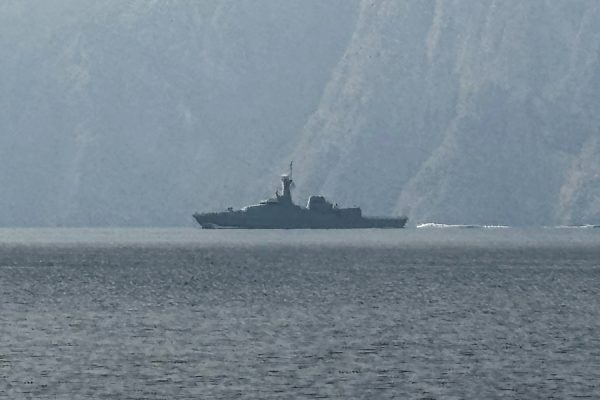
Energy shipping disrupted as markets react
The conflict has already affected shipping in the Strait of Hormuz, through which roughly one-fifth of global oil shipments pass.
A container ship was struck by an unidentified object on Wednesday, raising concerns about maritime security in the region.
As risks in the strait increase, oil prices have surged and global stock markets have come under pressure.
U.S. Central Command commander Brad Cooper said U.S. forces have weakened Iran’s air-defense systems and destroyed some ballistic missiles and launchers. He added that “the operation has only just begun.”
Explosions were still heard over Jerusalem on Wednesday. Israeli military spokesman Effie Defrin said the frequency of Iranian missile launches had declined.