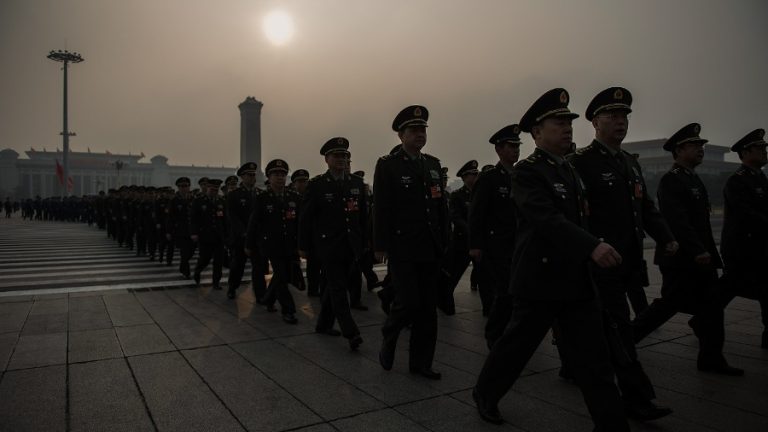
In the days since the United States and Israel launched strikes on Iran and reports emerged that Supreme Leader Ali Khamenei had been killed, the story has dominated international coverage. Looking back from Khamenei’s perspective, it is possible to trace how a series of decisions gradually closed off every path that might have led to a different outcome.
From the 12-day war last June to the decapitation strike in March, the question remains: were the fatal missteps along the way avoidable?
Khamenei’s most consequential decision was his determination to pursue nuclear weapons—and to state that position openly. That stance pushed Washington and Jerusalem toward a stark conclusion: the threat had to be removed entirely.
During earlier negotiations, President Donald Trump insisted that Iran should no longer enrich uranium on its own territory for nuclear fuel. Was the demand excessive? Not really. Twenty-three countries operate nuclear power programs by importing enriched uranium. American negotiators even proposed supplying Iran with nuclear fuel free of charge. Tehran rejected the offer.
Iran sits on enormous oil reserves. Why pursue nuclear power at all? Even if nuclear energy were necessary, why insist on domestic enrichment rather than importing fuel? Washington was prepared to provide it at no cost. The implication was difficult to avoid: Iran wanted to preserve the ability to develop nuclear weapons.
Success
You are now signed up for our newsletter
Success
Check your email to complete sign up
If such weapons were obtained, the strategic calculations would change dramatically. Iran’s theocratic leadership has repeatedly called for Israel to be erased. A government that frames its mission in religious terms might not hesitate even if escalation carried catastrophic risks. In pursuing that path, Khamenei effectively placed everything on the line—including his own survival.
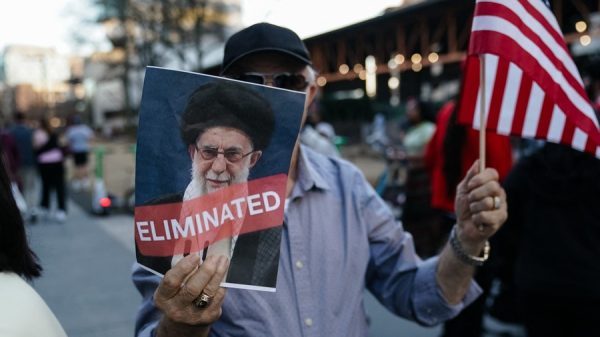
Khamenei refused to abandon the country’s nuclear ambitions
According to The Wall Street Journal, Iran proposed during negotiations to retain thousands of advanced centrifuges and continue enriching uranium to 20 percent purity. That level is widely regarded as a threshold for weapons capability. Iran’s position was clear: it wanted to maintain the ability to produce nuclear-weapon fuel on its own.
That was Khamenei’s red line. For two decades he forced the Iranian public to bear the costs of defending it. Yet the immediate turning point came with the uprising that erupted in January.
That month saw the largest wave of demonstrations in Iran since the 1979 revolution. Protesters across the country openly challenged the theocratic system. At the time, Trump posted a warning addressed directly to Khamenei: do not open fire on protesters, or the United States would respond.
Iranian officials dismissed the warning. Ali Larijani, then chairman of Iran’s Supreme National Security Council, responded sarcastically that Trump often made such statements and they should not be taken seriously.
But the Islamic Revolutionary Guard Corps did open fire. Security forces crossed the line. On Jan. 8 and 9 alone, a massacre reportedly left as many as 32,000 people dead, according to opposition-linked reports circulated at the time.
Had the death toll been limited to dozens, Washington might have looked the other way. A bloodbath on that scale made that impossible. Negotiations immediately became far more difficult, and the possibility of a limited response disappeared.
The protests themselves were fueled by economic desperation. The previous year, Iran had reportedly transferred about one billion dollars to Hezbollah militants. Yet when ordinary citizens protested because they could not afford food, the government distributed only seven dollars to each person.
Even at that stage, Khamenei still had options. He could have made concessions in negotiations—compromising on uranium enrichment, stabilizing the regime, and waiting out Trump’s presidency. Sanctions relief might eventually have been possible.
He chose the opposite path.
Khamenei believed that showing weakness would only invite further pressure from the United States and Israel. What he failed to assess carefully was Iran’s real military position, particularly after the 12-day war the previous June.
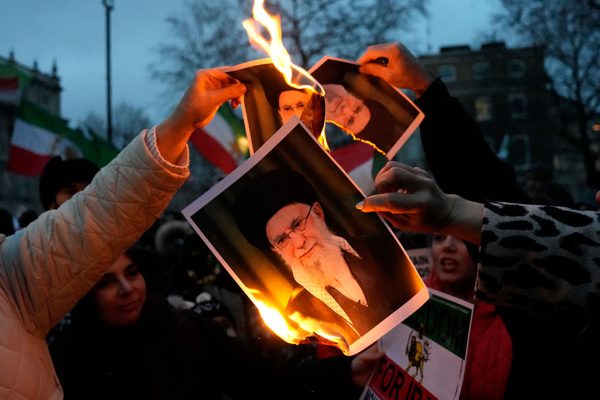
Iran had issued some strong warnings
Six months earlier, Iran had issued strong warnings to Washington and Jerusalem. Some commentators in the West took them seriously. Conservative media figure Tucker Carlson warned that attacking Iran’s nuclear facilities could lead to thousands of American deaths. He predicted gasoline prices might reach thirty dollars a gallon and even suggested the conflict could trigger a world war.
None of that happened.
Instead, Israeli fighter jets reportedly operated over Tehran with little resistance, striking Iranian military targets without losing a single aircraft. The 12-day conflict ended with a striking imbalance. The result also created the strategic opening Trump had long sought, making it possible for B-2 bombers to strike key Iranian nuclear facilities.
After losing its strongest deterrent, Iran launched several missiles that struck a U.S. radar dome and soon afterward requested a ceasefire.
Yet in the months that followed, Iran’s government continued issuing threats. Officials claimed the earlier defeat had been deliberate deception and that the next confrontation would reveal Iran’s true strength—as though the previous outcome had been a strategy designed to lure the enemy deeper.
The claim raised obvious questions. A strategy of drawing the enemy in requires strength and support behind it. In reality, Iran had already made a similar mistake before the 12-day war—displaying military force before possessing the power to sustain it.

Large-scale missile attacks against Israel
In April and October of 2024, Iran launched large-scale missile attacks on Israel. Those strikes allowed Israel to measure both its own defensive capacity and Iran’s actual capabilities. Once the balance became clear, Israel struck back by destroying key Iranian air-defense systems. That left Iran’s nuclear infrastructure far more exposed.
Why did Iran choose to act directly in the first place?
Because its network of proxies had begun to collapse.
Hamas had already been severely weakened in the Israel–Hamas war. Khamenei then ordered another proxy, Hezbollah, to join the conflict. For eleven months Hezbollah fired rockets toward Israel. Israel fought on two fronts and eventually crippled Hezbollah as well.
By that point the protective layer around Iran’s nuclear program had largely disappeared. When Tehran stepped forward itself, its strategic vulnerabilities became visible. Washington and Jerusalem concluded that the risks were manageable.
In many ways, the launch of “Operation Epic Fury” became possible because of Khamenei’s own decisions. His proxies were exhausted, his strategic buffers had vanished, and his air defenses had been weakened. The war initiated the previous June exposed the limits of Iran’s military strength.
Afterward, Iran’s currency collapsed, leaving many citizens unable to sustain daily life. When people protested out of desperation, the government responded with gunfire—crossing a red line Washington had warned against.
Even then, Khamenei remained rigid at the negotiating table. Having already lost most of his strategic leverage, he still insisted on preserving the nuclear option.
His final miscalculation was political.
Khamenei believed Trump would behave as Barack Obama had—signing a new agreement similar to the 2015 nuclear deal and declaring diplomatic success. Instead, he handed Trump a strategic opportunity few American presidents are ever given.
In the end, the decisions Khamenei made left him with nowhere to retreat.
The views expressed are solely those of the author.
By Dong Fang