By Jin Tao Pai, Vision Times
Several proposals made by delegates during China’s annual “Two Sessions” meetings have sparked the ire of Chinese netizens, with critics arguing that the suggestions reveal deeper structural problems facing the country, from a collapsing birth rate and sputtering economy to mounting unemployment.
The remarks came as Beijing prepares its 15th Five-Year Plan (2026–2030), which outlines economic and social priorities for the coming decade under Chinese leader Xi Jinping.
RELATED: Xi Warns of ‘Disloyalty’ in China’s Military Amid Enhanced Security at Two Sessions
‘We are short of children’
On March 8, during the third plenary session of the Chinese People’s Political Consultative Conference (CPPCC), delegate Meng Man, a history professor at Minzu University of China, spoke about birth policy while responding to questions from state media Phoenix TV.
Success
You are now signed up for our newsletter
Success
Check your email to complete sign up
Meng argued that the government should provide greater support for single women who choose to have children. “After all, we are currently short of children. If someone has the willingness, why shouldn’t we encourage it?” she said.
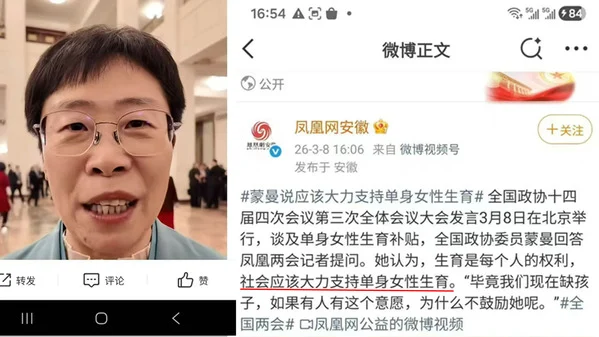
Meng, a well-known scholar who gained public recognition through televised history lectures about figures such as Empress Wu Zetian and Tang Dynasty politics, framed the issue as one of personal rights and demographic necessity.
RELATED: Nearly 13 Million Graduates Enter China’s Job Market as Employment Crisis Deepens
However, her comments quickly drew criticism online, where some interpreted the proposal as a sign of growing desperation within China’s population policy debates. China’s birth rate has been falling rapidly for years despite a series of policy shifts, from the end of the one-child policy to the introduction of a three-child policy and various financial incentives for families.
A worsening population crisis
According to publicly available estimates, China’s total fertility rate in 2025 fell to roughly 0.87–1.0, far below the 2.1 level needed for population replacement. Official figures indicate that approximately 7.92 million babies were born in 2025, the lowest number recorded since the founding of the People’s Republic of China in 1949.
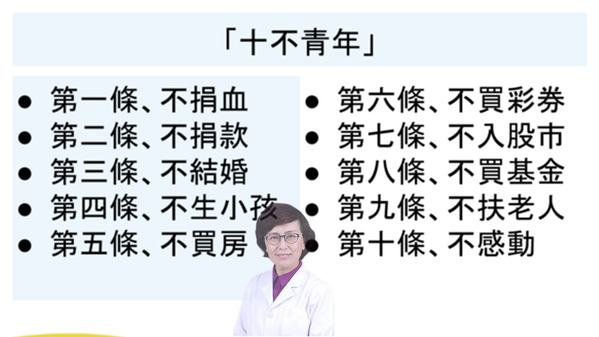
Many analysts attribute the decline to structural pressures including soaring housing costs, expensive education and medical systems, and intense workplace competition in major cities. Some young Chinese have also embraced the idea of becoming the “last generation,” choosing not to marry or have children.
A widely circulated sentiment captures the mood among younger people. “I’m not even sure about my own future,” wrote one user. “Why would I bring a child into this society?”
RELATED: The Brunt of a Nation: How China’s One-Child Policy Affected Thousands of Families
Another controversial comment came from Zhang Shuyang, a delegate to the National People’s Congress and president of Peking Union Medical College Hospital. Speaking to reporters on March 9, Zhang suggested that women should consider having children during what she described as their “optimal childbearing age.”
She attributed declining birth rates partly to social pressures. Some women “do not want to have children,” she said, because “the pressure is too great.” While the comment reflected widely accepted medical advice, critics argued that it overlooked deeper economic and social realities. High childcare costs, job insecurity, and lack of family support systems remain major obstacles for young families.
New graduates left to fend for themselves
A third proposal that drew attention came from Song Bao’an, an NPC delegate, academician of the Chinese Academy of Engineering, and president of Guizhou University. Song suggested encouraging university graduates to return to their hometowns to start businesses, particularly in western China.
The proposal aligns with Beijing’s broader strategy of promoting development in less-developed western regions under the upcoming 15th Five-Year Plan, which aims to advance what authorities describe as a “new phase” of western development.
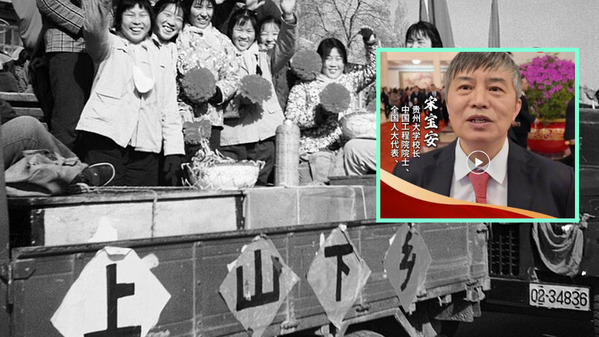
However, critics say the idea echoes earlier political campaigns. China previously launched large-scale programs encouraging educated youth to move to rural areas, most famously during the Mao era when urban students were sent to the countryside for “re-education.”
Entrepreneurship in rural regions also requires a complex support system, including capital, supply chains, legal protections, and talent networks, that many underdeveloped areas still lack. Without those conditions, critics argue that encouraging graduates to “return home and start businesses” shifts economic risk from the state onto individuals.
Youth employment show no signs of easing
China’s job market is also under increasing strain. Official figures show that 12.22 million university students graduated in 2025, while 2026 is expected to produce a record 12.7 million graduates, an increase of 480,000. Youth unemployment surged in recent years, reaching 21.3 percent in June 2023, before authorities suspended publication of the statistic.
When the data was later reintroduced in 2024, it excluded students from the calculation. Many young graduates have struggled to find stable employment, with some turning to gig-economy jobs such as food delivery.
Declining birth rates, rising youth unemployment, and regional economic disparities are emerging simultaneously as Beijing prepares its next five-year development plan. While officials continue to promote policy solutions, the debates surrounding these proposals suggest that many of China’s demographic and economic pressures may prove far more difficult to resolve.