By Tian Jingxin, Vision Times
A retired senior U.S. military commander is warning that the Chinese Communist Party (CCP) is engaged in what he describes as a “stealth war” against the United States — one that spans sophisticated espionage networks, cyber operations, supply chain coercion, and illicit drug flows.
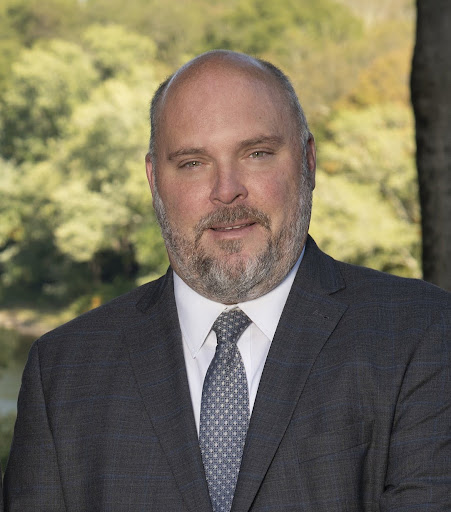
In a recent interview with investigative journalist Catherine Herridge on her program “Straight to the Point,” retired four-star General Charles Flynn warned that Beijing is pursuing “coordinated efforts” to undermine U.S. national security and expand its global influence.
Speaking from the perspective of a former front-line commander, Flynn said the defining geopolitical contest of the 21st century will revolve around relations between the United States and China. He warned that the United States faces a “complex threat” from the CCP, ranging from intelligence gathering networks inside the country to cyber warfare preparations, military infiltration attempts, economic coercion, and the flow of fentanyl-related drugs into North America.
Sprawling intelligence networks
Discussing intelligence risks inside the United States, Flynn highlighted the presence of large numbers of Chinese nationals studying in American universities. According to publicly available figures, more than 325,000 Chinese students are currently enrolled in U.S. educational institutions.
Success
You are now signed up for our newsletter
Success
Check your email to complete sign up
Flynn posed a hypothetical scenario to illustrate the potential scope of intelligence gathering. “Imagine if 25 or 30 percent of them are actually spies,” he said. “That means they’re collecting enormous amounts of information and sending it back to the Chinese Communist Party.” He argued that many individuals involved in intelligence activities operate under pressure from Chinese authorities, particularly through threats directed at family members remaining in China.
RELATED: China ‘Outsources’ Transnational Repression, Triggering Calls for Action
According to Flynn, such human intelligence networks are often combined with information warfare and legal pressure tactics aimed at weakening Americans’ confidence in their own institutions.
Cyber operations
Flynn also warned that Chinese cyber activity targeting U.S. infrastructure goes far beyond traditional espionage. He cited two major cyber campaigns widely attributed to Chinese state-linked actors: “Salt Typhoon” and “Volt Typhoon.”
The 2023 Salt Typhoon campaign, he said, appeared designed to gather intelligence about how U.S. systems operate during military deployments. The following year’s Volt Typhoon activity targeted telecommunications systems and communications metadata. “These are not ordinary cyber espionage operations,” Flynn said. Instead, he described them as “preparation of the battlefield” for potential future conflicts.
If a crisis were to erupt, for example over Taiwan, such cyber capabilities could be used to disrupt, delay, deny, and confuse U.S. decision-making and military operations. Though Taiwan operates as a sovereign nation, Beijing views it as a breakaway province and has vowed to reclaim the self-governing island by “any means necessary.”
Flynn also emphasized the geographic challenges facing the United States in a potential Indo-Pacific conflict. Mainland China lies roughly 100 miles from Taiwan, while U.S. forces must operate across nearly 8,000 miles of ocean. Because of this imbalance, he said logistics, supply chains, and command-and-control systems would become critical vulnerabilities if cyber or space systems were targeted early in a conflict.
Drone incursions at US bases
Flynn also described incidents suggesting physical surveillance attempts near U.S. military facilities. After assuming command of U.S. Army Pacific in June 2021, he visited military units in Alaska that summer. During intelligence briefings, he said he was surprised to learn that individuals identified as Chinese nationals had repeatedly attempted to access sensitive installations.
“During security checks, guards found cameras and drones hidden in the trunks of their vehicles,” Flynn said. According to Flynn, drones were frequently observed flying illegally around key training ranges such as the Donnelly and Yukon training areas.
He noted that Alaska hosts the largest U.S. Army training ranges and plays a crucial role in defending the northern flank of the United States as well as the Arctic region. Given increasing cooperation among China, Russia, and other regional actors, Flynn stressed that protecting northern strategic areas must remain a priority.
Rare earth dependency
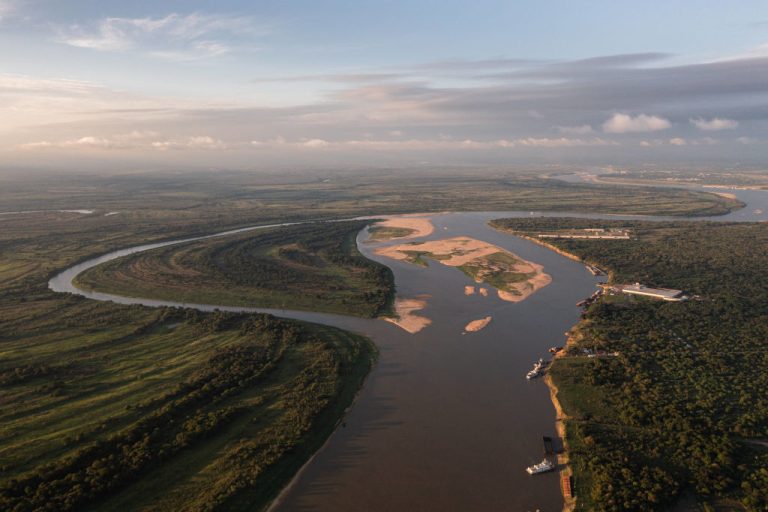
Flynn also criticized what he described as Beijing’s use of trade and resource supply chains as strategic leverage. He pointed to China’s growing influence over water resources in Southeast Asia through dam construction along the Mekong River, which affects neighboring countries such as Laos and Cambodia.
Within the United States, he argued that earlier policy decisions contributed to supply chain vulnerabilities. After the closure of the U.S. Bureau of Mines in 1996, many stages of mineral processing, including rare earth refining, were gradually outsourced overseas to other countries, mainly in Asia.
Today, China controls roughly 80–90 percent of global rare earth processing, according to Flynn. These materials are essential for advanced technologies including F-35 fighter jets, semiconductors, electric vehicles, and precision magnets.
While he acknowledged that complete economic decoupling from China may not be realistic, Flynn urged the United States to rebuild domestic rare earth processing capacity in order to “de-risk” critical supply chains.
Fentanyl crisis
Flynn also accused Chinese actors of contributing to the fentanyl crisis by supplying precursor chemicals used to manufacture the drug. He compared the scale of the current crisis with historical conflicts. More than 100,000 Americans die each year from fentanyl overdoses, he said, most of them under the age of 35. During the entire Vietnam War, roughly 62,000 American service members were killed.
“The Chinese Communist Party has never taken responsibility for this insidious attack,” Flynn said, adding that Beijing had also avoided accountability for the COVID-19 pandemic.
Flynn also criticized China’s activities in the South China Sea. “We told them not to build artificial islands, they built them,” he said. “We told them not to station personnel there, they did. We told them not to militarize them, they did anyway.”
Strategic uncertainty as deterrence
In the final portion of the interview, Flynn praised recent U.S. counter-operations against hostile actors in the Western Hemisphere. He described a U.S. military operation targeting Venezuelan leader Nicolás Maduro as a “PhD-level joint military operation,” combining multiple instruments of national power.
According to Flynn, the Maduro regime had served as a hub for narcotics trafficking, human smuggling, and illicit finance, while also providing a foothold for China, Russia, and Iran in the Western Hemisphere. He argued that actions like these create “strategic unpredictability” for adversaries, an important element in restoring deterrence.
Flynn concluded the interview by praising Herridge for pursuing independent investigative journalism, saying that a free press capable of reporting facts without corporate interference remains essential to the health of an open society.