By Lu Yixin, Vision Times
As the Chinese Communist Party (CCP) expands its campaign of transnational repression, scholars warn that Beijing is increasingly “outsourcing” intimidation and surveillance through legal commercial channels abroad, blurring the line between ordinary business activity and political coercion. Experts argue that democratic societies must respond by clearly defining legal boundaries and ensuring that every act of infiltration carries real consequences.
On Jan. 27, Taiwanese outlet “Newtalk News” published an analysis by Hung Pu-chiao, deputy executive director of Tunghai University’s Center for China and Regional Development, examining recent cases of alleged CCP cross-border repression targeting Hong Kong activists in Taiwan.
RELATED: Three Covert Tactics Behind Transnational Repression of Shen Yun, Falun Gong
‘Outsourcing’ repression through legal channels
Hung pointed to incidents in which Hong Kong groups operating openly in Taiwan were photographed and documented by private investigation firms. Subsequent reporting suggested these firms may have been commissioned as part of CCP-linked transnational repression efforts.
Success
You are now signed up for our newsletter
Success
Check your email to complete sign up
Hung warned that what makes these cases particularly troubling is not merely the CCP’s global reach, long evident in its suppression of dissent, but the way such operations are now conducted openly, through legitimate commercial services embedded in everyday social life.
“The publicization of the CCP’s covert front does not mean it has abandoned secrecy,” Hung wrote, adding, “Rather, it shows that its control over local collaborators has reached a level where it no longer fears exposure.” When exposure itself no longer carries risk, he argued, covert operations evolve into more routine, brazen practices that blend seamlessly into normal business activity.
Blurred lines, diluted responsibility
According to Hung, Beijing’s political ambitions toward Taiwan and Hong Kong communities abroad are no secret. Cross-border intimidation, surveillance, and pressure have long been integral to the CCP’s united front and stability-maintenance apparatus.
RELATED: 65 Canadian Federal MPs Issue Joint Statement Condemning CCP’s Transnational Repression
What is new, he said, is the regime’s ability to “outsource” these functions locally, without underground networks or long-term infiltration, simply by paying for existing services. “Private investigators, outsourced photographers, data collection — on the surface these look like ordinary commercial transactions,” Hung noted. “In reality, they can become tools of authoritarian repression.”
This model deliberately blurs the distinction between political coercion and neutral market behavior. Local actors involved may not even perceive themselves as participating in repression, viewing their work as routine business. Yet when professional surveillance techniques are used to identify dissidents and build blacklists, Hung stressed, the activity is no longer neutral.
“When ‘doing business’ becomes a shield for undermining national security,” he warned, “it represents not just an ethical collapse of the market, but a quiet auctioning of the rule of law.”
A systemic democratic challenge
Hung emphasized that such incidents must not be dismissed as isolated criminal cases. Today’s targets may be Hong Kong activists; tomorrow’s could be Taiwanese civil society groups, social movements, or ordinary citizens. “When an authoritarian regime learns it can intimidate and monitor people inside a democracy through legal outsourcing, its operational boundaries will only expand,” he wrote.
The real challenge, Hung argued, lies within Taiwan itself. Condemnation after the fact is not enough. Without systemic legal and institutional responses, silence becomes tacit permission. “This is not only an intelligence issue,” he said. “It is a challenge to legal systems, public awareness, and democratic self-defense.”
Hung also called for clearer legal definitions that draw firm lines between legitimate commerce and political repression, ensuring that responsibility cannot be evaded through claims of ignorance. Just as crucial, he said, is public recognition of the political nature of such acts, rather than treating them as sensational or isolated security incidents.
“The true vulnerability of democracy is not openness,” Hung concluded, “but the naïve assumption that markets and technologies are inherently neutral.”
Voices from Hong Kong activists in Taiwan
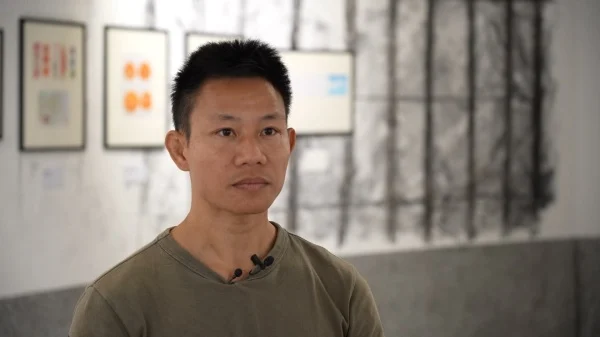
Concerns over CCP transnational repression were echoed by Hong Kong activist Tang Wai-hung, who relocated to Taiwan. In an interview with Liberty Times, Tang recounted how his Muay Thai gym was splashed with red paint in November. Taiwanese authorities later confirmed two Hong Kong suspects fled back to Hong Kong shortly after the attack.
RELATED: Taiwan, Allies Focus on Network Resilience Amid Cyber and Geopolitical Threats
Tang said he was targeted after publicly urging Hong Kong residents to boycott legislative elections. “I am very certain this was connected to the CCP and the Hong Kong government,” he said, describing the act as a warning meant to intimidate both him and other Hong Kongers in Taiwan. “The message is clear,” Tang said. “If you speak out like me, you will face the same consequences.”
He added that repression has escalated: Bomb threats at commemorative events, disruptions at film screenings, and surveillance at public gatherings. In one case, Tang said, “People from Hong Kong paid Taiwanese private investigators to secretly photograph attendees.”
While acknowledging Taiwanese police protection in some instances, Tang warned that responses often come only after harm occurs. He called for preventive legal mechanisms and heavier penalties, stressing that such acts constitute national security violations, not ordinary vandalism.
Lawmakers warn of growing threat
Democratic Progressive Party legislator Shen Po-yang warned that CCP transnational repression is becoming a global issue. “China is asserting jurisdiction beyond its borders,” he said. “Harassment, intimidation, and attempted arrests abroad are now central topics in international security discussions.”
Taiwanese President Lai Ching-te also addressed the issue, stating he was proud of citizens who refuse to be intimidated by CCP pressure. “I will safeguard this country and protect our people,” Lai said, pledging that Beijing’s influence would not be allowed to reach Taiwanese soil.
Hung concluded that Beijing will not stop because of moral condemnation alone. Only when costs rise, through legal accountability, public exposure, and the erosion of local complicity, will tactics be adjusted. “For a democracy,” he wrote, “making every act of infiltration and transnational repression carry a real price is not escalation; it is the most basic form of self-defense.”
Editorial note: Views expressed in this article are the opinions of the author and do not necessarily reflect the views of Vision Times.