Commentary
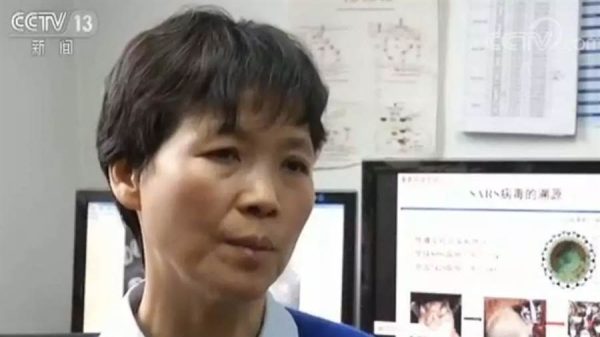
In 2020, the Chinese Communist Party’s propaganda apparatus produced one of the more self-defeating performances in the history of modern statecraft. Within the span of three months, two separate television interviews with Shi Zhengli, the virologist at the center of the Wuhan Institute of Virology’s bat coronavirus research program, told entirely contradictory stories. Those two recordings have not disappeared from the internet. They are increasingly cited in Washington’s accelerating inquiry into the pandemic’s origins.
The Wuhan lab’s lead researcher boasted of expertise, then denied all knowledge
The first interview aired on May 25, 2020, on CGTN, the CCP’s international English-language broadcast outlet. Shi Zhengli, appearing before a global audience skeptical about China’s role in the pandemic’s origins, chose to establish her credentials. Her team, she said, had accumulated more than a decade of experience studying coronaviruses in the Wuhan laboratory. The claim was meant to signal scientific authority. It backfired.
A laboratory that had spent over ten years collecting bat coronavirus samples from caves across China, building what was by some measures the largest bat-coronavirus genetic database in Asia, and conducting gain-of-function research, the practice of enhancing pathogens to study their potential to infect humans, had just publicly confirmed it possessed every technical precondition for a catastrophic accident.
Success
You are now signed up for our newsletter
Success
Check your email to complete sign up
Three months later, CGTN dispatched Liu Xin, one of its most assertive on-air personalities, to interview Shi Zhengli again. The tone had changed entirely. Under mounting international pressure over the lab-leak hypothesis, Shi looked directly into the camera and declared: before Dec. 30, 2019, this virus simply did not exist in our laboratory, and therefore a lab leak was impossible.
The two interviews, taken together, form a closed logical trap. A team with over a decade of coronavirus expertise, tens of thousands of catalogued viral samples, and advanced pathogen-enhancement capabilities claimed, three months after the pandemic began, to have had no prior knowledge of the very type of virus it had been studying for years. The claim was not merely implausible; it was structurally incoherent.
The party’s cover story collapsed on its own evidence
The contradiction deepens when set against a documented sequence of actions the Wuhan Institute of Virology took in the months immediately preceding the outbreak. In September 2019, the laboratory abruptly took offline its database of 22,000 viral samples and genome sequences, the most comprehensive bat-coronavirus repository in existence. The database has not been restored. No official explanation has been provided.
Shi Zhengli’s denial rested on a foundation that the CCP itself had already removed. Her claim that the virus did not exist before a specific date was only coherent if the raw data that would confirm or refute it had been systematically destroyed or suppressed. The Party erased the records, then its state media handed Shi a microphone to declare there was nothing to find.
Liu Xin’s interview was not journalism. It was reputation management: an attempt by the CCP’s external propaganda apparatus to foreclose a line of inquiry by substituting a single subject’s denial for the independent verification that the Party had already made impossible. The sequence was deliberate. Destroy the evidence, engineer the interview, broadcast the denial globally.
Washington’s intelligence establishment has reversed its assessment
For several years, the official posture of the American intelligence community was agnosticism. During the Biden administration, most agencies rated the lab-leak hypothesis at low confidence. That assessment gave the CCP’s propaganda operation room to maneuver; a fractured American intelligence picture could be cited as evidence that the theory lacked credibility.
That cover has now been removed. John Ratcliffe, the CIA director appointed after Trump returned to the White House in January 2025, has been unambiguous. He has stated publicly that the CIA’s current analysis places the COVID-19 outbreak in direct connection with China, and that the laboratory origin is assessed with high confidence. The shift from low confidence to high confidence is not a rhetorical adjustment; it represents a fundamental realignment of the American intelligence community’s formal position. The United States government has, in effect, concluded internally that Beijing lied, and that the lie contributed to a catastrophe that killed millions.
Trump is holding the accountability question in reserve as a negotiating instrument
Against this backdrop, the recent surface-level warmth in American-Chinese diplomatic exchanges has confused some observers. Trump signaled at Davos that he had maintained contact with Xi Jinping, the CCP’s general secretary and China’s top leader, since returning to office. A state visit to China in April was reported to be in the works, with a reciprocal visit to Washington potentially following in August or September.
This should not be read as reconciliation. The diplomatic calendar and the accountability question are operating on separate tracks, and Trump has made clear they are not mutually exclusive. He has stated, in terms that left little room for ambiguity, that he has not forgotten where COVID-19 came from, what it did to the United States, and what it cost the world. That statement was not nostalgic; it was a signal.
The pandemic origins question functions for Trump as a card that grows in value the longer it goes unplayed. In any negotiation over trade, Taiwan, supply chains, or regional security, the unresolved accountability for a pandemic that killed over a million Americans provides Washington with a moral and legal leverage point that Beijing cannot neutralize through economic concessions alone. The CCP can offer market access. It cannot offer an explanation for the database that went offline in September 2019.
The strategic endgame is larger than compensation
Some analysts of Trump’s China policy have argued that the pandemic accountability card is a tool for extracting trade concessions or financial reparations. That framing may be too narrow. The political commentary program Tiangao Haikuo has suggested that Trump’s ultimate objective goes beyond compensation, that the pandemic origins case, pursued to its logical conclusion, strikes at the CCP’s foundational claim to legitimate governance.
A regime that concealed the early spread of a pathogen, silenced the doctors who raised alarms, destroyed the samples and databases that would have enabled an early international response, and then deployed its state media apparatus to produce denial interviews cannot simultaneously claim to govern responsibly or in the interests of its people or the world. The accountability argument, pressed hard enough, is not merely about damages. It is about the CCP’s right to rule.
The short-term diplomatic calendar will likely produce a period of managed engagement. Beijing may calculate that high-level visits and trade negotiations represent an opportunity to bury the accountability question under a layer of pragmatic deal-making. That calculation has been made before, by other governments, about other problems the CCP wished would go away. It has not consistently proven correct.
Shi Zhengli’s two interviews remain online. The Wuhan Institute of Virology’s database remains offline. The CIA’s assessment has been formalized. And Trump has not, by his own account, stopped thinking about it.
Whether the reckoning arrives in 2026, 2027, or later, the CCP’s pandemic cover-up has produced an instrument that its adversaries have not discarded. When the accounting finally comes, it will be rooted not in speculation but in the Party’s own documented record, a record it cannot now retract.
(This article represents the author’s personal views and position.)
By Chen Jing