As U.S. and Israeli military operations against Iran continue to escalate, multiple rumors about Iran’s new Supreme Leader, Mojtaba Khamenei, regarding his injuries, whereabouts, and personal background, are spreading. Recent reports from various media outlets have revealed different clues, plunging the newly appointed Iranian leader into a media whirlwind.
Mojtaba Khamenei injury rumors and absence from public appearances
According to India’s WION News on March 16, following the Feb. 28 airstrikes targeting Iranian sites, Iranian officials initially tried to project an image of “no harm done.” However, leaked diplomatic sources suggested that Mojtaba Khamenei was injured during the bombings.
Iran’s ambassador to Cyprus, Alireza Salarian, told The Guardian that he had heard Mojtaba suffered injuries to his legs, hands, and arms, and speculated that he may currently be receiving treatment in a hospital.
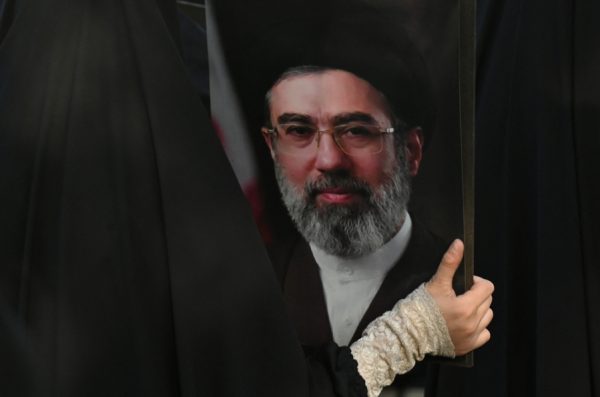
To date, Iranian officials have not released any images or footage showing his condition. Mojtaba’s first “statement” as Supreme Leader was read aloud by a TV anchor in text form only, without any audio or video of him personally.
BBC’s digital investigation team, BBC Verify, also noted that a “latest official photo” widely circulated by Iranian state media was in fact an old image, digitally altered with artificial intelligence to appear recently taken.
Success
You are now signed up for our newsletter
Success
Check your email to complete sign up
Intelligence claims of secret transfer to Moscow
Other reports have suggested more controversial and unverified claims. Kuwait’s Al-Jarida newspaper reported that, given Israel’s Mossad has extensive penetration capabilities in Iran, leaving the injured Supreme Leader in Tehran would be extremely risky.
The paper cited intelligence sources claiming that Mojtaba had been secretly moved to Moscow, Russia, and transported via a highly classified Russian military aircraft for specialized treatment.
The report further claimed that this arrangement was proposed during a phone call between Russian President Vladimir Putin and Iranian President Masoud Pezeshkian. If true, this would suggest that Mojtaba is currently under Russian security protection.
Washington publicly questions his condition
Meanwhile, U.S. officials have publicly commented on the Iranian leader’s condition.
Former U.S. President Donald Trump said in a radio interview that he believes Mojtaba “suffered serious injuries,” but may still be “alive in some form.” U.S. Defense Secretary Pete Hegseth stated at a press briefing that U.S. intelligence believes the leader “has been injured and likely has visible disabilities.”
These claims have not been independently verified but indicate that Washington is using Mojtaba’s prolonged absence from public appearances to exert pressure on the Iranian regime.
Controversy over personal background resurfaces
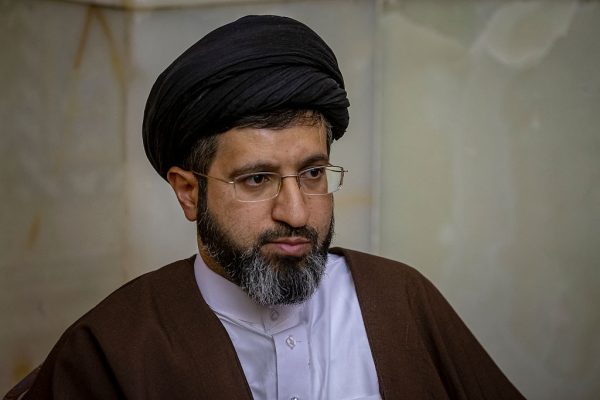
At the same time, the New York Post reported on March 16 that U.S. intelligence recently briefed the White House on sensitive information suggesting Mojtaba Khamenei may be homosexual.
According to insiders, Trump reportedly laughed in surprise upon hearing this intelligence. Some briefing attendees reportedly found the claim “unexpected.”
Three sources told the New York Post that U.S. intelligence considers the information somewhat credible and not purely politically motivated. Two sources indicated that the intelligence points to a long-term relationship between Mojtaba and a mentor from his childhood; another source suggested the person may have worked for the Khamenei family.
The report also said that U.S. intelligence does not have visual evidence but considers the sources “highly reliable.” One insider stated the information comes from one of the government’s most tightly protected intelligence sources.
The New York Post also cited a 2008 U.S. diplomatic cable, later released by WikiLeaks, which revealed that Mojtaba had received treatment in London at Wellington Hospital and Cromwell Hospital for sexual function issues. The documents stated he married around age 30 and had multiple medical visits to the UK.
Iranian law criminalizes homosexual behavior, with severe cases potentially punishable by death. Former Iranian President Mahmoud Ahmadinejad publicly declared in 2007: “There are no homosexuals in Iran.”
At present, Mojtaba Khamenei’s exact whereabouts and recovery from injuries remain unclear. As regional conflicts continue, his prolonged absence from public view has fueled further speculation about the actual functioning of Iran’s power structure.