Commentary
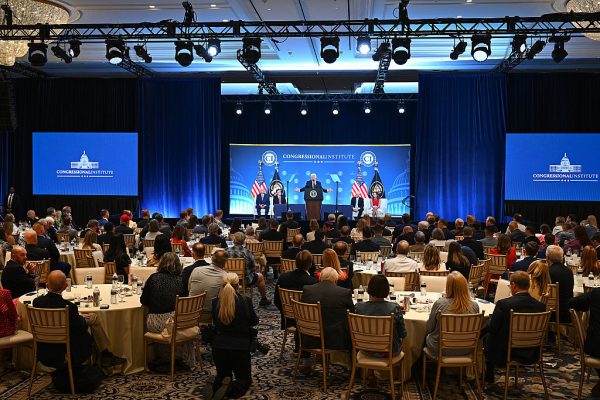
On Saturday, March 7 U.S. President Donald Trump stood in front of 13 allied leaders at his golf resort outside Miami and told them to send their militaries after the drug cartels. He offered American precision missiles to any president willing to use them and warned Cuba that “great change will soon be coming.” Secretary of State Marco Rubio, Secretary of Defense Pete Hegseth, and newly appointed Special Envoy Kristi Noem flanked him on stage. The White House called the gathering the “Shield of the Americas.”
The announced agenda was narcotics, migration, and cartel violence. However, the administration’s own actions told a different story. Days before the summit, the U.S. imposed visa restrictions on three Chilean officials tied to a Chinese undersea cable project, and Mike Waltz, the U.S. ambassador to the United Nations, had already declared on Fox News that “the Chinese are moving incredibly aggressively into the Western Hemisphere” and that Trump and Rubio were pushing back hard. Bloomberg described the summit as part of Trump’s “anti-China crusade” in the region.
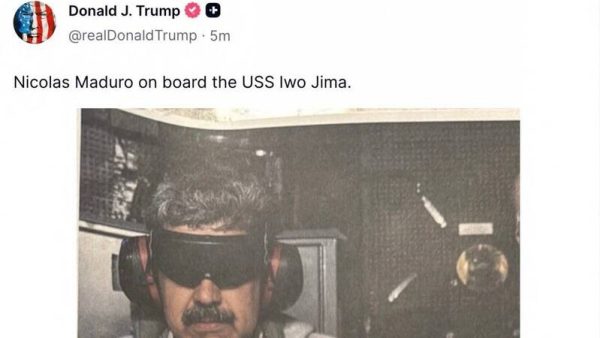
In the weeks before the summit, Washington had torn apart Beijing’s partner network across the Western Hemisphere by force, capturing Venezuela’s president, blockading Cuba, and destroying Chinese-made weapons systems in two theaters. The Shield of the Americas is what comes after: the architecture designed to fill the space Beijing lost and ensure the CCP cannot take it back.
Between January and early March 2026, the United States captured Venezuela’s president, blockaded Cuba’s energy supply, struck Iran’s military infrastructure alongside Israel, and conducted dozens of airstrikes on drug trafficking routes in the Caribbean. In each case, Chinese-built weapons systems or Chinese-financed partnerships were tested against American power, and in each case they failed. Beijing’s investments, arms sales, and strategic agreements produced nothing for any of its partners when the pressure arrived. An earlier Vision Times analysis traced the pattern in detail: what the CCP had built across the hemisphere over three decades came apart in less than two months.
Success
You are now signed up for our newsletter
Success
Check your email to complete sign up
Beijing responded to the loss of each partner with words. Venezuela drew “concern.” Cuba drew silence. Iran, where Chinese air defense systems were destroyed and the supreme leader was killed, drew a request for “an immediate cessation of military operations.” The CCP’s network in the Americas was gone, and the question was what would take its place.
An anti-cartel alliance that structurally locks China out
The summit’s anti-narcotics mission is real. The fentanyl crisis, fed by precursor chemicals from Chinese pharmaceutical companies routed through Mexican cartels, kills tens of thousands of Americans every year, and Trump was not performing concern when he told the room to use military force. The question is what the anti-cartel architecture produces beyond its stated mission.
When 13 countries integrate their militaries into American systems, the practical requirements run deep: shared communications, interoperable equipment, joint intelligence networks, standardized port security. A country coordinating its military operations through U.S. Southern Command is not simultaneously installing Huawei telecommunications equipment, granting port concessions to Chinese state-owned shipping companies, or hosting Chinese space facilities on its territory. The security partnership crowds out the Chinese economic relationship by making the two incompatible, because a government cannot run joint operations with Washington while its ports, networks, and airwaves are built and monitored by Beijing.
That incompatibility matters because Beijing’s entire position in Latin America was built on filling a vacuum Washington left open. The CCP provided the loans, ports, railways, and 5G networks that no one else offered. By 2024, Chinese state enterprises held contracts on more than three dozen ports across the hemisphere, Huawei had embedded itself in a dozen telecommunications networks, and China maintained more space infrastructure in Latin America than anywhere outside the mainland, including a deep space station in Argentine Patagonia that operates as effectively sovereign Chinese territory. Trade with the region hit a record $518 billion.
The Shield of the Americas fills that vacuum with security integration that makes Chinese infrastructure functionally unwelcome across the hemisphere. Two days before the summit, Ryan C. Berg, director of the Americas Program at the Center for Strategic and International Studies, published a blueprint for what the gathering could produce as a counter-China architecture: a PLA Influence Mapping Task Force to track Chinese dual-use infrastructure in real time, a “Secure Port of the Americas” certification program to replace Chinese port operators, and a $50 to $100 billion infrastructure compact as a direct Belt and Road alternative. Whether the administration adopts these recommendations or builds its own version, the structural logic is the same: the anti-narcotics mission is the delivery mechanism and the counter-CCP architecture is the payload.
Naming a coalition that already existed
The 13 nations at Doral, Florida, were not selected for their relevance to the drug trade. Each one represents a specific Chinese interest being contested, and most had already acted before the summit gave their alignment a name.
Panama is the clearest example. President José Raúl Mulino repudiated Panama’s Belt and Road agreements in early 2025, and in January 2026 Panama’s Supreme Court ruled unconstitutional the port concessions that had allowed Hong Kong-based CK Hutchison to operate terminals at both ends of the Panama Canal for over two decades. The government occupied the ports, seized the equipment, and handed operations to Denmark’s Maersk. When Beijing threatened that Panama would “inevitably pay a heavy price,” Mulino rejected the threat in public. Chinese infrastructure was physically removed from the most important shipping lane in the Western Hemisphere, making Panama the clearest case of Belt and Road running in reverse.
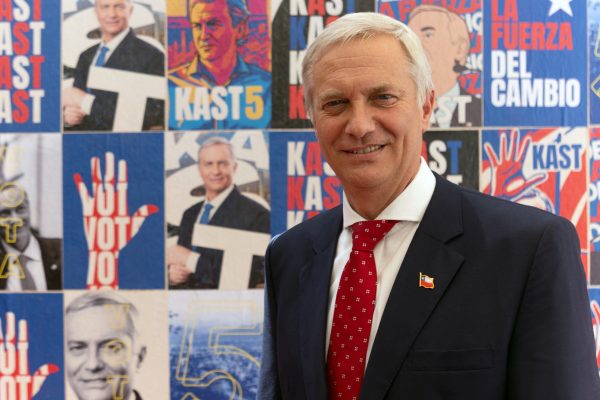
Argentina under President Javier Milei has signed trade agreements with explicit counter-China clauses and sits on the lithium triangle, where Beijing has aggressively pursued mining access to minerals essential for batteries and electronics. Bolivia’s new right-wing government holds similarly vast lithium deposits. Ecuador is running joint military operations with the U.S. and days before the summit expelled Cuba’s entire diplomatic delegation, a step no Ecuadorian government had ever taken. Paraguay is one of the few countries in the world that still recognizes Taiwan rather than Beijing. Chile’s incoming president, José Antonio Kast, attended before his inauguration; Chile sends more than a third of its exports to China, and setting the terms of that relationship before the new president takes office is the point.
The absent three are the next phase
Brazil, Mexico, and Colombia are currently not part of the alliance. All three are led by left-wing governments deepening ties with Beijing, and their absence marks the line the Shield currently draws.
Brazil is the most significant. China is Brazil’s largest trading partner, and under President Luiz Inácio Lula da Silva the relationship has reached what CCP general secretary Xi Jinping called “its best moment in history.” Lula signed a currency swap agreement designed to bypass the U.S. dollar in bilateral trade, visited Huawei headquarters, and publicly declared that “nobody can stop Brazil” from deepening ties with Beijing. After the Maduro capture, Xi personally called Lula to promise China would “stand firmly” by Brazil and the broader Global South.
Mexico under President Claudia Sheinbaum resists the security alignment, and Colombia under President Gustavo Petro has explored Belt and Road membership and sought $40 billion in climate financing from Beijing.
The absences are real but may be temporary. Brazil holds presidential elections in October 2026, and Senator Flávio Bolsonaro, a Trump ally, is polling competitively against Lula. Colombia and Peru have upcoming elections that could produce right-leaning governments. CSIS noted explicitly that “future iterations of this gathering could include presidents from Colombia and Peru, as well as possibly from Brazil.” Though the 13 nations at Doral are the foundation, the architecture is built to expand.

What Beijing faces
The tools the CCP used to build its position in the Americas are the same tools that failed to defend it when tested. The loans did not buy loyalty that survived the first American military operation, the arms sales did not protect a single partner, and the partnerships dissolved the moment Washington applied pressure. Beijing’s Foreign Ministry has established a task force to preserve its gains in the hemisphere, and weeks after the 2025 National Security Strategy named the Trump Corollary to the Monroe Doctrine, released its third policy paper on Latin America, signaling no intention of retreat.
The task force faces a problem no policy paper can solve. In less than two months, Washington tore apart Beijing’s network in the Western Hemisphere, and then it started building its own: a 13-nation security bloc, coordinated through Southern Command, designed to hold the ground the CCP lost and ensure Beijing never gets it back.
The views expressed in this article are the author’s own and do not necessarily reflect the editorial position of Vision Times.
By Andrew Jensen