By Andrew Jensen, Commentary
Over the past two months, a series of geopolitical shocks has struck several governments aligned with Beijing. Iran is grappling against sustained U.S.–Israeli airstrikes, Venezuela’s leadership collapsed following a U.S. raid that removed Nicolás Maduro from power, and Cuba, heavily dependent on Venezuelan oil, has been pushed into an energy crisis. Meanwhile, Chinese-linked port operators have lost control of facilities at both ends of the Panama Canal.
Taken individually, these developments might appear unrelated. But viewed together, they suggest something larger: A network of partners that Beijing spent decades cultivating is now under severe pressure. Whether by deliberate strategy or opportunistic escalation, the cumulative effect is the same. Key nodes in China’s global partnership system are weakening or collapsing, often in rapid succession.
RELATED: What a US Strike on Iran Means for the Chinese Communist Party
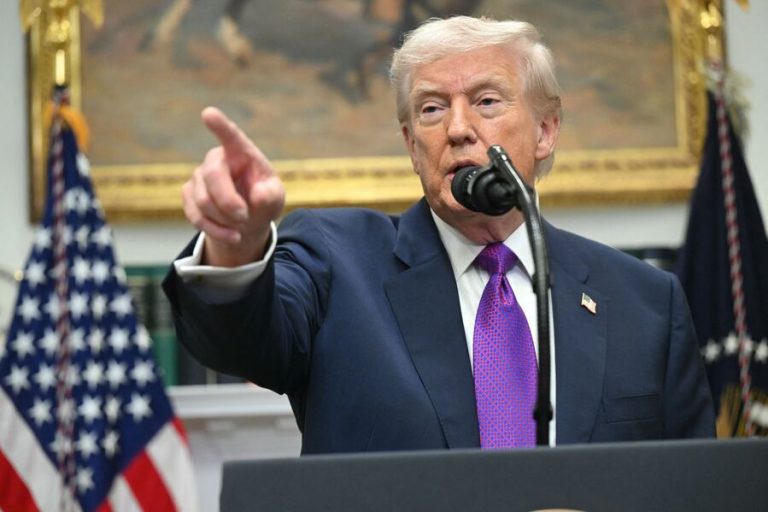
As U.S President Donald Trump prepares for a three-day summit with Chinese Communist Party (CCP) leader Xi Jinping in late March, the geopolitical landscape confronting Beijing looks very different from what it did just weeks earlier. Here’s why.
China’s strategy of harnessing indirect power
Success
You are now signed up for our newsletter
Success
Check your email to complete sign up
Much of Beijing’s long-term strategic thinking about global competition was shaped by a 1999 book written by two Chinese military colonels, “Unrestricted Warfare.” The authors argued that China could not defeat the United States through conventional military confrontation. Instead, they proposed a broader approach: challenge American power through economics, trade, infrastructure control, financial leverage, and proxy partnerships.
Over the following decades, China built a global network that reflected this philosophy. Russia, Iran, and North Korea formed the core strategic partners often referred to by analysts as the “CRINK” bloc. Beyond them, Beijing cultivated relationships with governments willing to challenge Washington or operate outside Western political and financial systems.
Venezuela and Cuba extended that network into the Western Hemisphere. Iran connected it to the Middle East. Meanwhile, China’s Belt and Road Initiative created infrastructure and financial dependencies across dozens of countries, linking ports, railways, energy pipelines, and telecommunications systems to Chinese investment and technology.
Chinese companies also developed an extensive global port network. A Hong Kong–based conglomerate, CK Hutchison, operated terminals near major maritime chokepoints including the Suez Canal, the Strait of Malacca, and the Panama Canal. While formally a private corporation, its global footprint carried obvious strategic implications.
Together, these relationships created an indirect architecture of influence. Beijing did not need formal military alliances if partner states, infrastructure assets, and economic dependencies could collectively shift the balance of power. Recent events, however, suggest the limits of that model.
Venezuela: China’s energy foothold in the Americas
The turning point came in early January, when U.S. special operations forces conducted a raid on Venezuelan leader Nicolás Maduro’s compound in Caracas. According to U.S. accounts, American aircraft suppressed Venezuelan air defenses while special forces entered the compound and captured Maduro. He was transported to New York and later arraigned on narco-terrorism charges.
Washington subsequently moved to restructure Venezuela’s oil sector. U.S. energy companies quickly began discussions with the White House about new operating frameworks, while petroleum revenues were redirected through U.S.-supervised channels.
For China, the implications were significant. Over two decades, Beijing had invested heavily in Venezuela’s energy industry through oil-backed loans and infrastructure financing. Chinese lending to Venezuela exceeded $60 billion through the China Development Bank alone, part of broader financial commitments estimated at more than $100 billion.
Those investments had given China a major energy foothold in the Western Hemisphere. With the Maduro government removed, that position has effectively collapsed.
The operation also exposed weaknesses in Chinese military hardware exported abroad. Venezuelan air-defense systems, including Chinese radar systems and Russian missile batteries, reportedly failed to detect or respond to the incoming U.S. force. While the full details remain unclear, the incident has raised questions among defense analysts about the performance of Chinese-made sensors and radar systems in real combat scenarios.
Cuba: Energy crisis as leverage
The Venezuelan shift quickly reverberated elsewhere. Cuba relies heavily on subsidized Venezuelan oil to generate electricity and sustain its economy. With Venezuelan exports disrupted, the island’s energy supply deteriorated rapidly.
In late January, the United States imposed new sanctions targeting any country supplying fuel to Cuba. Mexico, historically a secondary supplier, halted shipments under threat of penalties. According to Cuban government statements and satellite imagery analysis, fuel shortages have already forced the country to ration electricity and reduce work schedules.
Secretary of State Marco Rubio has been a key figure in the administration’s approach, emphasizing that Washington seeks political change in Havana. While the White House has described the situation as a potential “friendly transition,” the pressure campaign has dramatically tightened the island’s economic constraints.
Neither Beijing nor Moscow has intervened in a meaningful way. China has offered diplomatic support and limited humanitarian aid, but no substantial fuel shipments have arrived. Russia, heavily focused on its war in Ukraine, has likewise provided little assistance. The result is a severe strain on one of China’s closest political partners in the Western Hemisphere.
The Panama Canal as strategic infrastructure
Another major development occurred in Panama. In January, the country’s Supreme Court ruled that CK Hutchison’s concession to operate ports at both ends of the Panama Canal violated constitutional provisions. Panama’s maritime authority subsequently seized the facilities, transferring control to new operators.
The canal handles roughly 40 percent of U.S. container traffic and serves as a vital corridor for naval and commercial shipping between the Atlantic and Pacific oceans. Control of port facilities at both entrances therefore carries considerable strategic importance.
The move followed years of rising U.S. concern about Chinese influence over critical infrastructure. Panama had already withdrawn from China’s Belt and Road Initiative and strengthened military cooperation with Washington. For Beijing, the loss of the canal port operations represents another setback in its broader network of overseas logistics and infrastructure assets.
Iran: Beijing’s key partner in the Middle East
Iran occupies a unique role within China’s global network. It supplies energy to China, controls access to the Strait of Hormuz, and has been willing to confront the United States directly. In contrast, many other Middle Eastern countries maintain security relationships with Washington even while expanding economic ties with Beijing.
In recent years, China deepened cooperation with Iran through a long-term strategic partnership agreement and arms transfers, including air-defense systems and radar technology. That relationship was tested when the United States and Israel launched coordinated strikes against Iranian military targets. U.S. electronic warfare aircraft reportedly neutralized key radar systems, enabling American and Israeli aircraft to operate inside Iranian airspace.
The strikes killed Supreme Leader Ali Khamenei and numerous senior officials, while damaging Iran’s naval forces and military infrastructure. Within two days, more than 1,200 targets had reportedly been struck.
For China, the episode carries broader implications. Beijing has marketed advanced weapons systems to many countries as a counterweight to Western military power. If those systems prove ineffective under combat conditions, the reputational impact could extend well beyond Iran.
The inner ring: Russia and North Korea
Despite these setbacks, Beijing’s closest strategic partners remain intact. Russia entered the partnership network as its primary military heavyweight. With a large nuclear arsenal and a permanent seat on the UN Security Council, Moscow theoretically offered the ability to project power in defense of allied states.
Yet the war in Ukraine has significantly constrained Russia’s capacity. The conflict has absorbed much of its military resources and limited its ability to intervene elsewhere. When Venezuela, Cuba, and Iran came under pressure, Moscow issued diplomatic condemnations but took no direct action.
North Korea remains the alliance’s nuclear wildcard. Pyongyang can threaten South Korea and Japan and has supported Russia’s war effort. However, its role within Beijing’s network is primarily defensive. Its nuclear arsenal serves as deterrence rather than a tool for projecting influence abroad.
Both Russia and North Korea retain nuclear capabilities, but nuclear weapons are instruments of self-preservation rather than alliance defense. No state has threatened nuclear war to protect a partner’s oil exports or infrastructure. As a result, the alliance’s “inner ring” remains intact but largely unable to intervene on behalf of weaker partners.
Xi’s military purges
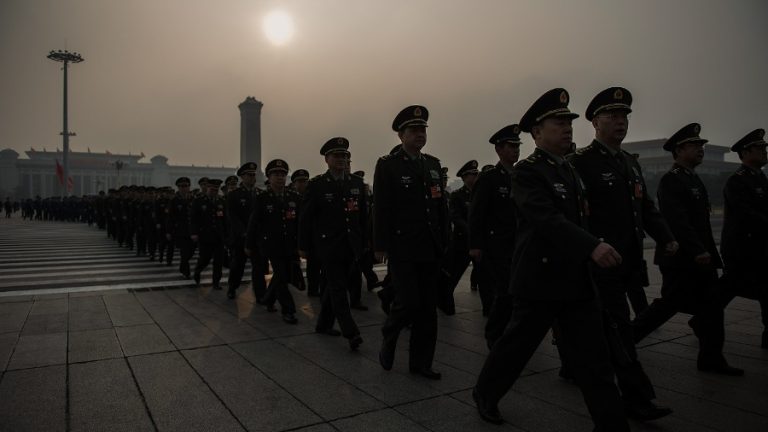
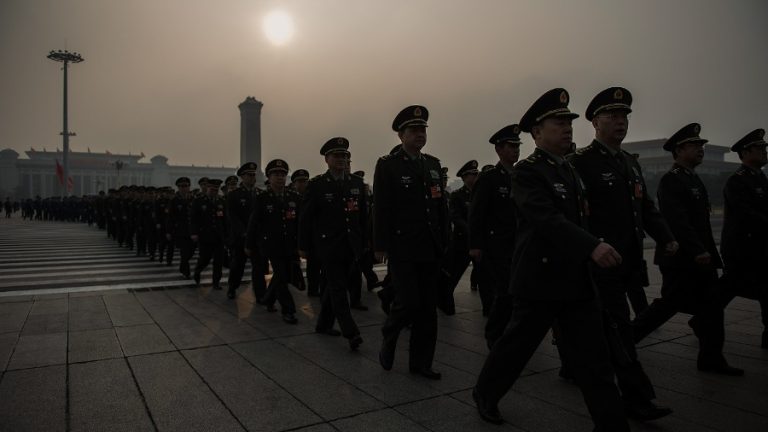
Internal developments inside China may also shape Beijing’s response. Since 2023, Chinese President Xi Jinping has overseen sweeping purges across the People’s Liberation Army (PLA). Former defense ministers, rocket-force commanders, and senior procurement officials have been removed or investigated. The purge has extended into China’s nuclear forces and key military departments responsible for equipment development.
Five of the six non-Xi members of the Central Military Commission appointed in 2022 have been removed. The only remaining member, Zhang Shengmin, oversaw the discipline investigations themselves and was later promoted to vice chairman.
Large-scale purges can strengthen political control but also carry operational costs. Military analysts have long noted that rapid leadership turnover can disrupt institutional knowledge and create hesitation among officers who fear political repercussions for mistakes.
The Pentagon’s 2025 China Military Power Report warned that the purges could cause short-term disruptions to readiness, although it also noted that China’s forces could ultimately emerge more centralized and disciplined.
The summit in Beijing
Against this backdrop, Trump is scheduled to travel to Beijing on March 31 for a three-day summit with Xi Jinping. The meeting is expected to focus on trade disputes, technology restrictions, and Taiwan arms sales.
The geopolitical context surrounding the summit has shifted dramatically in a short time. Venezuela’s government has collapsed, Cuba faces a severe energy crisis, Chinese-linked operators have lost control of strategic canal infrastructure, and Iran’s leadership has been struck by U.S. and Israeli forces.
China still retains significant leverage. It remains the world’s largest manufacturing economy, the largest trading partner of many developing countries, and a major holder of U.S. Treasury securities. The Belt and Road Initiative continues to bind dozens of nations into infrastructure and financial partnerships.
But the military and political partnerships that once formed the outer layer of Beijing’s strategic network have been weakened. When those partners came under pressure, China and its closest allies largely limited their response to diplomatic statements.
A network under strain
The events of the past two months do not necessarily represent a coordinated campaign. Some developments, such as Panama’s court ruling, originated in local political decisions rather than direct U.S. action. Others may have emerged from rapidly evolving crises rather than a single strategic plan.
Yet the overall pattern is difficult to ignore. The pressure has moved sequentially from one partner to another, weakening key nodes in the network Beijing built to challenge American influence. China’s broader economic architecture remains far more resilient than its military partnerships. Infrastructure projects, trade relationships, and supply chains cannot be dismantled overnight.
Still, the events leading into the Beijing summit raise an important question: Whether Beijing’s strategy of indirect power of economic leverage, infrastructure control, and proxy partnerships can withstand direct confrontation. For decades, Chinese strategists believed it could, but recent events suggest that assumption is now being tested.
Editorial note: Views expressed in this article are the opinions of the author and do not necessarily reflect the views of Vision Times.