On the runway, the apron lights shone on the blue-and-white aircraft. Slowly descending, the president appeared at the cabin door, waving. This scene has almost become an iconic image of the U.S. presidency.
Like the White House, “Air Force One” is a symbol of presidential authority. It is not just an airplane—it is a flying command center, capable of transporting the president anywhere in the world, whether for diplomatic visits or urgent military operations.
Many people may not realize that the call sign “Air Force One” was not arbitrarily chosen; it has a specific historical origin.
Contrary to popular belief, “Air Force One” is not a particular aircraft. Simply put, whenever the U.S. president is aboard a U.S. Air Force plane, that plane at that moment is designated “Air Force One.” If the president switches planes, the call sign moves to the new aircraft. The president never travels without it.
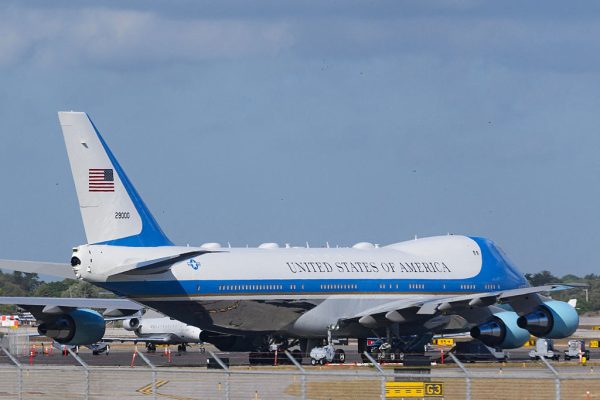
If the president is on a civilian aircraft instead of a military one, the plane is called “Executive One,” not Air Force One. In practice, however, the two dedicated Boeing 747-200B planes commonly used by the president have become the permanent icons of Air Force One. Even when the president is not aboard, these planes are referred to as such.
Success
You are now signed up for our newsletter
Success
Check your email to complete sign up
‘Air Force Two’
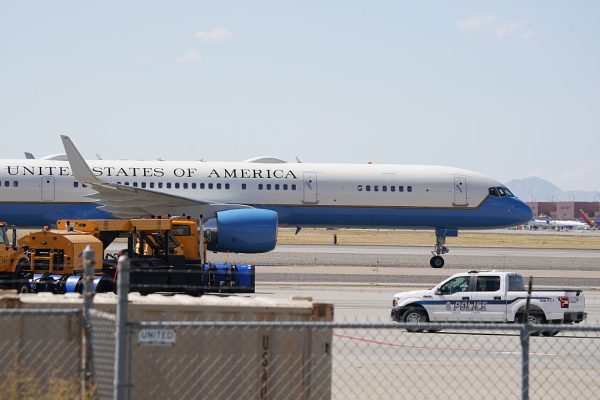
Similarly, “Air Force Two” is the call sign for the vice president’s plane, usually a Boeing C-32. For safety reasons, the president and vice president do not travel on the same aircraft, ensuring the nation’s two top leaders are not at risk on a single flight.
The history of presidential air travel dates back to the early 20th century. In 1910, Theodore Roosevelt experienced flying in St. Louis, becoming known as the first “flying president.” Later, Franklin Delano Roosevelt became the first sitting president to fly internationally during World War II. However, the official call sign “Air Force One” was established under Dwight D. Eisenhower in 1953.
That year, a military plane using the same tail number as the president’s aircraft caused a potential communication risk. To avoid confusion, the Air Force created a dedicated call sign for the presidential plane. The Cold War further emphasized this need; the world was under constant threat, and the military had to know at all times whether the president was on board.
Eisenhower’s plane then, a Lockheed VC-121 “Starliner,” was far less sophisticated than today’s Air Force One. It seated about 16 people and included a small office and bedroom, but it was nothing like the modern “flying White House.”
Today’s Air Force One is a three-deck plane weighing about 800,000 pounds, with roughly 4,000 square feet of interior space. It includes large offices, conference rooms, private quarters, and a conference area dubbed the “flying Oval Office.” The president can conduct meetings, sign documents, and issue orders mid-flight.
The plane also features a medical suite with surgical capabilities and a flight doctor on every mission. It can carry up to 2,000 pounds of medical supplies and accommodate roughly 100 people. If the White House is considered the nation’s brain, Air Force One is a backup brain in the sky.
The aircraft is equipped with advanced electronics, television, phones, and encrypted systems so that the president can maintain communication even during crises. Systems are hardened against EMPs and cyberattacks. While specifics remain classified, the White House states that even at tens of thousands of feet in the air, the president retains the ability to respond to attacks on the United States. In short, the president is never “out of reach” in flight.
In-flight refueling
Air Force One also has in-flight refueling capability. A tanker plane can rendezvous and refuel it midair, allowing indefinite flight if necessary. While this feature has rarely been used, it remains a critical safety measure.
There is also a more fortified “doomsday plane.” If the 747 is the president’s flying office, the Boeing E-4 is a flying bunker for catastrophic scenarios. Built in the 1970s, four E-4s were designed to protect the president and government leadership in case of attacks. These planes are equipped with radiation shielding, defense systems, and communications satellites, maintaining command and control globally.
Typically, the E-4 is used by the Secretary of Defense or other top officials when the president is not aboard. A typical presidential plane can carry about 76 passengers, including the president, staff, press, medical personnel, and special guests. The president travels on a dedicated plane, while journalists may occasionally report from the cabin with costs reimbursed by the government.
Air Force One cruises at about 600 miles per hour, comparable to a Boeing 747. Its size and weight make it a significant engineering achievement. Some discussions have considered supersonic options, but for the president, speed is less important than reliability and security.
Ready to go at a moments notice
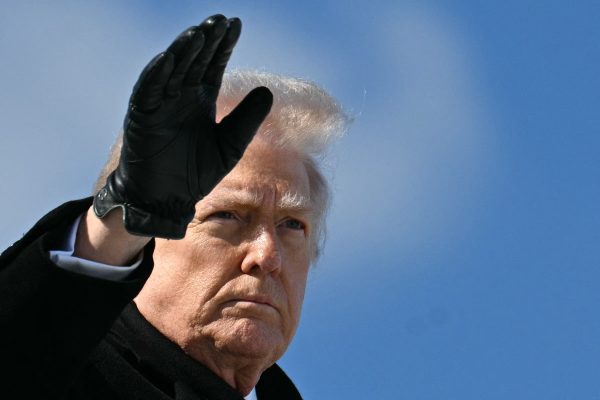
Air Force One does not remain parked at airports. It must be able to take off at any moment to avoid delays in emergencies. That’s why the president is often seen waving from the plane while it’s on the tarmac. It is typically stationed at Joint Base Andrews, a military base near Washington, D.C.
According to Freedom of Information Act disclosures, during one trip in October 2014, Air Force One’s operating costs exceeded $200,000 per hour, including fuel, maintenance, and flight expenses. Fuel alone—over 53,600 gallons—accounts for a significant portion. Transport to and from the plane via cars or helicopters is additional.
The current two Air Force One planes have been in service since the George H.W. Bush administration in the 1990s. The U.S. government contracted Boeing for two 747-8s (VC-25B), with delivery now expected around 2027 due to production delays. These planes do not support midair refueling.
When all details are considered, Air Force One is less about luxury and more about design and functionality: ensuring that the president can remain mobile, secure, and capable of decision-making under any circumstance.