On March 18, U.S. Representative Derek Tran (California’s 45th District), together with Representatives Don Bacon, Marilyn Strickland, and Pat Harrigan, formally introduced the Combating Chinese Communist Party Influence Act. The bill aims to comprehensively expose and counter the Chinese Communist Party’s (CCP) expanding global malign influence operations in order to safeguard the national security of the United States and its allies.
According to the disclosed details of the legislation, the bill directs the Director of National Intelligence (DNI), in coordination with other leaders of the U.S. intelligence community and through the National Intelligence Council, to produce a comprehensive Intelligence Community Assessment (ICA) on the CCP’s overseas “malign influence activities” over the three-year period beginning Jan. 1, 2023.
The bill outlines key areas of focus and requirements for the assessment:
- Four major strategic regions: A thorough investigation of CCP interference activities in critical regions, including the Indo-Pacific, Africa, Latin America, and Europe—particularly actions that expand influence at the expense of the United States and its allies.
- Financial systems and alliances: An evaluation of how CCP activities manipulate and impact global and regional financial systems, assess damage to U.S. alliances, and influence international perceptions of the United States.
- Deadline and transparency: The DNI must submit the final report to relevant congressional committees (including intelligence, armed services, and foreign relations committees) within 180 days of the bill’s enactment. To ensure public transparency, the main report must be released in unclassified form, with a classified annex permitted to protect sensitive sources.
Representative Derek Tran stated: “To effectively respond to the threat posed by the CCP, our national security officials must have access to the best intelligence. The Combating Chinese Communist Party Influence Act will ensure that our intelligence officers and policymakers have a clear, evidence-based global picture. I am proud to lead this bipartisan group in limiting the CCP’s global influence.”
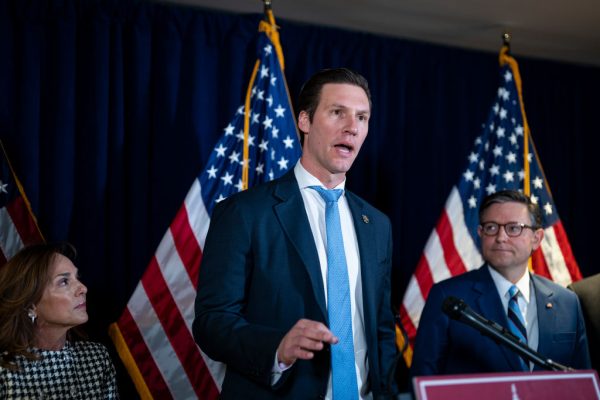
Other co-sponsors also voiced strong support. Representative Pat Harrigan said: “The CCP is waging a quiet war of influence against the United States. From the Indo-Pacific to Latin America, it is systematically undermining our alliances and manipulating financial systems. This bill sets a 180-day deadline that will force the intelligence community to lift the veil, allowing Congress to take countermeasures with a full understanding of the situation.”
Success
You are now signed up for our newsletter
Success
Check your email to complete sign up
Representative Don Bacon, citing his own experience with CCP-linked hacking of his email, emphasized the urgency of the bill, stating that policymakers urgently need a coordinated intelligence assessment to identify and respond to cyberattacks and disinformation.
Representative Marilyn Strickland reiterated concerns about the CCP’s ongoing erosion of democratic systems worldwide, urging Congress to clearly recognize its influence and act swiftly.
As the CCP continues to pressure Taiwan and expand military and trade ties in regions such as Latin America, the introduction of this bipartisan bill marks a more binding step by the U.S. Congress toward systematically assessing and countering the CCP’s global expansion.
Analysts note that the core of the bill lies in establishing a structured intelligence analysis framework, enabling the U.S. government to more clearly identify and respond to foreign influence operations, thereby strengthening national security defenses.
Additionally, the legislation reflects a broader shift in U.S. national security strategy—bringing “non-traditional threats” such as information warfare, economic infiltration, and political influence into the central security framework.
Notably, the bill is backed by lawmakers from both parties, indicating a growing consensus within Congress on China policy and national security issues.
The bill has now been formally submitted to the relevant congressional committees for further consideration.
By Tian Jingxin