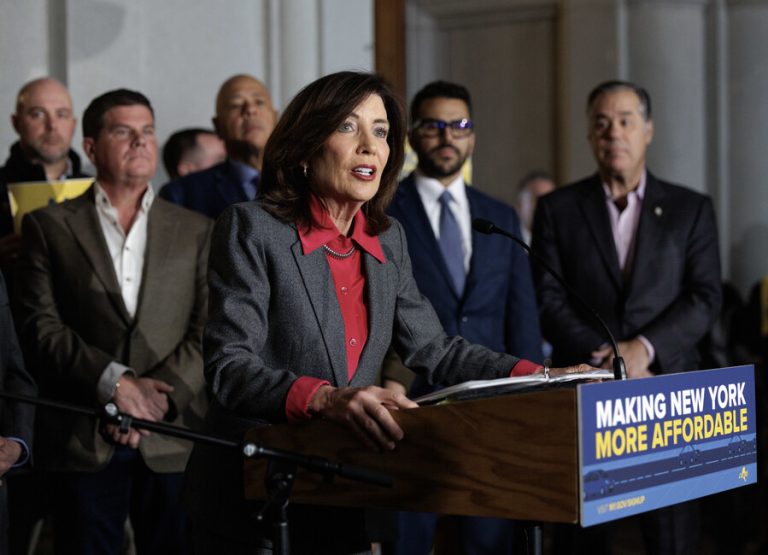
New York Governor Kathy Hochul recently unveiled a comprehensive reform plan aimed at combating auto insurance fraud and curbing abusive personal injury lawsuits. Upon its announcement, the plan immediately received strong endorsements from core law enforcement and first-responder unions, including the New York City Police and Fire Departments, but it also sparked fierce opposition from the well-funded and politically connected Trial Lawyers Lobby.
This policy battle—between “lowering premiums” and “protecting litigation profits”—is quickly becoming the most contentious legislative showdown of the year in New York’s state capital, Albany.
High auto insurance rates have long been a heavy financial burden for New York’s working-class families. According to the latest statistics, the average annual auto insurance premium for New York drivers has soared to approximately $4,000, some $1,500 above the national average.
Multiple policy analysts and insurance industry representatives have pointed out that the primary driver of these exorbitant premiums is not merely traffic accidents in densely populated areas, but the increasingly prevalent “staged accident” insurance fraud and the resulting abusive litigation.

Systemic problems
To address this systemic problem, Governor Hochul has formally introduced an auto insurance reform plan, with the core goal of fundamentally lowering premiums by strictly punishing fraud and limiting unreasonable claims. Explaining her policy motivation, Hochul bluntly noted that insurance companies use ubiquitous fraud and “runaway litigation costs” as an excuse to arbitrarily inflate prices.
Success
You are now signed up for our newsletter
Success
Check your email to complete sign up
Hochul’s reform proposal includes several strict legal measures. First, the plan would impose strict compensation caps on drivers committing criminal acts at the time of an accident, clearly limiting their ability to claim large, highly subjective civil damages such as “pain and suffering.” Second, the new legislation would grant local prosecutors and law enforcement greater judicial authority, ensuring they can pursue criminal charges not only against drivers staging accidents but also against the key organizers behind organized “staged accident” networks. Preliminary state government estimates suggest that if the plan passes the legislature and is implemented, auto insurance rates for New York drivers could drop by 15 percent to 20 percent, providing substantial financial relief to millions of families burdened by high living costs.
Hochul’s reform roadmap quickly gained support from New York City’s two largest disciplined services unions—the Police Benevolent Association (PBA), representing the NYPD, and the United Firefighters Association (UFA). These organizations represent tens of thousands of first responders who rely on personal vehicles for long commutes.
Patrick Hendry, president of the PBA, and Andrew Ansbro, president of the UFA, both publicly expressed support for the governor’s legislative initiative. They noted that officers and firefighters often work shifts across multiple districts, making private vehicle commuting unavoidable, and therefore the uncontrolled rise in insurance premiums hits them hard. In a joint statement, union leaders emphasized that high premiums severely impact their members’ quality of life and expressed support for Hochul’s anti-fraud efforts because they would help “make New York truly affordable.”
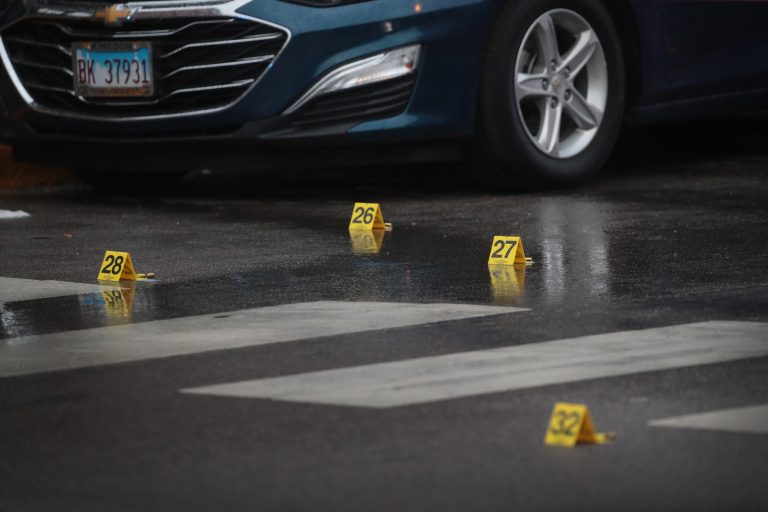
Frontline law enforcement personnel have deep insight into how insurance fraud operates. Under New York state law, fraud rings often employ individuals to deliberately stage minor collisions, then quickly collude with specific informal clinics, therapists, and personal injury lawyers to fabricate medical records and extract maximum insurance payouts. These inflated fraudulent claims ultimately drive up premiums, which are paid by law-abiding drivers across the state.

A formidable political challenge
However, despite the reform plan enjoying strong support from law enforcement and ordinary drivers, Hochul faces a formidable political challenge. Standing in the way is New York’s well-funded and politically influential special interest group—the Trial Lawyers Lobby.
The trial lawyer community has long reaped enormous profits from personal injury litigation. According to a litigation reform advocacy group, the New York trial lawyer community recently spent as much as $179 million on advertising and media marketing. In response to Hochul’s attempts to reduce civil claim limits and tighten litigation thresholds, the lawyer lobby has launched a vigorous counterattack, placing both sides on a potential “crash course” within the legislative agenda.
The lobbying group’s significant influence in the state legislature is largely due to its deep-rooted political connections. Reports indicate that the core of this “heavyweight” interest group’s lobbying network includes a former college roommate and long-term business partner of New York State Assembly Speaker Carl Heastie, as well as a direct relative of a current state senator from Queens. These political ties give the lawyer lobby considerable leverage in blocking any reform that could reduce its litigation profits.
In its fierce opposition to the governor’s proposal, trial lawyer representatives argue that capping damages, including “pain and suffering,” effectively favors large insurance companies and deprives legitimate accident victims of fair compensation. They claim that rising premiums result from insurance companies chasing excessive profits, not from lawyers advocating for victims.
In response, pro-reform business groups and consumer watchdogs have countered relentlessly, pointing out that it is precisely these heavily marketed “advertising lawyers” who encourage excessive lawsuits, earning New York a reputation as a “judicial hellhole.” Endless litigation drives up systemic costs, ultimately pushing premiums beyond what ordinary citizens can afford.
In this rapidly intensifying struggle, Governor Hochul and the law enforcement unions are attempting to leverage public dissatisfaction with inflation and high living costs to drive reform from the grassroots. Yet the well-funded, politically connected lawyer lobby will undoubtedly use its enormous leverage to try to stall or significantly dilute key provisions of the proposal. Political analysts note that this auto insurance reform battle is not just a policy debate—it is a stress test of New York’s political power structure. Regardless of how the bill ultimately passes, its outcome will directly affect the finances of millions of New York drivers and profoundly influence the state’s civil litigation landscape.
By Tian Jingxin