For Meredith Kyer, caregiving has been a lifelong journey shaped by love, persistence and advocacy. She is the mother of three daughters, including 24-year-old Alexis, who is autistic and epileptic. Over the years, Meredith has balanced raising her children, building a blended family, and advocating for inclusion and dignity for her daughter.
“Overall, she’s a good kid,” Meredith said of Alexis. “I’m very blessed to have my three girls.”
Her family life has gone through transitions, including separation from Alexis’ father and later building a new partnership with her fiancé of seven years, whom Alexis calls “Dad.” Together, their blended household includes six children and four grandchildren.
Alongside parenting, Meredith has worked in caregiving roles for years, including as a home health aide and ComHab worker. She has also worked at facilities such as Honor Shelter in Middletown, Letchworth Village, and Helen Hayes Hospital.
Recognizing Alexis’ needs
Meredith first noticed developmental differences when Alexis was very young. Compared to her siblings, Alexis was not speaking or developing language in the same way.
Success
You are now signed up for our newsletter
Success
Check your email to complete sign up
“She wouldn’t talk,” Meredith said. “We barely got anything out. Sometimes now we’ll get a couple words, but never a sentence.”
After evaluations, Alexis was diagnosed with autism and other challenges. Meredith recalls receiving a bleak prognosis from medical professionals, but she refused to accept limits placed on her daughter.
“They were like, ‘there’s no hope, she’ll never do anything,’” she said. “And we never think like that.”
Instead, Meredith focused on therapy, speech support, education and activities designed to help Alexis engage with the world at her own pace. “She’s a beautiful young lady who is growing and developing,” she said. “She’s just not on the same goals as the rest of the children.”
Seeing the person beyond the diagnosis
One of Meredith’s ongoing challenges has been helping others see Alexis as she sees her.
“Getting people to see her the same way I see her,” she said, remains one of the hardest parts.
“She’s got a beautiful heart, a beautiful soul,” Meredith added. “She gets angry, she gets frustrated, just like everybody does. She just has a hard time expressing it.”
For Meredith, autism is only one part of who Alexis is. She emphasizes her daughter’s emotions, personality and desire to belong. “I love my kids to the ends,” she said. “It doesn’t matter what’s wrong with them. I’ve always stood for them.”

Celebrating milestones & giving back
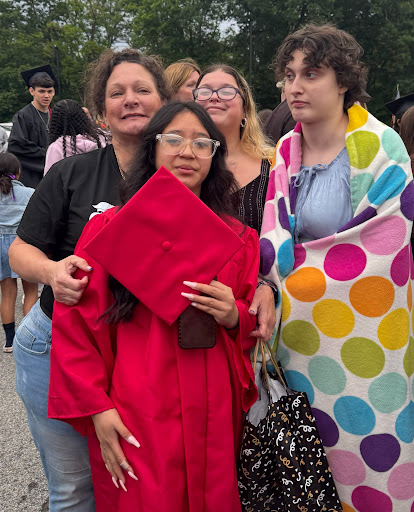
Despite challenges, Meredith Kyer finds deep joy in Alexis’ milestones, especially her graduation, when Alexis walked across the stage with her peers.
“She got to graduate and walk across the stage with all the regular kids,” Meredith said. “She’s gotten so many awards.”
She also cherishes family memories like Alexis’ first concert, a long-awaited trip to Walt Disney World, and moments like Alexis dressing as Jessie from Toy Story.
“It took me like 10 years to be able to afford to take her, and I did,” she said. “She was just so happy.”
These experiences are deeply tied to Meredith’s caregiving philosophy, shaped by her own childhood in a group home. It strengthened her commitment to supporting other families and advocating for inclusion.
“I realized that there’s so many other kids that need a good life,” she said. “Sometimes they think kids are disposable.”
For Meredith, it all comes back to one focus: “It’s not about me. It’s about my kids, and that they turn out to be good human beings.”
READ MORE:
- Caregiver Collective: Crystal Covington Helps Families Move Beyond Survival Mode
- David Sirota Uses Technology to Make the World More Accessible
- Finding Inclusion Through Understanding: Brett Anthony’s Journey with Autism and Advocacy
Inclusion, advocacy, and unconditional support
Meredith emphasizes the importance of programs like self-direction, which she says can greatly improve quality of life. “Self-direction is huge,” she said. “I wish more people knew about it.”
She also values community efforts like the Infinite Heart Initiative, which create inclusive spaces where individuals with special needs can fully participate in everyday life. “It just makes them feel like they’re part of the everyday world,” she said. “Instead of being excluded, they’re included.”
To other caregivers, her message is simple: keep advocating. “Don’t let anybody tell you your child can’t do,” she said. “They’ll always say they can’t.”
For Meredith, caregiving is rooted in love and acceptance. “It’s allowing them to be themselves and just supporting it,” she said.