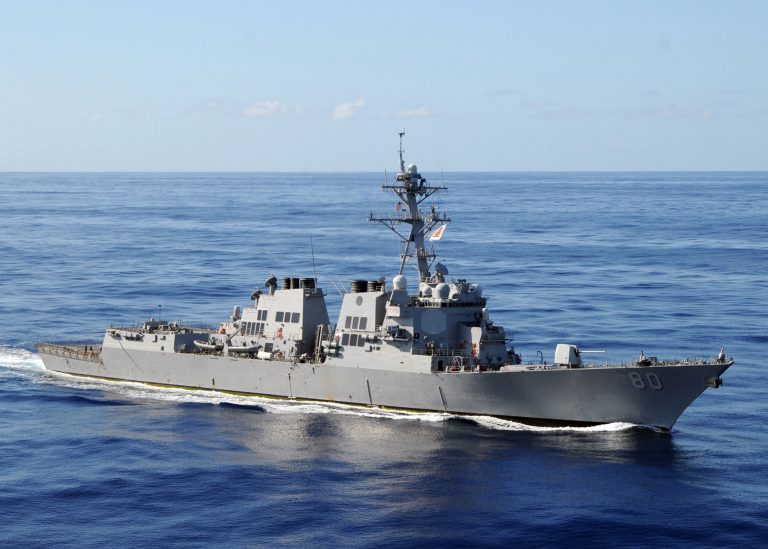
The US-Israeli military campaign against Iran, Operation Epic Fury, has entered its twentieth day. American AI targeting systems have dismantled the Islamic Revolutionary Guard Corps’ distributed defense network province by province, killing multiple senior Iranian leaders and exposing CCP-built radar, missile, and drone systems as combat failures. Beijing has reportedly begun purging hundreds of its own defense scientists in response.
Operation Epic Fury has systematically eliminated Iran’s most powerful figures. Ali Larijani, widely considered the real power behind Supreme Leader Ali Khamenei, was killed in airstrikes on the night of March 16-17, as publicly confirmed by Israeli Defense Minister Katz. Gholamreza Soleimani, the commander of Iran’s Basij militia, a paramilitary force used to suppress domestic protests, was killed in the same operation. Soleimani bore direct responsibility for violence against Iranian civilians during previous waves of unrest.
Intelligence Minister Ismail Khatib followed almost immediately. Khatib ran Iran’s domestic repression apparatus, coordinated the regime’s global intelligence operations, and played a central role in the current conflict.
Katz stated that he and Prime Minister Netanyahu had jointly authorized the Israeli military to strike any designated Iranian senior official without requiring additional case-by-case approval, provided intelligence was confirmed and preparations were complete.
Netanyahu framed the campaign in blunt terms: “We are dismantling the Iranian regime and giving the Iranian people the opportunity to finish it off.”
Success
You are now signed up for our newsletter
Success
Check your email to complete sign up
Basij militia members are refusing to serve as fear spreads through Iran’s security forces
Iran’s remaining senior officials are fewer in number and increasingly terrified. That fear has spread rapidly through the regime’s military and paramilitary organizations.
Multiple car-ramming attacks have struck Basij militia checkpoints inside Iran. Growing numbers of militia members are refusing to report for duty. In one incident in Tehran, civilians played a recording of a drone’s buzzing sound, which was enough to scatter Basij guards from their posts. Some militia members who previously helped suppress Iranian protesters have publicly raised white flags.
Eyal Hulata, a former Israeli National Security Advisor, told media that large numbers of ordinary Iranians are cooperating with Israel. These are opponents of the current regime whose friends and relatives were crushed during protests two months earlier. Hulata explained that Iranian citizens understand the significance of this moment and have been providing intelligence at unprecedented levels: officials’ movements, hiding locations, daily routines.
Israeli and American intelligence agencies verify all such information before acting. “We don’t bomb without basis. We act on real-time leads, and the results speak for themselves,” Hulata said.
US Treasury Secretary Bessent recently confirmed that the Iranian regime is collapsing from within, calling this a statement of fact rather than diplomatic rhetoric. Washington has identified all secret accounts held by Iran’s senior leadership, and their funds can be frozen instantly. Defections have even begun inside Tehran’s Finance Ministry.

Mossad planted sleeper agents in Iran decades ago
With Khamenei’s death now confirmed, the scale of Mossad’s penetration of Iran has moved well beyond rumor. Declassified materials and media reporting following last year’s “Twelve-Day War” revealed that Israeli intelligence possessed the precise addresses, underground bunker locations, and personal phone numbers of Khamenei and other top leaders. Targeting at that level of precision would be nearly impossible without extremely high-ranking insiders providing real-time location data.
Mossad’s operational model in Iran combines three layers: high-level penetration agents, locally recruited resistance operatives, and advanced remote surveillance technology. Together, these render virtually all of Iran’s defenses transparent.
The roots of this intelligence network extend back decades. During the Pahlavi dynasty, when Israel and Iran were allies, Israeli intelligence trained and cultivated mid-level Iranian military and intelligence officers. When the 1979 Islamic Revolution swept the country, these Israeli-trained personnel were not all purged. Some became deep-cover sleeper agents who remained dormant for twenty years or more before activation. By the time they were activated, several had risen to senior positions within the Iranian establishment. This long-term infiltration is a major factor behind Mossad’s operational success.
Iran built a distributed defense system to survive decapitation, but It didn’t work
Iranian military planners drew hard lessons from the 1991 Gulf War and the 2003 invasion of Iraq. Both conflicts demonstrated that conventional confrontation with the United States was virtually unwinnable and that leadership decapitation could cause an entire defense system to collapse. Beginning in the 2000s, the Islamic Revolutionary Guard Corps gradually implemented what it called “Mosaic Defense.”
The system reorganized IRGC ground forces into 31 provincial command units, one for each of Iran’s provinces. Each unit received relatively autonomous command authority, its own ammunition reserves, logistics chains, missile and drone launch capabilities, and in some cases naval and air defense assets. Local commanders could fight independently based on pre-established guidelines if central communications were severed or senior leadership was eliminated. The Basij militia was integrated as a supplementary force, creating a structure where every province functioned as one tile in the mosaic.
The strategic logic was survival through fragmentation. Even if the Supreme Leader, the General Staff, and Tehran’s command centers were all destroyed, Iran’s armed forces could theoretically continue resisting in a decentralized, guerrilla-style mode, dragging any attacker into a costly war of attrition.
Iran’s foreign minister publicly invoked this doctrine during the current conflict. He insisted that bombing the capital would not affect operational capability and that the mosaic defense structure meant Iran would decide when the war ended. Events have proved him wrong.
Palantir’s Maven AI cut Iran targeting staff from 2,000 to 20
Dismantling Iran’s distributed defense network province by province using conventional military tactics would have been a slow, grinding process. The US military used an entirely different approach, powered by artificial intelligence.
Last year, the Department of Defense signed a $480 million, five-year contract with Palantir Technologies for its Mission Command System (MSS), a data integration platform that consolidates streams from all service branches and joint command-and-control systems into a shared, real-time synchronized battlefield picture. The department later expanded the contract to nearly $1.3 billion through 2029 to meet growing demand.
At its AIPCON event during Operation Epic Fury, Palantir announced that its Maven Smart System had dramatically reduced the time needed to identify and strike battlefield targets during active conflict.
“We’ve gone from target identification to developing courses of action to executing on those targets, all through one system. That’s revolutionary,” said Cameron Stanley, the Department of Defense’s Chief Digital and Artificial Intelligence Officer.
Palantir architect Chad Wahlquist added that what previously required 2,000 intelligence personnel for targeting and intelligence collection now takes only 20 people, who accomplish the work faster and more efficiently. “This ability to do more with fewer resources helps warfighters keep everyone safe and complete the mission,” Wahlquist said.
Whether tracking senior Iranian leaders in real time or conducting precision strikes against armed forces distributed across 31 provinces, the AI-driven system has proved stable and effective under combat conditions.
America’s 9,000-satellite network makes Iranian concealment nearly impossible
The AI targeting system depends on real-time satellite communications. In the low-earth orbit satellite domain, the United States holds an unmatched advantage. SpaceX’s Starlink constellation alone operates more than 9,000 satellites at altitudes typically between 100 and 500 kilometers above the surface.
Satellite data throughput increases with proximity to the ground (it is inversely proportional to the square of altitude), making low-orbit satellites ideal for tracking moving targets. Traditional GPS satellites in medium and high orbits perform adequately against fixed positions but struggle with mobile ones. That gap is precisely the strength of low-orbit systems.
America’s commercial low-orbit satellite networks, once repurposed for military use, operate at a scale and efficiency no other country can match. The US military also maintains its own dedicated military low-orbit satellite network, with SpaceX supporting daily operations.
Under this near-omnipresent surveillance blanket, supplemented by high-altitude reconnaissance aircraft when needed, the ability of Iranian forces, or the CCP and Russian military advisors behind them, to conceal their movements is extremely limited. The technological gap creates an absolute overmatch.
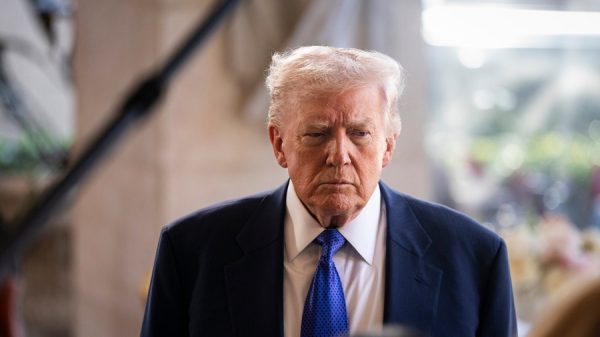
Trump fixed America’s energy weakness before attacking Venezuela and Iran
Trump’s strategic logic has become unmistakable across multiple theaters: shore up America’s own weaknesses while striking the opponent’s most exposed positions simultaneously.
On energy, Trump reversed the Biden administration’s green energy priorities and removed restrictions on oil, natural gas, and coal production immediately after taking office. The move served two purposes: creating conditions to reduce US inflation and laying the energy foundation for industries like artificial intelligence, which consume staggering amounts of power that renewable sources alone cannot sustain at current scale.
On Venezuela, the January capture of strongman Nicolás Maduro eliminated a key CCP foothold in South America. Venezuela possessed significant oil resources and had been exporting crude primarily to China under international sanctions while also keeping Cuba’s economy alive. The Smartmatic voting machine company, founded by Venezuelans, is also under scrutiny. General Flynn recently stated that Maduro is about to disclose critical information about election fraud software used in Venezuelan voting machines, and there are indications of deep Venezuelan involvement in the 2020 US election.
Capturing Maduro alive rather than killing him sent an unmistakable deterrence signal. The operation simultaneously brought Venezuelan oil resources under American influence, strengthened US energy infrastructure (Houston-area refineries that process heavy crude had switched to Canadian supplies after Venezuela’s cutoff and can now switch back), and expanded American leverage across Latin America.
The CCP’s “ghost fleet” oil supply chain, which shipped Venezuelan crude through Malaysian waters for reloading before delivery to China, was also severed. This cut Beijing’s gray-market energy supply and likely disrupted gray-market oil operations connected to the Xi family’s business interests.
Cuba, whose economy depends almost entirely on Venezuelan oil subsidies, cannot survive long once Venezuela changes hands. Every offensive move simultaneously strengthens the American position.
America’s remaining major vulnerability is missile defense, particularly against hypersonic weapons. This is precisely why Greenland matters so much to Trump’s defense planning.
CCP-built radar and missiles failed in combat causing Beijing to purge its scientists
Iran’s military-industrial system was built in large part with CCP assistance: missiles, radar, drones, and potentially nuclear weapons technology. Key missile components like high-strength carbon fiber can only be produced at scale by three countries (the United States, Japan, and China). Since Iran cannot obtain these materials from the US or Japan, the supply chain leads directly to Beijing. This dependency extends to system maintenance, operations, and personnel training.
The US-Israeli campaign against Iran therefore functions as a live-fire stress test of the CCP’s defense industrial output. The results have been devastating for Beijing. Every Iranian attack and defensive measure, most backed by CCP military theory and technology, has been met with effective American countermeasures.
Underground missile bases that heavy bunker-busting bombs cannot fully destroy can be neutralized by sealing their exits and rendering the entire system inoperable. Against drone threats, the US military has deployed combat-validated countermeasures including Anduril Industries’ Ghost-X reconnaissance drone, Project Eagle’s Merops drone interception system, and SpektreWorks’ LUCAS drone (modeled on Iran’s Shahed-136), all proved effective and inexpensive on Ukrainian battlefields.
For the Strait of Hormuz, Trump holds multiple options depending on international cooperation levels. Japanese Prime Minister Takaichi Sanae has expressed active support during her current US visit. Gulf states have issued furious condemnations of Iran’s indiscriminate attacks. European nations including the UK, France, Germany, Italy, and the Netherlands have released a joint statement condemning Iran’s blockade of the strait. Trump is using the Iran campaign to restructure America’s global military posture.
The amphibious assault group USS Tripoli has passed through the Strait of Malacca and is heading toward Iranian waters. The group functions as a light carrier equipped with over twenty vertical-takeoff fighters and helicopters, a large landing ship, a destroyer, and approximately 2,500 Marines. Seizing Kharg Island (Iran’s primary oil export terminal) or Qeshm Island in the Strait of Hormuz are both viable options the US can execute independently. White House Press Secretary Caroline Leavitt put it directly: “The military still has cards to play, and the Hormuz plan is moving forward.”

Beijing hauled away busloads of defense researchers after battlefield failures
Iran’s battlefield performance has sent shockwaves through Beijing. According to reports, Venezuela’s military was equipped with JY-27A/JYL-1 radar systems developed by CETC Institute 38 in Hefei (formally the East China Institute of Electronic Engineering), while Iran received YLC-8B/YLC-2V radar systems from CETC Institute 14 in Nanjing (the Nanjing Research Institute of Electronic Technology). Both radar systems performed poorly under combat conditions.
CCP military authorities have reportedly removed hundreds of researchers and financial personnel from both Institute 38 and Institute 14 for investigation, hauling them away by the busload.
Wu Manqing, a member of the Chinese Academy of Engineering who recently disappeared from public view, is the founding figure behind the CCP’s digital array radar program. After graduating with a master’s degree from the National University of Defense Technology in 1990, Wu spent his entire career at Institute 38. He rose from junior technician to deputy chief engineer, served as institute director from 2001 to 2012, and later became chief engineer and general manager of the entire CETC conglomerate, China’s largest state-owned defense electronics firm.
Yang Wei, another Academy of Engineering member who served as deputy general manager of Aviation Industry Corporation of China (AVIC), is the chief designer of the J-20 fifth-generation stealth fighter. Yang was an alternate member of the 19th CCP Central Committee, former vice chairman of the China Association for Science and Technology, and led the design of the J-10 and JF-17 fighters as well as next-generation fly-by-wire flight control systems. He has also been removed from public view.
At least 17 academicians have reportedly been purged in recent weeks. This wave of removals reveals that fraud and corruption within the CCP’s defense industry have been festering for years. A system riddled with corruption produces weapons that look impressive on paper and fail under pressure. When those weapons encountered the US military in actual combat, the failures became impossible to conceal. Xi Jinping, the CCP’s general secretary and China’s top leader, is reportedly furious. The regime’s entire defense credibility is at stake.
Trump delayed the Xi summit because the pressure campaign is still building
With the Iran campaign ongoing and CCP defense credibility collapsing, Trump’s decision to postpone a meeting with Xi Jinping follows logically.
The Office of the Director of National Intelligence just released its 2026 Annual Threat Assessment, which confirms China as America’s primary strategic competitor and challenger. The report places China alongside Russia, Iran, and North Korea as nations actively using diplomatic, economic, and military means to undermine American influence and power. The assessment amounts to an unwelcome signal delivered directly to Beijing.
Whether Xi Jinping and the CCP can absorb wave after wave of American strategic pressure without suffering structural collapse remains the central question of this era. The answer will unfold in the months ahead.
By Fang Yan, Fengyun Grand Chessboard