When Li Yunhai arrived at Houston’s George Bush Intercontinental Airport, he was preparing to leave the United States. Instead, federal agents stopped him at the security checkpoint.
Inside his phone and laptop, investigators found large volumes of unpublished cancer research data, including materials tied to projects funded by the U.S. National Institutes of Health and the Department of Defense. Prosecutors later said Li had downloaded roughly 90 gigabytes of proprietary research from the University of Texas MD Anderson Cancer Center, where he had been working on breast cancer studies and vaccine development.
Li told officials he intended to continue his research in China and believed he had the right to keep the data. Records showed he had signed a confidentiality agreement after joining the institution in 2022 under a J-1 exchange visa. Investigators also found that, despite denying foreign funding, he had received support from the National Natural Science Foundation of China and conducted research linked to a hospital affiliated with Chongqing Medical University.
He was convicted of attempting to steal trade secrets and sentenced to one year in prison. After completing his sentence, he is expected to be deported.
The case is one of several that have drawn attention from U.S. authorities, who in recent years have tightened scrutiny of Chinese nationals working or studying in sensitive fields. Visa reviews have become more restrictive, and some Chinese students have seen their visas revoked, particularly those with institutional ties to China or involvement in advanced research areas.
Success
You are now signed up for our newsletter
Success
Check your email to complete sign up
Shifting focuses
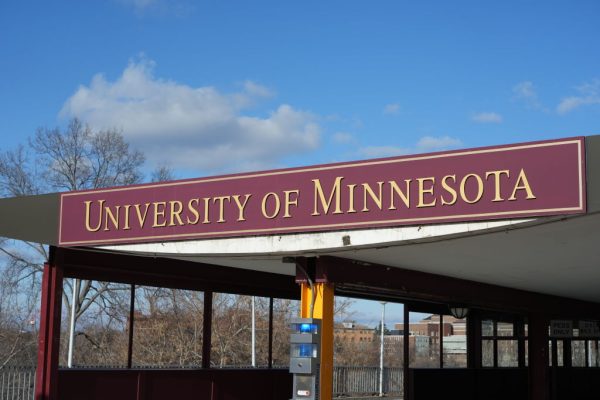
In January 2024, another case unfolded along the U.S. East Coast. Fengyun Shi, a graduate student at the University of Minnesota studying agricultural applications of artificial intelligence, traveled to Virginia during a break. Investigators said his focus shifted from crops to a major military-industrial site.
Using a drone, Shi captured images of the Newport News Shipyard, where U.S. aircraft carriers and nuclear submarines are built. A security guard reported the activity to the Naval Criminal Investigative Service. During one flight in poor weather, the drone became stuck in a nearby tree, drawing the attention of a local resident, who alerted authorities.
Shi later left the area without retrieving the drone and attempted to return to China on a one-way ticket. He was arrested in San Francisco. Federal investigators recovered images of the shipyard and facilities associated with BAE Systems, a defense contractor. Shi pleaded guilty to two misdemeanor counts under the Espionage Act and was sentenced to six months in prison, followed by one year of supervised release.
Feng Chongyi, a professor at the University of Technology Sydney, said the case raised questions about intent. A student researching agricultural disease detection had instead documented a sensitive military facility, he noted, suggesting that multiple explanations, including the possibility of an assigned task, should be considered.
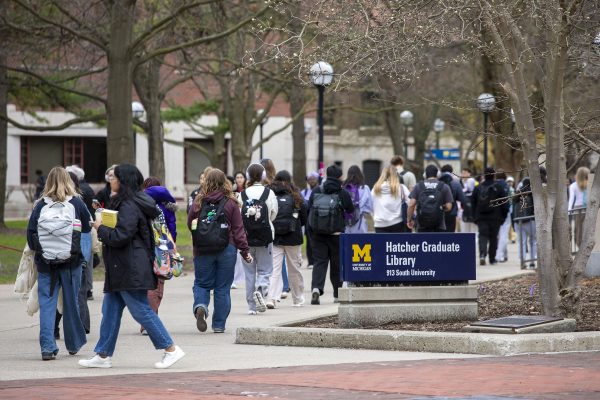
Another investigation announced in October 2024 involved five Chinese nationals who had studied at the University of Michigan. Prosecutors said the group entered a remote military site in Michigan during a large-scale summer exercise and later provided false statements.
According to investigators, the group had reserved a nearby motel in advance. One individual later told authorities the trip was intended for meteor watching. A search of his external hard drive revealed images of military vehicles taken the same day they encountered a National Guard officer.
All five have since graduated and left the United States.
Earlier incidents show a similar pattern. In 2020, two Chinese students, Wang Yuhao and Zhang Jielun, drove into the Naval Air Station Key West in Florida without authorization and photographed restricted areas. Investigators recovered images of military infrastructure, including weapons storage facilities.
Zhang was sentenced to 12 months in prison and Wang to nine months. Both were later deported and barred from reentering the United States.
Base was targeted before
The same base had been targeted before. In 2019, a Chinese national identified as Lyuyou Liao was arrested after entering the installation and photographing sensitive areas. Another individual, Zhao Qianli, had been convicted earlier that year for similar conduct.
Cedric Leighton, a retired U.S. Air Force intelligence colonel, said such incidents reflect ongoing efforts to gather information on U.S. military operations. He said Chinese actors use a mix of technical tools and human intelligence to monitor sensitive sites, including tracking aircraft activity near bases.
Beyond these individual cases, U.S. prosecutors have also pursued broader economic espionage investigations. Zhang Hao, a professor affiliated with Tianjin University, was arrested in 2015 and later convicted of conspiracy and economic espionage involving FBAR filter technology, a critical component in mobile communications and military systems.
According to court filings, Zhang and his associates obtained proprietary designs and technical data while working at U.S. companies, then collaborated with Chinese institutions to establish production capabilities in China. In 2020, he was sentenced to 18 months in prison and ordered to pay $477,000 in restitution.
A 2020 report by the Australian Strategic Policy Institute found that China had established at least 600 overseas talent recruitment stations. Among the most prominent is the Thousand Talents Plan, launched in 2008 to attract researchers working abroad in advanced fields.
Engineers familiar with Silicon Valley hiring practices say recruitment efforts often extend into professional networks and alumni associations, targeting individuals with technical expertise and Chinese backgrounds.
As these cases accumulate, their impact is extending beyond the courtroom. Chinese nationals continue to study and work in the United States, but access to certain research areas and career paths has become more constrained. In some sectors, concerns over national security have made it harder for individuals with Chinese ties to move into sensitive roles, even when they meet professional qualifications.
Editor’s Note:
This article is based on media reports, publicly available court records, and commentary from analysts and overseas media. Some details and motivations in individual cases have not been independently verified and are presented as reported.