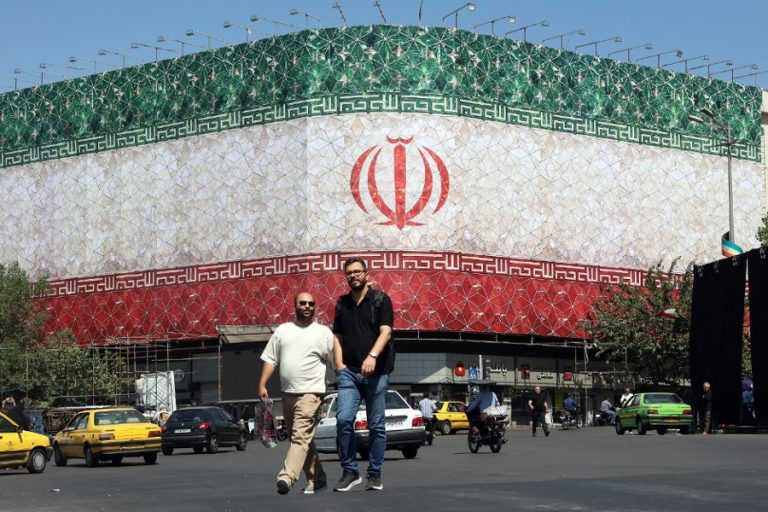
According to reports from the Associated Press and the New York Post, as the Middle East edges closer to full-scale conflict, a highly anticipated diplomatic effort has once again stalled. On Wednesday, March 25 the Iranian government issued a statement rejecting U.S. President Donald Trump’s proposed “15-Point Plan” aimed at achieving a permanent regional ceasefire, while also putting forward a series of highly challenging counter-demands.
Trump’s ‘15-Point Plan’
According to White House sources, Trump’s “15-Point Peace Plan” covers multiple sensitive areas, including nuclear disarmament, missile limitations, and a geopolitical map reshaping. Key elements of the plan include:
- Complete and permanent nuclear freeze: Iran would be required to permanently halt all uranium enrichment under unrestricted supervision by the International Atomic Energy Agency (IAEA) and hand over all existing stockpiles of highly enriched uranium.
- Dismantling missile programs: Iran must stop developing and testing any ballistic missiles capable of carrying nuclear warheads and destroy long-range strike weapons exceeding certain ranges.
- Cut support for the ‘Resistance Arc:’ Tehran would have to immediately cease financial and arms assistance to proxy groups such as Hamas, Hezbollah, and the Houthi movement.
- Recognize Israel’s right to exist: While not explicitly requiring formal diplomatic recognition, the plan demands Iran stop all hostile actions and inflammatory propaganda against Israel.
- Regional military transparency: Establish a U.S.-led monitoring mechanism to track Iran’s military deployments in the Persian Gulf in real time.
The Trump administration views this plan as the only path to “lasting peace,” promising phased lifting of all economic sanctions and hundreds of billions of dollars in economic aid if Iran accepts.
Iran’s rejection: sovereignty and geopolitical security
Iran’s Supreme Leader and Foreign Ministry responded that Trump’s plan completely ignores Iran’s core security concerns. A Foreign Ministry spokesperson said at a press conference: “This is an illegal document attempting to destroy Iran’s defensive capabilities without war.”
Iran’s main reasons for rejecting the plan focus on three points:
- The plan requires Iran to give up defensive missile capabilities, which in the current unstable regional security context equates to “disarming itself.”
- It interferes with Iran’s relationships with other sovereign states and allied organizations, violating international law.
- Iran doubts the Trump administration’s willingness to honor agreements, citing the 2018 U.S. unilateral withdrawal from the JCPOA as having completely destroyed trust between the two countries.
Success
You are now signed up for our newsletter
Success
Check your email to complete sign up
In response, Iran issued a counter-demand list:
- Full compensation: Demand at least $1 trillion in compensation for economic losses caused by years of U.S. sanctions.
- U.S. military withdrawal: Full withdrawal of U.S. forces from Iraq and Syria, with a promise not to establish new bases in the region.
- Unconditional asset unfreezing: Immediate unfreezing of tens of billions of dollars in Iranian assets worldwide, without any political conditions.
- Mutual security guarantees: Demand the U.S. stop provocative navigation in the Persian Gulf and reduce its troop presence in the region.
Regional context: a tense standoff
While diplomatic rhetoric escalates, “maximum pressure” and “strong countermeasures” are unfolding militarily. The U.S. has deployed dual carrier strike groups to the Persian Gulf and reinforced air forces in Qatar and Bahrain. The Trump administration has made clear that if diplomacy fails, Washington will not rule out using “all necessary means” to prevent Iran from obtaining nuclear weapons or disrupting regional order.
Currently, the situation is at a critical juncture. On one hand, the window for diplomatic negotiation is not fully closed, leaving room to ease tensions through talks; on the other hand, with military deployments and hardline statements escalating, the risk of broader conflict is rising. Observers widely believe the coming days will be a key period for assessing the trajectory of the crisis. If differences cannot be narrowed in the short term, the standoff could escalate into a more destructive phase.
Regional allies such as Israel and Saudi Arabia are closely monitoring developments. Israeli military officials have repeatedly hinted that, should U.S.-Iran talks ultimately fail, Israel may independently carry out preemptive strikes on Iranian nuclear facilities.
By Tian Jingxin