As U.S. and Israeli operations against Iran enter their fourth week, the United States is accelerating troop deployments to the Middle East while evaluating a potential seizure of Iran’s oil hub, Kharg Island. Success would give the U.S. control over about 90 percent of Iran’s crude exports and strengthen its bargaining position, but it would also put U.S. forces in serious danger, facing casualties and the pressure of long-term occupation.
According to the Liberty Times, citing the Financial Times on March 25, U.S. military planners may use a low-altitude insertion method, deploying troops to Kharg Island via helicopters and tilt-rotor aircraft, then quickly dispersing to secure the surrounding oil and gas facilities as cover.
This deployment would put Iran in a dilemma: attacking could destroy its own energy lifeline, while restraint might allow the island to fall under foreign control.
CNN24 reports that the Pentagon plans to send about 1,000 soldiers from the 82nd Airborne Division to the Middle East within days, with the first troops potentially acting within a week, and the rest deployed as the situation develops.
Meanwhile, two U.S. Marine Expeditionary Units are en route to the region: the 31st MEU aboard the amphibious assault ship Tripoli departed Japan and is expected to arrive by the weekend; the 11th MEU, traveling with the Essex Amphibious Ready Group from California, will take three to four weeks to reach its destination.
Success
You are now signed up for our newsletter
Success
Check your email to complete sign up
The Essex is equipped with F-35 stealth fighters and V-22 Ospreys, capable of air assaults and amphibious landings, playing a key role in the operation.
Former Trump special envoy and retired U.S. Army Lieutenant General Keith Kellogg said on Fox & Friends on March 24: “I strongly support deploying ground forces… seizing Kharg Island and controlling the Strait of Hormuz would cut off Tehran’s ‘economic lifeline’ and ensure it can no longer hold the global economy hostage.”
Kellogg, who served last year as Trump’s envoy for Ukraine affairs and was formerly commander of the 82nd Airborne Division, advocates using troop deployments to control key Iranian islands and reduce Tehran’s grip on oil supplies. He specifically highlighted Kharg Island as a strategic Persian Gulf location and the lifeline of Iran’s oil exports.

Experts: seizing the island Is easier than holding it
Former U.S. Central Command intelligence director Karen Gibson said that, militarily, capturing Kharg Island is feasible, but the challenge lies in subsequent defense.
Once U.S. ground forces are deployed, protecting them becomes the top priority, potentially diverting forces originally intended for strikes on mainland Iran to island defense.
Kharg Island covers about 21 square kilometers and lies only 24 kilometers from the Iranian coast, fully within Iran’s fire coverage.
Former NATO Supreme Allied Commander in Europe James Stavridis believes that as long as the U.S. maintains air and naval superiority, the island could theoretically be held long-term, though casualties are likely unavoidable.
Analysts suggest the operation could proceed in two stages: first, precision strikes to destroy island defenses; second, airborne forces rapidly seize the island, followed by Marines taking over its defense and using the island’s flammable oil and gas facilities as a deterrent.
However, U.S. forces face multiple risks. Passing through the Strait of Hormuz exposes fleets to mines and shore-based fire; long-range deployment from the Arabian Sea could leave troops vulnerable to air defenses.
Another option would involve securing bases and airspace rights from Jordan or other Persian Gulf states, but this would require complex diplomacy. Without land-based support, resupply and troop movement would face serious challenges.
Iran could retaliate, driving oil prices up
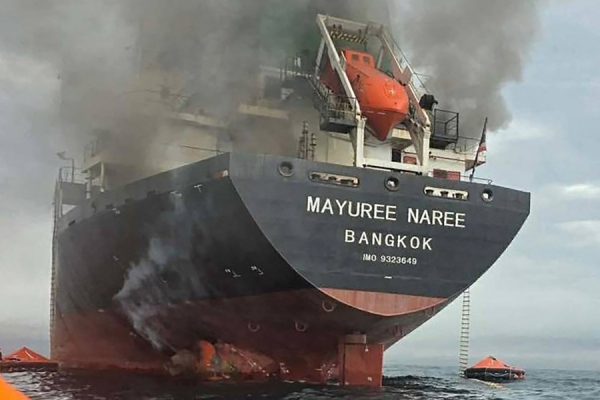
If Kharg Island is captured, Iran may adopt a “scorched-earth” approach, sabotaging oil and gas facilities to prevent U.S. seizure, and could block the Strait of Hormuz in retaliation, pushing global oil prices higher.
Even if the operation succeeds, whether the U.S. can leverage it for negotiations remains uncertain. Observers warn it could entangle America in a long, costly ground conflict in the Middle East.
Additionally, with the November midterm elections approaching, domestic support for such operations will be a critical factor the Trump administration must consider.
By Gao Yun