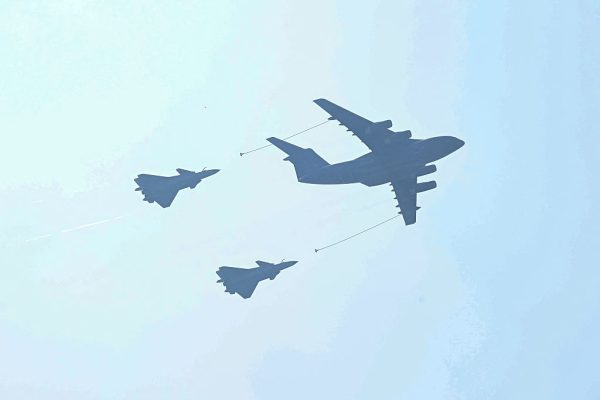
Recent changes to China’s official academic roster have drawn attention to Yang Wei, the chief designer of the J-20 fighter jet, after his name was removed from the Chinese Academy of Sciences list between March 17 and 18.
The update came without explanation. Within days, discussion spread across Chinese and overseas platforms, linking the move to a broader tightening of oversight in the defense sector.
On March 22, state media Xinhua reported that new rules governing the conduct of executives in state-owned enterprises had been issued by the General Office of the Chinese Communist Party Central Committee and the State Council, with instructions for nationwide implementation. The timing overlapped with Yang’s removal, and online commentary began connecting the two.
A post circulated on March 24 on the platform X, attributed to the account “Jingquan Political-Economic Commentary,” described an alleged investigation into Yang’s activities. The account cited multiple sources, claiming he had established a private company that used state-funded resources for research and development, then sold the resulting products back to state-owned aviation firms. It also alleged financial ties with a listed company that had come under scrutiny during a recent audit of the defense industry.
Alongside the personnel developments, longstanding questions about the J-20’s design resurfaced across Chinese internet platforms.
Success
You are now signed up for our newsletter
Success
Check your email to complete sign up
Articles on Sohu, NetEase, Zhihu, Sina, and Toutiao revisited earlier claims that the aircraft drew heavily on Russia’s MiG-1.44, a prototype that was never put into production. A March 2 report on Sohu cited Russian aviation specialist Yevgeny Fedosov, who pointed to similarities in the canard and wing configuration, arguing that the overlap was unlikely to be accidental and noting that China had purchased key components and technologies from Russia.

Earlier reporting has made similar claims. In July 2024, the Eurasian Daily cited Russian military experts who said the J-20 shares structural features with the MiG-1.44, including its canard-delta layout and V-shaped tail. One of the experts said the aircraft uses the AL-31F engine developed by Russia’s Salyut company, which China reportedly acquired for $500 million.
The same analysis raised concerns about performance. According to the expert, the canard design used in the MiG-1.44 carried inherent limitations that could affect stealth capability, and similar issues may be present in the J-20. He also said the aircraft’s radar cross-section is significantly larger than that of the U.S. F-22, questioning its classification as a stealth fighter.
In the period leading up to Yang’s reported troubles, some of these discussions appeared repeatedly across Chinese platforms, at times in articles that were later republished with revised content. In certain cases, language previously seen as supportive of official narratives was removed, drawing attention to the shift in tone.
Commentary from outside China has added further layers to the story.
U.S.-based commentator Li Muyang, speaking on his program, said Yang’s situation may be tied not only to financial issues but also to claims that the J-20 incorporates Russian technology, describing the aircraft as built on designs that had already been discarded.
More serious claims have circulated on social media. Canada-based Chinese dissident Sheng Xue wrote on X that, according to an unnamed source, senior authorities had instructed Yang to “end his own life” rather than face a formal investigation. The allegation has not been independently verified.
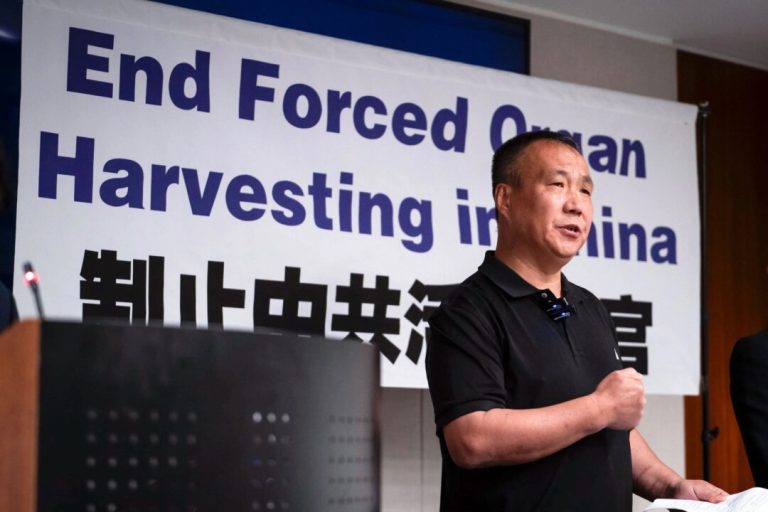
The same source described similar cases involving experts in fields such as artificial intelligence, semiconductors, aerospace, and biosecurity, who were said to have died without public legal proceedings, with official explanations citing illness or suicide.
According to the account, Yang oversaw projects involving hundreds of billions of yuan in annual funding. The post described a network of associates connected to those resources and claimed that refusal to comply with instructions could lead to consequences extending beyond the individual to family members and related circles.
At the same time, external developments have fed into the broader discussion.
Online commentary referenced events in Iran and the reported capture of Venezuelan President Nicolás Maduro, suggesting these developments had exposed weaknesses in systems linked to China’s defense industry.
On March 24, U.S. President Donald Trump spoke at the White House during the swearing-in ceremony of Homeland Security Secretary Markwayne Mullin. He said 101 missiles launched toward the USS Abraham Lincoln had all been intercepted, describing the outcome as a demonstration of U.S. military capability.
The remarks quickly drew responses online. Some users argued that the failed missile attack reflected not only on Iran but also on countries supplying its systems, noting that many of Iran’s defense technologies are believed to involve Chinese support. Others pointed to recent detentions of Chinese experts in radar, physics, and missile guidance systems as additional signs of internal pressure within China’s defense sector.