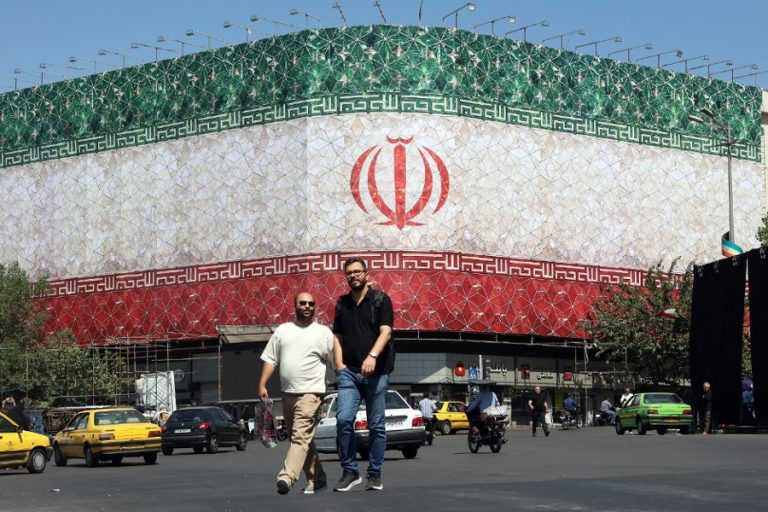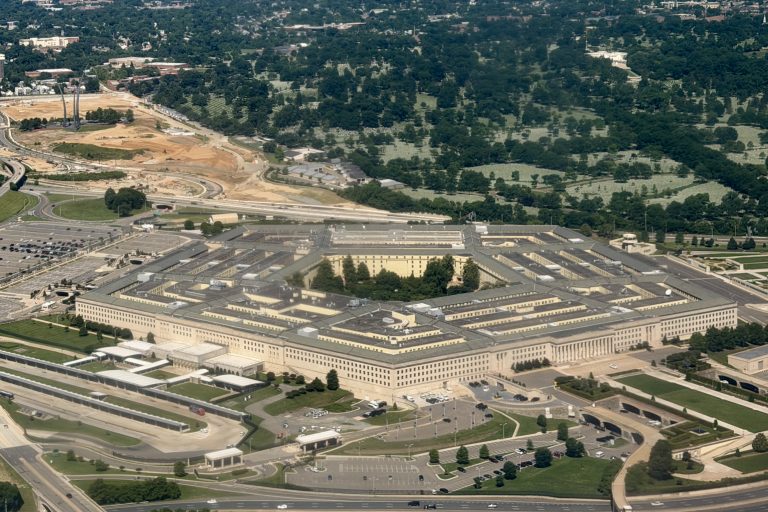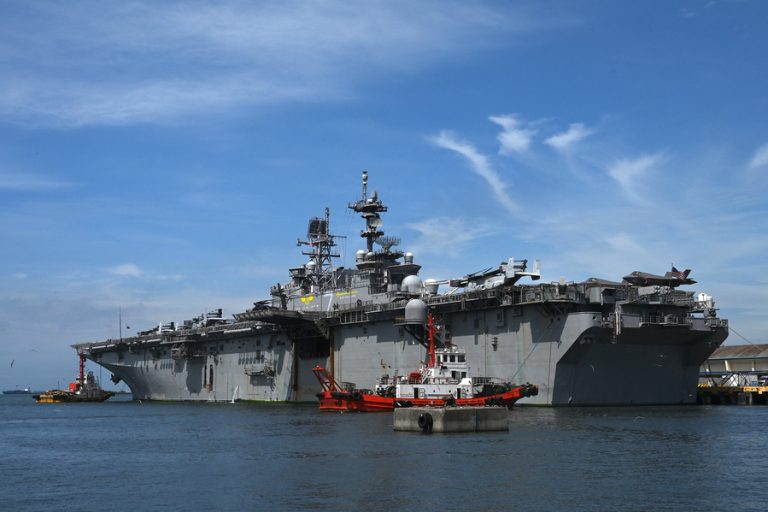
As the U.S.-Iran conflict continues to escalate, the United States is accelerating troop deployments to the Middle East. On Saturday, March 28 the U.S. Central Command (CENTCOM) issued a statement on X saying that the amphibious assault ship USS Tripoli, carrying approximately 2,500 Marines, has arrived in the Middle East.
The U.S. military stated that the USS Tripoli, serving as the flagship of the Amphibious Ready Group and the 31st Marine Expeditionary Unit, has entered CENTCOM’s area of responsibility. The ship is an America-class amphibious assault vessel capable of carrying F-35 stealth fighters, V-22 Osprey transport aircraft, and other types of aircraft, while also maintaining amphibious operational capabilities.
In addition to the USS Tripoli, the U.S. Navy’s USS Boxer amphibious assault ship and two other vessels, along with another Marine Expeditionary Unit, have departed from San Diego, California, en route to the Middle East.
In another post, CENTCOM stated that U.S. forces have so far struck more than 11,000 Iranian military targets and sunk over 150 Iranian vessels.
Operation Epic Fury was launched on Feb. 28, targeting the weakening of Iran’s nuclear and missile capabilities, the destruction of its terrorist networks, and the targeting of entities deemed an “imminent threat.” U.S. airstrikes are now entering their fifth week.
Success
You are now signed up for our newsletter
Success
Check your email to complete sign up
U.S. Secretary of State Marco Rubio previously said that the United States could achieve its objectives without deploying ground forces. However, he emphasized that President Donald Trump must be prepared for all contingencies, and current U.S. deployments are intended to provide “maximum flexibility” to respond to changing circumstances.

Additionally, the U.S. military has deployed a range of air, naval, and land-based forces, including B-1 bombers, F-35 stealth fighters, aircraft carriers, nuclear submarines, and amphibious assault ships. Land-based strike capabilities include the M-142 High Mobility Artillery Rocket System (HIMARS).
CENTCOM said that U.S. forces are currently focusing on striking Iran’s security institutions, prioritizing the elimination of targets identified as “imminent threats.”
This troop buildup comes after Iran attacked the Prince Sultan Air Base in Saudi Arabia, launching six ballistic missiles and 29 drones, injuring at least 10 U.S. personnel, two seriously, highlighting the rising risk of conflict spillover.
Although the U.S. continues to push for negotiations, the war has already had a noticeable impact on the global economy. International air transport has been disrupted, oil exports have been impeded, and fuel prices continue to rise. Iran’s control of the Strait of Hormuz, in particular, has nearly closed this critical energy corridor, further amplifying market volatility.
Meanwhile, the Iran-backed Houthi forces announced their entry into the conflict through missile attacks. Analysts suggest this move could further threaten global shipping, especially at the Bab el-Mandeb Strait in the Red Sea.
Experts from the International Crisis Group note that if the Houthis expand attacks on commercial vessels, oil prices will rise and the overall maritime security system will be affected.