Wu Faxian, former commander of the Chinese Communist Party’s air force, left behind a memoir that stands apart from most accounts written by disgraced officials. It contains omissions and self-justifications, but also preserves moments that rarely surfaced in public, drawn from what he personally saw, heard, and experienced.
One such moment centers on Tan Zhenlin, a senior Party leader, during the upheaval of early 1967. At a time when veteran officials were beginning to push back against the Cultural Revolution, Tan spoke with unusual emotion.
“I have never cried before,” he said. “Now I have cried three times. There is nowhere to cry. Thinking it over, I should not have joined the revolution so early, should not have lived to 65, and should not have followed Chairman Mao.”
The remark became known as the “three regrets.” It was not a theoretical critique. It was personal, direct, and, in the political climate of the time, dangerous.
Mao’s reply came soon after, delivered face to face. According to Wu’s account, it was sharp and dismissive. If Tan believed he should not have joined the Party, Mao said, then he could quit. If he thought he should not have taken part in the revolution, then he need not continue. If he regretted following Mao, then he could stop. As for living to 65, Mao added, that had already happened.

Success
You are now signed up for our newsletter
Success
Check your email to complete sign up
After that exchange, Tan’s position deteriorated. Internal criticism sessions continued in his home unit. While other senior figures were gradually brought back into political life, Tan remained sidelined and was excluded from key Party meetings.
The environment described in the memoir helps explain why such remarks were rare. In early 1962, at the “Seven Thousand Cadres Conference,” Liu Shaoqi, then China’s head of state, attempted to acknowledge that the famine following the Great Leap Forward was largely man-made. Mao rejected the characterization, insisting the overall situation remained positive. Officials quickly aligned themselves with Mao’s position.
Many in attendance had grievances but stayed silent. Some feared that speaking openly would implicate themselves, as they had carried out policies during the Great Leap Forward. Others remembered what had happened to Marshal Peng Dehuai, who had criticized Mao and was later purged. Even those who began to speak often withdrew their remarks, asking that they not be recorded.
Public expressions of loyalty took on a different meaning in that setting. Lin Biao, who delivered a speech praising Mao at the conference, later admitted privately that his words were not sincere but necessary. Mao, however, praised the speech and ordered it circulated.
The same pattern extended into the Cultural Revolution. Millions of Red Guards traveled across the country to gather in Beijing or at sites associated with the Party’s revolutionary history. In Jinggangshan, food shortages became severe enough that some students died of hunger. Zhou Enlai organized emergency measures, including airlifting food from major cities, to stabilize the situation.
The scale of these mobilizations placed heavy strain on transport, housing, and food supplies. Even then, Mao pressed for larger gatherings, calling for the number of participants to increase.
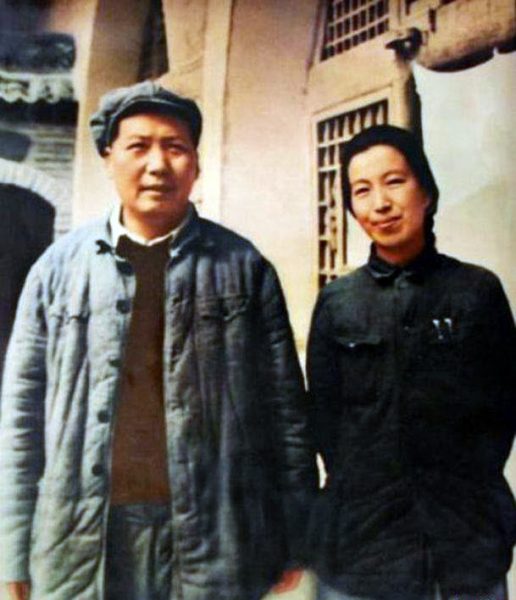
At the top of the Party, tensions were visible in other ways. Jiang Qing, Mao’s wife, took an increasingly assertive role in political meetings. In one instance recalled by Wu, she sharply criticized Zhou Enlai in front of others, asserting authority in policy matters. Zhou responded cautiously, avoiding direct confrontation.
Lin Biao, despite his public alignment with Mao, occasionally intervened when conflicts escalated. In a dispute involving Jiang Qing, he defended another senior figure, but did so carefully. Direct opposition to Jiang risked provoking Mao himself.
The memoir also traces a series of political purges during the period. Figures once promoted rapidly could be removed just as quickly. Wang Li, Guan Feng, and Qi Benyu rose to prominence and then fell from favor within a short span. Arrests often came without clear explanation at the time.
Before the 1971 Lin Biao incident, a network of central investigative teams had already been established, drawing hundreds of officials into prolonged inquiries. Meetings could run overnight, with participants expected to attend in full.
Responsibility for earlier political cases remained a point of contention. Decisions that appeared to come from lower-ranking officials often reflected directives from the top. Wu’s account raises questions about how blame was assigned after the fact.
By the end of the Cultural Revolution, none of the original members of the Cultural Revolution Group retained their positions. Those who had once stood at the center of power were removed one by one.
Against that backdrop, Tan Zhenlin’s outburst stands out less as an isolated moment and more as a rare instance in which private frustration surfaced in public view. The response it drew, immediate and unforgiving, reflected the boundaries that defined political life at the time.
By Pei Yiran