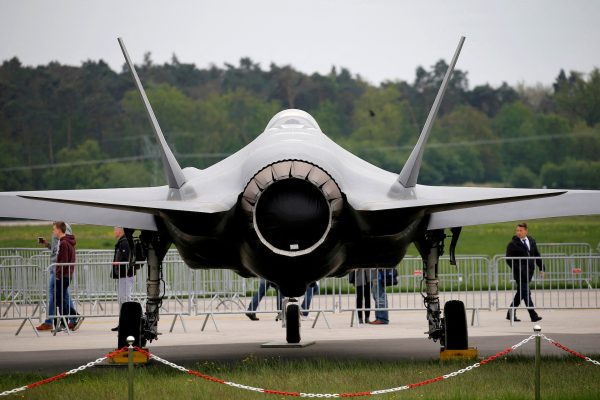
On March 14, 2026, a Chinese engineer posting under the handle “Tiger Talks the World” published a detailed instructional video explaining how Iran could destroy American F-35 stealth fighters using low-cost systems. The video carried Persian-language subtitles and accumulated tens of millions of views. Five days later, Iranian authorities announced they had downed a U.S. F-35. Military Times and CNN reported that an F-35 had sustained damage under circumstances consistent with Iranian fire and made an emergency landing. The U.S. government did not publicly confirm the aircraft was shot down, and an investigation remained ongoing.
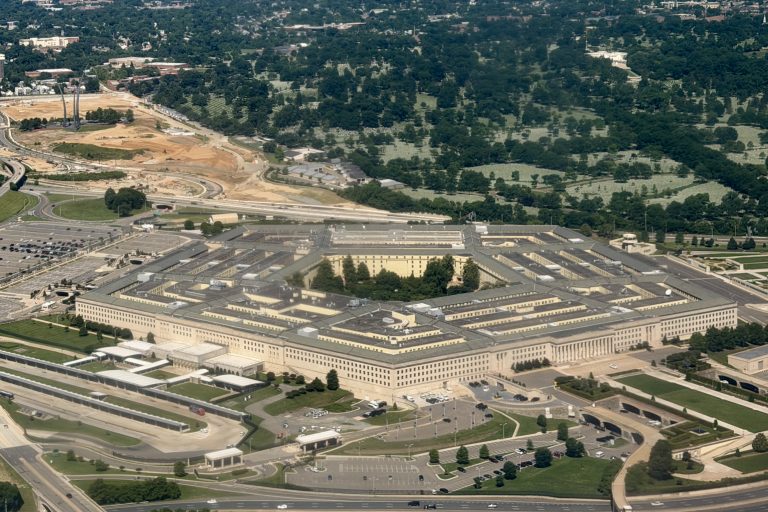
The engineer is a graduate of Northwestern Polytechnical University, a Party-controlled defense research institution in Xi’an long regarded as one of China’s premier military-industrial universities. The United States placed it on its Entity List as early as 2001 over its ties to the Chinese military. The university operates eight national-level key laboratories, seven of them devoted to defense technology, along with two national engineering research centers and dozens of additional provincial-level military research facilities. It falls under the authority of China’s Ministry of Industry and Information Technology.
According to South China Morning Post reporting on April 2, “Tiger Talks the World” is one of several Chinese STEM professionals who have been systematically supplying Iran with detailed military analysis through online videos. Their content has included targeting tactics for F-35s, missile strike strategies against U.S. aircraft carriers in the Persian Gulf, precise coordinates of American military bases across the Middle East, and simulated defensive scenarios for repelling a potential U.S. amphibious landing on Iran’s Kharg Island. A source familiar with the network, speaking anonymously, told the Post that many of the video creators’ classmates work directly in China’s defense industry.
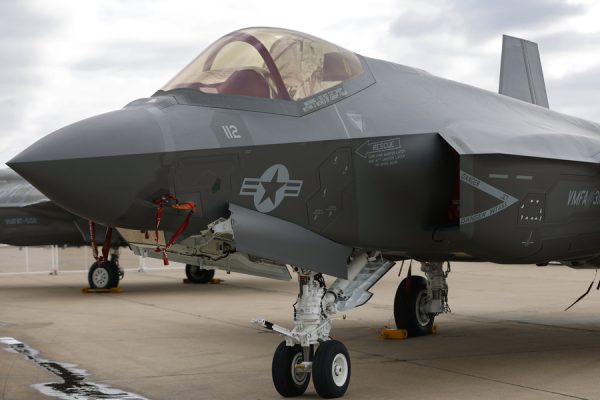
Two American aircraft were hit over Iran within 48 hours
On April 3, a U.S. Air Force F-15E Strike Eagle was struck by enemy fire south of Tehran. The aircraft remained airborne long enough for the crew to travel approximately 420 kilometers before the pilot determined the jet could not be saved; both crew members ejected and were subsequently rescued.
An A-10 Thunderbolt II attack aircraft dispatched in support of the search-and-rescue operation was also hit by an Iranian missile. The pilot flew the damaged aircraft into Kuwaiti airspace before ejecting and was recovered safely. Chinese Communist Party state media, citing Iranian sources, reported that the A-10 was struck by a Qaem-1/2 man-portable surface-to-air missile fired by Iran’s Basij paramilitary forces, hitting the tail section.
Success
You are now signed up for our newsletter
Success
Check your email to complete sign up
On April 4, Iran’s Supreme Joint Military Command announced it had deployed a new air defense system the previous day, implying U.S. aircraft had been hit by this new capability.
U.S. broadcaster ABC reported that Iranian forces used passive infrared detection to locate and engage American aircraft. Tang Jingyuan, a U.S.-based political analyst, explained the technique: unlike active radar, which emits detectable signals, passive infrared sensors simply wait. They lock onto the heat signature of a jet engine’s exhaust, where temperatures can exceed one thousand degrees Celsius, then guide a heat-seeking missile toward that thermal signal. The sensor emits nothing. It simply listens for heat.
Tang noted that while the exact missile model remained unclear, Western military analysts broadly assessed that Iran employed medium-to-long-range surface-to-air missiles, combining standard radar with passive infrared detection to achieve successful strikes against U.S. aircraft. He added that this technology is widely believed to have been transferred to Iran by the Chinese government.
Chinese state media tried to mock America’s costly rescue; Chinese citizens pushed back
The rescue of the F-15E crew came at significant material cost. U.S. losses during the operation included one A-10 Thunderbolt II, valued at approximately $18.8 million; two C-130 Hercules transport aircraft, valued between $150 million and $200 million combined; one MH-6 Little Bird light helicopter, approximately $7.5 million; and two MQ-9 Reaper drones, approximately $60 million. Total equipment losses exceeded $400 million.
On the morning of April 5, Party mouthpieces Xinhua and The Beijing News relayed Iranian state claims that the U.S. military had tried to kill its own missing F-15E aircrew. By noon the same day, word emerged that American forces had successfully rescued both crew members. Chinese netizens responded with open contempt: “They published that before confirming anything. You can’t trust a single punctuation mark from these outlets.”
Sinafin Finance News and NetEase both ran prominent coverage framing the rescue as a financial catastrophe, emphasizing that the U.S. had hemorrhaged more than $400 million to save two people. The framing detonated in the comment sections.
Tens of thousands of users piled into the comments on a single portal site, generating more than 1,680 posts. Representative comments included: “If you serve in the American military, it’s worth it. One word: worth it.” “Human life is priceless. They’ll make a movie about this, like Saving Private Ryan.” “Spending $400 million, plus incalculable risk, to save a possibly wounded soldier. That’s enough to earn the loyalty of any citizen.” One commenter turned the framing back on the editors: “This article talks only about the money. That tells you everything about what they value.” Another wrote: “Some places treat human lives as worthless. Others treat them as invaluable. Which world do you want to live in?” A third was more precise: “They blew up their own aircraft to protect classified information, then risked more lives to bring two people home. That’s not a dollar figure. That’s a value system.”
On April 5, retired General Frank McKenzie, former commander of U.S. Central Command, appeared on CBS News’s Face the Nation. “It takes a year to build a plane,” McKenzie said. “It takes two hundred years to build a military tradition of leaving no one behind.”