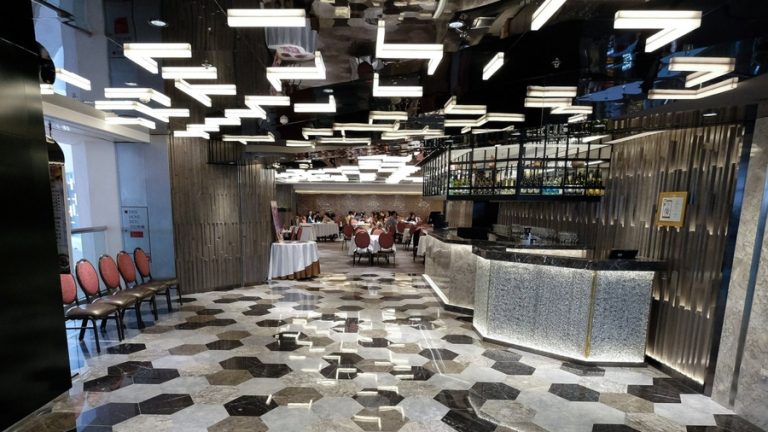
At the entrance to Taikoo Shing Centre, one of Hong Kong’s largest shopping complexes on Hong Kong Island, the corner that the House of Canton occupied for over 40 years now sits dark. The restaurant closed quietly in late February 2026. It was not the first closure this year, and it will not be the last.
According to reporting by the Sing Tao Daily, a Hong Kong newspaper, at least 14 Cantonese-style restaurants have shut down across the city in the first four months of 2026 alone. Many were neighborhood institutions with histories measured in decades. Even large restaurant groups have been unable to hold the line: the Star Seafood Restaurant chain and the Eastern Harbour Court brand have both contracted sharply.
Operating costs have climbed. A spending pattern that once kept Hong Kong restaurants full, the local middle class celebrating birthdays, weddings, and Sunday dim sum with family, has been disrupted by emigration, economic anxiety, and the pull of cheaper restaurants just across the border in mainland China.
Forty years of Cantonese fine dining erased in a single season
House of Canton, known in Chinese as Hanteng Ge, built its reputation on high-end Cantonese cooking across three locations: Taikoo Shing, Tsuen Wan, and Festival Walk mall in Kowloon Tong. For many Hong Kong families, it was the restaurant of choice for celebrations that demanded something more formal than a neighborhood teahouse. Its closure at the Taikoo Shing location in February marked the end of the brand entirely in Hong Kong. The site will be taken over by Maxim’s Group, one of Hong Kong’s largest catering conglomerates, which plans to open a new outlet under its Eight restaurant brand later this summer.
The same fate hit Tin Yat Restaurant in Pacific Place, the upscale shopping mall in Admiralty, the city’s financial district. Known for refined dim sum and a polished dining room, Tin Yat managed reasonable lunch trade but could not sustain its evening business. It closed last month. Both House of Canton and Tin Yat belonged to the same parent company, the Elegant Dining Group; with both now shuttered, the group has exited Hong Kong’s restaurant market entirely.
Success
You are now signed up for our newsletter
Success
Check your email to complete sign up
Neighborhood institutions that survived for decades could not survive this year
Several closures carried particular emotional weight because of how long the restaurants had served their communities.
Good Luck Seafood Restaurant in Kowloon City Plaza had operated for 30 years before closing on March 22. It was a holdout in an era of cost-cutting: the restaurant insisted on making all its dim sum by hand each day, refusing to use pre-made or frozen items. Its closure announcement thanked the neighborhood for three decades of support.
Sun Lung Shing Teahouse in Ngau Chi Wan, in the eastern part of Kowloon, carried a history of nearly 67 years. Housed in a corrugated iron structure typical of Hong Kong’s older village buildings, it was one of the last remaining teahouses where patrons could bring caged songbirds, a practice once common in Cantonese teahouse culture, in which elderly men would carry their birds to morning tea as a form of companionship and social display. The Hong Kong actor Luo Jiaying publicly praised the teahouse before its closure was announced. It will close at the end of April 2026, forced out by the Hong Kong government’s redevelopment of the surrounding area. Its closure marks the disappearance of a living cultural artifact.
Longbao Restaurant in Kwai Fong, with a 60-year history, announced its closure at the end of last month after 14 years at its current location. The owners cited three factors: sudden shifts in global trading conditions, weak consumer spending in Hong Kong, and a failure to reach agreement with their landlord on a rent reduction. The reference to sudden shifts in global conditions almost certainly points to the economic disruption flowing from tariff disputes and a broader cooling of regional trade, but the landlord’s refusal to negotiate pushed the decision over the edge.
Chain restaurants collapse faster than anyone expected
The Star Seafood Restaurant chain has been in visible retreat for over a year, but the pace of closures has accelerated sharply. After shutting branches in Wong Tai Sin, Tuen Mun, and San Po Kong, the chain closed its Kwun Tong location on Yian Street this year and its San Po Kong branch on Duke Street on March 1. The San Po Kong outlet had operated for more than 20 years, originally under the name Duke Restaurant before the current chain took it over. Star Seafood now operates only two remaining branches, one in Kowloon and one on Hong Kong Island, down from a network that recently numbered six.
The Eastern Harbour Court brand, which operates upscale Cantonese restaurants under its parent Eastern Harbour Catering Group, has shrunk to a single surviving location. Its branch at HomeSquare shopping mall in Sha Tin, a satellite town in the New Territories north of the city center, closed quietly in March. Only the branch at Tsing Yi City mall in the western New Territories remains open.
The full list of Hong Kong Cantonese restaurant closures since January 2026
Tsui Wan Fishing Port Restaurant located in Tsui Wan Plaza in the Chai Wan district of eastern Hong Kong Island, the restaurant posted an abrupt closure notice in January giving staff and customers seven days to collect their belongings. A fixture for elderly residents in the neighborhood, it had hosted performances by Cantonese singer Lee Lung-kei.
House of Canton, Taikoo Shing closed in late February after more than 40 years in operation, marking the end of the Hanteng Ge brand entirely in Hong Kong.
Tin Yat Restaurant, Pacific Place, Admiralty closed last month after failing to sustain its evening business, ending the Elegant Dining Group’s presence in Hong Kong entirely.
Houyuan Seafood Restaurant, Lam Tin serving the Lam Tin district in eastern Kowloon from its location inside the Lei King Wan shopping complex for over a decade, it was a popular gathering place for family meals and older residents who came for morning dim sum. It closed last month.
Baihui Restaurant, Lam Tin was part of the Baihao Catering Group. This restaurant specialized in traditional Cantonese dim sum and sourced seasonal seafood from across the region for its dinner menu. Located near an MTR station, part of Hong Kong’s metro rail network, it had become a neighborhood anchor for family gatherings. Its branch on the ground floor of Kaitang Building closed on April 4.
Star Seafood Restaurant, Kwun Tong closed this year on Yian Street, reducing the chain to two surviving branches citywide.
Star Seafood Restaurant, San Po Kong closed March 1 after more than 20 years in operation, originally under the name Duke Restaurant.
Good Luck Seafood Restaurant, Kowloon City closed March 22 after 30 years, having insisted on handmade dim sum until its final day.
Sun Lung Shing Teahouse, Ngau Chi Wan is closing at the end of April 2026 after nearly 67 years, forced out by government redevelopment of the surrounding area.
Jade Garden, Tseung Kwan O is a Jade Garden brand, founded in 1971, and was the first Cantonese restaurant opened by Maxim’s Group and holds an iconic position in the city’s culinary history. Following last year’s closure of its Mong Kok branch, the Tseung Kwan O location at New Town Plaza closed on January 31 when its lease ran out and was not renewed.
Palace Restaurant, Tsing Yi was located in the commercial podium of Cheung Hong Estate in Tsing Yi, a residential area in the western New Territories, Palace Restaurant closed last month when its lease expired.
Longbao Restaurant, Kwai Fong closed late last month after 60 years in operation, with the owners citing landlord refusal to negotiate a rent reduction as the deciding factor.
Eastern Harbour Court, Sha Tin closed in March at HomeSquare shopping mall, leaving the brand with a single surviving location at Tsing Yi City mall.
Shing Cheong Chiu Chow Seafood Restaurant, Tai Wai was founded in 1999 by a restaurateur who emigrated from the Chaozhou region of Guangdong Province in the 1970s, this restaurant operated in Tai Wai, near the Sha Tin district in the New Territories. It announced its closure at the end of last year. Chiu Chow cuisine, named for the Cantonese pronunciation of Chaozhou, is a regional style closely related to broader Cantonese cooking and historically associated with the large wave of Chaozhou migrants who settled in Hong Kong across the twentieth century.
What Hong Kong’s restaurant collapse reveals about the city’s economy
The breadth of these closures cuts across every category: high-end Cantonese dining rooms, mid-range chain operators, neighborhood teahouses in working-class districts, and mall-based family restaurants in the New Territories.
The owner of Longbao Restaurant stated the cause plainly: the world trading environment had shifted, consumer spending in Hong Kong was weak, and the landlord refused to negotiate a rent reduction. All three pressures appear, in varying combinations, across the other closures. Several restaurants lost their locations simply because leases expired and were not renewed, with landlords showing no willingness to adjust terms to reflect the current market.
A growing proportion of Hong Kong residents now cross into Shenzhen, the mainland city just north of the border, for weekend meals, drawn by lower prices and a wider selection. The middle-class families who once filled these restaurants on Sunday mornings are eating across the border, eating at home, or are no longer in Hong Kong at all, having emigrated during and after the political upheaval of 2019 and the years that followed.
The closure of a 67-year-old teahouse where elderly men once brought their songbirds on Sunday mornings, or a 30-year-old restaurant that refused to use pre-made dim sum, is the erasure of social infrastructure that held working-class and middle-class Hong Kong communities together. What is vanishing is not a set of businesses. It is a way of life.
By Li Jingyao