KMT’s chairperson, Cheng Li-wen met Chinese leader Xi Jinping on April 10 in Beijing. During the meeting, both sides emphasized the “1992 Consensus” and opposition to Taiwan independence, triggering strong concern from Taiwan’s government and security authorities. Taiwan’s Presidential Office, Executive Yuan, and Mainland Affairs Council issued statements in succession, criticizing the rhetoric as potentially placing Taiwan within a “One China framework” and even paving the way for a “unification process.”
‘Peace’ narrative packaging a ‘unification process’
Several Taiwanese government bodies said the “Zheng–Xi meeting” reflects five major characteristics: strengthening the “One China framework,” advancing a “One Country, Two Systems Taiwan model,” removing Taiwan from the international landscape, and packaging a “unification process” under a “peace” narrative, while simultaneously applying military pressure as part of a dual strategy of “peace and force.”
Additionally, Beijing is said to be using anti-foreign and anti-Japan narratives to frame the Taiwan issue as an “internal matter,” thereby reducing international attention.
A spokesperson for Taiwan’s Presidential Office stated that the meeting used “both sides of the strait belong to one China” as the political foundation for interaction between the two parties, effectively incorporating Taiwan into China’s political agenda and potentially turning it into a tool for promoting unification.
Taiwan’s Presidential Office criticized the Kuomintang for failing to uphold its party autonomy and national stance during the “Zheng–Xi meeting,” instead allowing China to use the so-called “1992 Consensus,” centered on the claim that “both sides of the strait belong to one China,” as the “common political foundation” between the two parties.
Success
You are now signed up for our newsletter
Success
Check your email to complete sign up
The statement said this effectively echoed Beijing’s narrative by portraying the international community’s concern and support for peace in the Taiwan Strait as “external interference,” thereby turning the meeting into a political tool that undermines the Republic of China, facilitates Taiwan being “unified,” and compromises national sovereignty.
The Presidential Office expressed deep regret over what it described as behavior that was inappropriate and self-diminishing. It emphasized that Taiwan’s sovereignty and democratic system are not to be shaken, and that any future decisions must be determined by all of its people.
The Executive Yuan also expressed a firm stance, stating that Beijing is attempting to internalize cross-strait relations through party-to-party exchanges and pave the way for “peaceful unification,” with the substantive goal of annexing Taiwan. The Executive Yuan emphasized that the Taiwan Strait is a free navigation route for the democratic world, and maintaining its openness, peace, and stability serves the common interests of the international community. Any political maneuver to place Taiwan under a “One China framework” will not be accepted by Taiwanese society, and the 23 million people of Taiwan firmly oppose it.
RELATED:
- Cheng Li–wen Leads KMT Delegation To China Ahead Of Planned ‘Cheng–Xi Meeting’
- Xi Invites KMT Chair Cheng Li–wen to Beijing Amid Cross-Strait Tensions
- Taiwan Opposition Trip to Beijing Sparks Accusations of CCP Influence Operations
‘Preferential policies for Taiwan’ may conceal a ‘grooming, trapping, and eliminating’ strategy
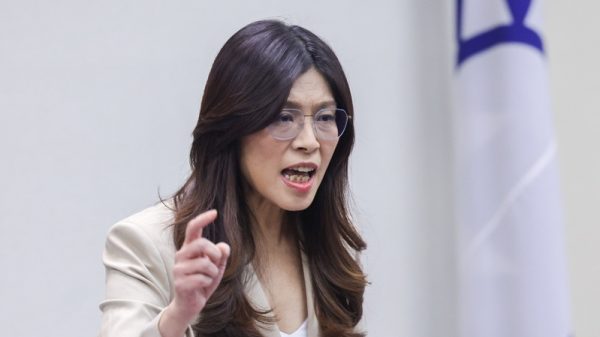
Regarding the mention of “expanding Taiwan’s international space” during the meeting, the Mainland Affairs Council stated that if such efforts are promoted under a CCP-led “suzerain model,” they could instead lead to increased suppression and would not benefit Taiwan.
The council also warned that China’s past “preferential policies for Taiwan” often carried political motives and could be withdrawn at any time, potentially creating risks for industries.
After 2005, China provided preferential treatment for Taiwanese agricultural and fishery products, but later suspended these benefits for political reasons, harming farmers and fishermen. Such policy reversals can turn investments into risks and even create a “grooming–trapping–eliminating” pattern. The government does not want to repeat this and will caution industries against over dependence.
The Mainland Affairs Council further stated that Zheng Liwen not only failed to stabilize cross-strait relations but also allowed the CCP’s propaganda narrative to spread more aggressively, sending misleading signals to the international community. In particular, the “Zheng–Xi meeting” mention of “opposing external interference” effectively frames cross-strait issues as China’s internal affairs and isolates Taiwan. If this framing takes hold, China could block external assistance to Taiwan internationally, potentially affecting support from other countries, including arms sales.
Overall, Taiwan’s Presidential Office, Executive Yuan, and national security system unanimously believe that the “Zheng–Xi meeting” is not merely a party exchange, but also involves political positioning and sovereignty issues across the Taiwan Strait. The government reiterated that Taiwan’s future should be decided by its 23 million people and stressed that the Taiwan Strait is international waters, committing to continued cooperation with democratic countries to maintain regional peace and stability.
By Li Ming, Vision Times