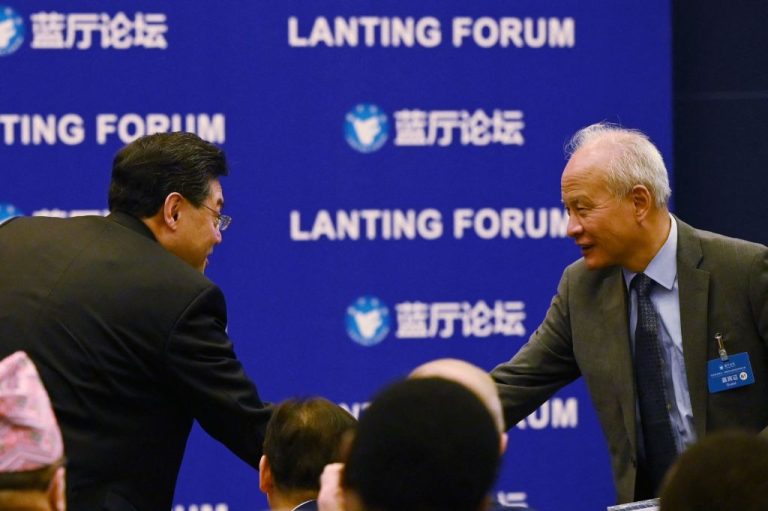
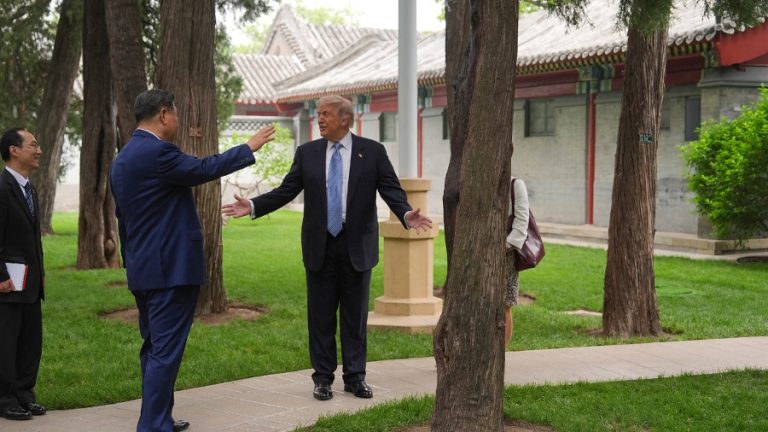
Song Tao, director of the Taiwan Work Office of the CCP Central Committee, announced on March 30 that Chinese Communist Party leader Xi Jinping has invited Kuomintang (KMT) Chairwoman Cheng Li-wen to lead a delegation to Jiangsu, Shanghai, and Beijing from April 7 to 12 for visits and meetings. A Taiwanese national security official said on March 31 that the timing of the visit carries high political intent, and the move could send dangerous signals to international allies and affect Taiwan’s position within the democratic bloc. U.S. Senator Jeanne Shaheen, visiting Taiwan, noted that if the CCP wants to engage with one party, it should engage with all parties.
Timing of the meeting sparks controversy
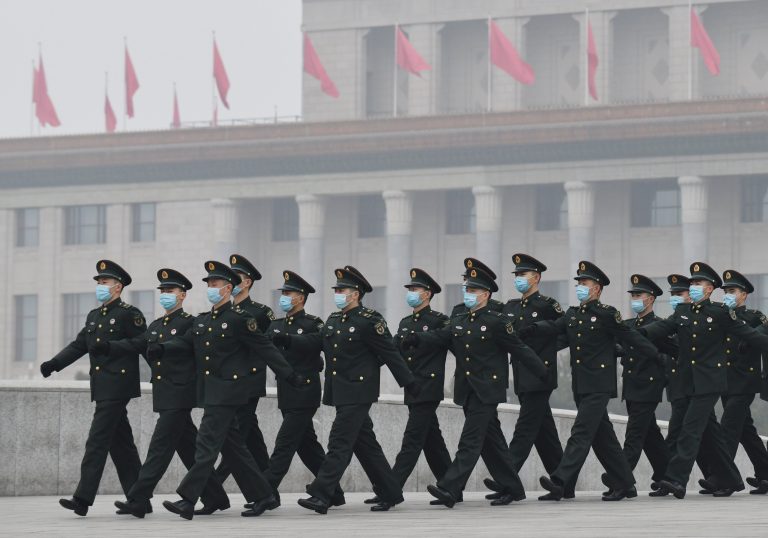
The Cheng-Xi meeting is scheduled after the Qingming holiday. The timing coincides not only with discussions over the NT$1.25 trillion special military procurement budget but also comes amid frequent PLA activities near Taiwan.
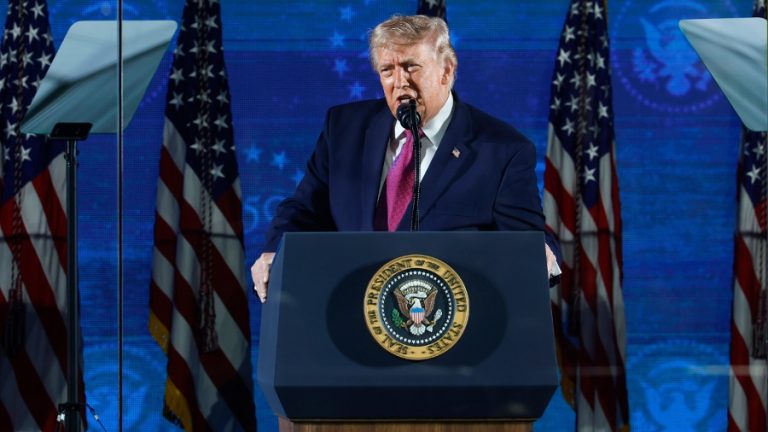
According to reports from the Central News Agency, a national security official said on the morning of March 31 that although the “Trump-Xi meeting” has been postponed to mid-May, Beijing still arranged for the Cheng-Xi meeting immediately after the Qingming holiday. Given China’s current domestic and international situation, this meeting is considered a necessary move for Beijing.
The official explained that first, facing the U.S. president’s delay due to Middle East developments, Beijing aims to project an image of complete control over Taiwan before the Trump-Xi meeting, signaling that “Taiwanese public opinion leans toward China” and “toward reunification.” Beijing also hopes this sends a message that “the U.S. should stop, or at least reduce, arms sales to Taiwan.”
The second reason for the timing is domestic. As KMT members openly express support for Taiwan’s defense procurement plans—different from Chairwoman Cheng Liwen’s line—and as U.S. and European officials visit Taiwan to back its defense strengthening, Beijing quickly brings Cheng to Beijing to “set her above all” and consolidate the KMT’s overall direction, maintaining stability for her pro-unification stance.
Success
You are now signed up for our newsletter
Success
Check your email to complete sign up
However, the official noted that regardless of the unpopularity of the “unification” line in Taiwan, a recent poll by the Election Study Center at National Chengchi University shows the proportion of Taiwanese who identify as Chinese has dropped to a new low (only 2.4 percent). Elected officials are alarmed by Cheng Liwen’s pro-China stance, highlighting that “unification” is politically toxic in terms of public opinion in Taiwan.
The official emphasized that, for democratic allies in the Indo-Pacific and beyond who support Taiwan and oppose authoritarian expansion, this timing could send a dangerous and misleading signal. By aligning with the CCP on “unification,” it could appear that Taiwanese are more willing to side with authoritarian China, potentially undermining Taiwan’s international support and, in the long term, risking Taiwan being excluded from global security frameworks—a disastrous scenario economically, in supply chains, and in collective security.

US senator calls for equal dialogue
A bipartisan U.S. Senate delegation held a press conference this afternoon at the Taipei Guest House, attended by Deputy Minister of Foreign Affairs Chen Mingqi and AIT Director Raymond Greene.
When asked about Cheng Liwen’s upcoming visit to China, U.S. Senate Foreign Relations Committee senior Democrat Jeanne Shaheen said dialogue is positive. She noted that President Trump will also visit China and hopes China will engage in dialogue with all leaders in Taiwan, both ruling and opposition, on an equal basis.
Shaheen emphasized that if Beijing wants to engage with one party, it must communicate with all parties.
She also stressed that Taiwan must be prepared, with a strong defense budget to create deterrence against unwanted consequences—a point repeatedly made by the delegation.
When asked whether Taiwan risks becoming a bargaining chip in U.S.-China talks, Republican Senator John Curtis said that when he visited Taiwan shortly after U.S.-Taiwan diplomatic relations ended in August 1979, anger toward the U.S. had already dissipated, and “friendship quickly warmed,” aided by Congressional guarantees including the “Six Assurances.”
Curtis added that U.S.-China meetings are not inherently bad or frightening. Stronger U.S.-China relations could protect Taiwan, while deteriorating relations could increase the risk of Chinese aggression.

Internal KMT divisions
According to BBC Chinese, Professor Yeh Yao-yuan of the University of St. Thomas explained that Cheng Li-wen’s pro-China, skeptical-of-U.S. political stance is clear, but other senior KMT figures, such as Taichung Mayor Lu Xiuyan—eyeing the 2028 presidential election—pursue a different strategy, promoting quicker passage of defense budgets and pro-U.S. policies.
Yeh said the KMT’s internal differences do not imply a total break with China but show that relations with the U.S. must also be maintained. “Frankly, this shows two competing factions are slowly emerging within the KMT.”
Professor Zhang Junhao, director of the Department of Political Science at Tunghai University, said analyzing the U.S.-China-Taiwan triangle, Beijing aims to use the KMT to take a leading role in cross-strait relations before the Trump-Xi meeting, showing Cheng Liwen as a tool to counterbalance President Lai Ching-te’s cross-strait policies.
Since being elected KMT chair last year, Cheng Li-wen has repeatedly expressed willingness to visit China and meet Xi Jinping. She stated that under her leadership, the KMT can promote peaceful cross-strait development based on the “1992 Consensus” and opposition to Taiwan independence. After receiving Beijing’s invitation, she said on March 30 that she gratefully accepted and hopes the KMT and CCP can jointly promote cross-strait exchanges. She emphasized at the press conference that “the whole world recognizes the One-China principle.”
The last KMT chair to visit China was Hong Xiuzhu in 2016, who led a delegation to Beijing and Nanjing and met Xi Jinping.
Analysts note that for Beijing, this invitation aims to restart high-level KMT-CCP dialogue, stress peaceful development based on the “1992 Consensus and anti-Taiwan independence,” and signal a willingness to maintain stable communication channels with the opposition. For the KMT, the visit may strengthen the “cross-strait family” line, appeal to pro-unification voters and Taiwanese businesspeople, and showcase a peaceful cross-strait image ahead of the year-end local elections.
By Li Zexu