According to a report by the Daily Mail on April 10, NASA’s Artemis II mission successfully returned to Earth on Friday night after completing a historic crewed flyby of the Moon. The Orion spacecraft reentered the atmosphere in a fiery descent and ultimately splashed down in the Pacific Ocean off the coast of San Diego, California.
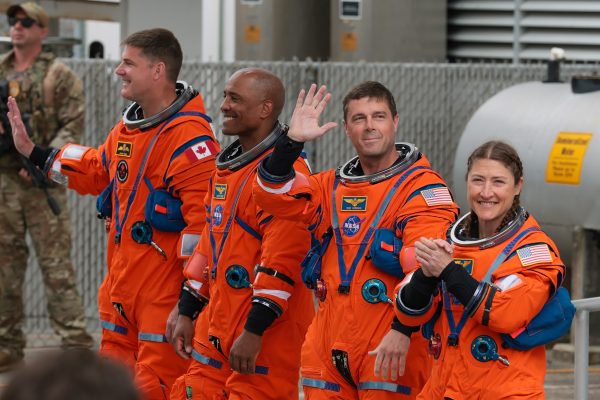
The mission crew consisted of four astronauts: Reid Wiseman, Victor Glover, Christina Koch, and Canadian astronaut Jeremy Hansen. The roughly 10-day mission carried them farther into deep space than any humans in history, marking a major step toward humanity’s return to the Moon.
NASA described the mission as a “complete success,” noting that the spacecraft landed precisely in the designated recovery zone.
Extreme reentry: a test of speed and heat
During reentry, the Orion spacecraft reached speeds of about 25,000 miles per hour and endured temperatures up to roughly 3,000°F. A communication blackout lasting about six minutes occurred due to plasma formation during reentry, which was expected.
According to NPR on April 11, the spacecraft entered Earth’s atmosphere at more than 30 times the speed of sound, undergoing a 13.5-minute “fireball-like” descent that tested the reliability of its heat shield system. The parachutes deployed successfully, and the capsule safely splashed down in the Pacific Ocean.
Success
You are now signed up for our newsletter
Success
Check your email to complete sign up
Although there was a brief communication issue with the Navy recovery team after landing, medical personnel confirmed that all four astronauts were in good condition after boarding the capsule.
Mission significance: restarting lunar and deep space exploration
NASA Administrator Jared Isaacman called the mission “perfect” and emphasized that the United States will accelerate its plans to return to the Moon, including a potential crewed landing as early as 2028 and the construction of a lunar base.
“We are back on track to send astronauts to the Moon. This is just the beginning,” Isaacman said.
U.S. President Donald Trump also congratulated the crew and invited them to the White House, adding: “Next stop—Mars.”
NASA Deputy Administrator Lori Glaze described the mission as “one of the most significant human deep-space exploration efforts in decades.”
From Apollo to Artemis: pushing human limits
Mission data shows Artemis II traveled more than 700,000 miles, reaching a maximum distance of 252,756 miles—surpassing the record set by the Apollo 13 mission in 1970.
According to NPR, the astronauts orbited approximately 4,000 miles above the Moon’s surface, conducting geological observations and capturing extensive imagery to support research into the Moon’s origins. They also named newly identified lunar craters, including one after Commander Wiseman’s late wife.
Astronaut Glover reflected during the return journey that viewing Earth from deep space made it appear as “a unique oasis in the vast emptiness.”

What’s next? Artemis program accelerates
Following the mission, NASA quickly shifted focus to upcoming plans. Artemis III is expected to launch as early as next year to test lunar landing systems in Earth orbit, while the first crewed Moon landing may take place during the subsequent Artemis IV mission—marking humanity’s first return to the lunar surface since 1972.
Christina Koch described the program as “a relay race,” emphasizing that each generation of astronauts is paving the way for the next.
Meanwhile, preparations are already underway at the Kennedy Space Center for the next launch, including assembly of the rocket and launch platform. As engineering lead John Giles put it: “There’s no time to stop and reflect—we’re already moving on to the next step.”