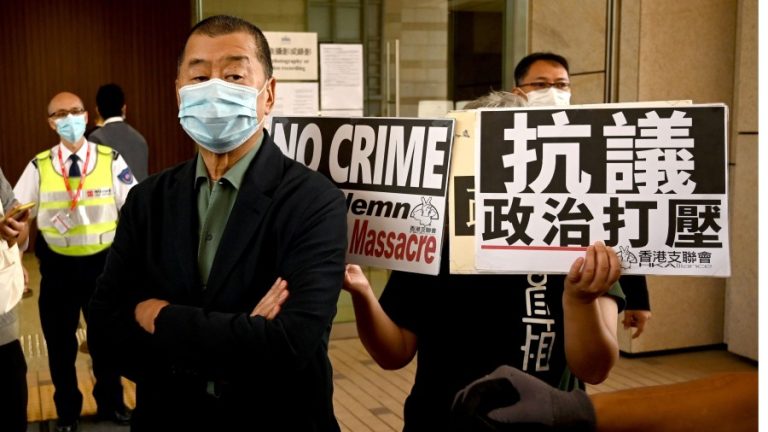
According to Radio France Internationale, several journalists from Independent Media have submitted a report to Hong Kong police after being continuously followed and harassed by unidentified individuals. The Hong Kong Journalists Association (HKJA) reiterated that it does not tolerate intimidation, surveillance, or coercion against the media and journalists, and sent a letter to the Security Bureau requesting clarification and an official stance. However, after receiving the letter, the Security Bureau instead accused the HKJA of making baseless accusations, saying it had damaged the reputation of law enforcement officers.
HKJA condemns harassment, writes to Security Bureau seeking response
According to Ming Pao, HKJA Chairperson Christine Cheung wrote to the Security Bureau on April 5 this year, asking the authorities to clarify whether Hong Kong law enforcement agencies had conducted any form of investigation or surveillance of journalists, and urging the government to clearly state its opposition to all forms of tracking, intimidation, and harassment of reporters.
The HKJA referenced similar incidents in 2023 involving journalists from the English-language outlet Hong Kong Free Press and other media. At the time, a man reportedly followed reporters from their home to their workplace; when confronted by journalists, he hid in a men’s restroom to avoid questioning. However, the Security Bureau accused the HKJA of speculating without evidence and did not directly deny any involvement by law enforcement. Since the case was never solved, it may have led the public to believe the Bureau’s position was ambiguous.
In its email, the HKJA urged the Security Bureau to clearly state whether Hong Kong law enforcement agencies had conducted any form of surveillance, tracking, or following of journalists from Independent Media or any other reporters, including direct deployment of officers or outsourcing such activities to third parties. The HKJA also said that if the Bureau confirms no involvement, it should explicitly condemn all forms of tracking, intimidation, and harassment against journalists, and called on police to properly investigate two reported cases by Independent Media as well as the 2023 harassment incidents, ensuring perpetrators are held legally accountable.
The HKJA emphasized that journalists carrying out reporting duties in public spaces are legally entitled to freedom from intimidation and interference. It warned that if law enforcement remains silent or fails to clearly distance itself from intimidation against journalists, it would seriously undermine media confidence in the Security Bureau’s commitment to press freedom, and would also contradict the spirit of Article 27 of the Basic Law and Article 4 of Hong Kong’s National Security Law.
Success
You are now signed up for our newsletter
Success
Check your email to complete sign up
Security Bureau accuses HKJA of baseless speculation
Two days later, the Security Bureau responded, stating that it welcomes the HKJA providing more information to the police, and that any person who suffers threats or harassment should report to the police immediately, who will handle and investigate the matter in accordance with the law.
The Bureau also strongly criticized the HKJA, saying it was once again questioning whether law enforcement was involved in alleged stalking and harassment without evidence, calling it unfounded speculation that “not only damages the reputation of all law enforcement personnel, but also undermines the professional image of journalists who are expected to base their reporting and commentary on facts.”
Foreign media: Hong Kong becoming a ‘media graveyard’
Since the Hong Kong government implemented the National Security Law in 2020, the city’s media environment has undergone dramatic changes. Surveys by the Hong Kong Journalists Association (HKJA) show that journalists’ assessment of press freedom has continued to decline. The HKJA has issued a “Press Freedom Index” since 2013, rating the media environment from 0 to 100. Recent results have fallen to historic lows, with scores around 25 in 2024, indicating that journalists perceive increasing self-censorship and legal pressure.
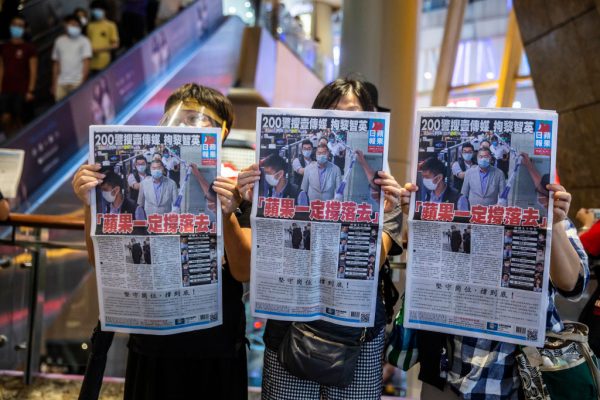
According to a Liberty Times report citing AFP, the imprisonment of Apple Daily founder Jimmy Lai for 20 years marked the formal end of Hong Kong’s once-proud independent media ecosystem, entering what some describe as a “media graveyard” era.
The report noted that after the National Security Law took effect in 2020, Hong Kong’s media landscape experienced severe upheaval. In August of that year, hundreds of police officers raided the Apple Daily headquarters and arrested Jimmy Lai. In June 2021, Apple Daily, with a 26-year history, was forced to cease publication after its assets were frozen.
The report said the wave of media closures spread rapidly, with independent outlets losing their space to operate. Stand News and Citizen News shut down, Radio Free Asia withdrew its operations for safety reasons, and The Initium relocated its headquarters to Singapore. In the four years following the law’s implementation, at least 900 journalists in Hong Kong lost their jobs. Many reporters faced organized harassment, while employers were subjected to unusual tax audits. In recent years, there were also ten cases of foreign journalists being denied visas or entry. This reflects the disappearance of Hong Kong’s once-prized “free flow of information.”
The report added that while the Hong Kong government repeatedly emphasizes that citizens enjoy legally protected freedom of the press and expression, and that such rights are safeguarded under the National Security Law, the sentencing of Jimmy Lai and six senior executives has once again highlighted the stark gap between official statements and on-the-ground realities, triggering renewed international scrutiny of Hong Kong’s rule of law.
By Li Jingyao