A mother first, a journey unfolds
“So my name is Adhara Jimenez-Banse. I am a social worker, but primarily I am the parent of someone with Down syndrome,” she said. “This is the story that brings us here.”
Jimenez-Banse has lived in Orange County for two decades and remains active in community work. Yet, as she explains, her most meaningful education has come from her son. “Zhaid has taught me a wealth of knowledge… he’s taught me more than a book has.”
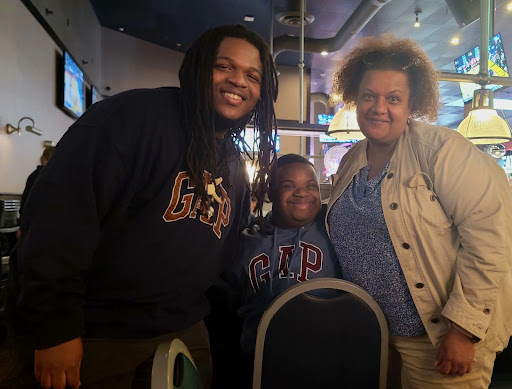
She is the mother of two boys, ages 20 and 18. Zhaid, her younger son, is now a high school student. “My connection to people who are more neurodivergent has primarily been through my son,” she said.
Diagnosis and early intervention
Zhaid was not diagnosed with Down syndrome until he was seven months old. “He wasn’t sitting upright, he slumped forward,” she recalled. After seeking a second opinion, the diagnosis was confirmed through testing.
“The initial shock… I was crushed as a parent,” she said. “You always think of this ‘perfect life,’ but again, what is the perfect life?”
Success
You are now signed up for our newsletter
Success
Check your email to complete sign up
A doctor’s words soon reshaped her perspective: “One piece of advice he gave us was, ‘Zhaid will go as far as you take him.’”
Early intervention began before Zhaid turned one. Therapists came to the home regularly. “Speech, physical therapy, occupational therapy—all these services were being done at home,” she said. Later, these supports continued in school.
When Zhaid started school at age five, he was nonverbal. “Through speech and constant interaction… by the age of eight, he started to verbalize more words,” she said. “Today, Zhaid—he doesn’t stop talking.”
Growth, milestones, and redefining expectations
Zhaid’s development came step by step. “He crawled longer than the average child… he started to walk almost at two,” she said. “Every milestone has been a celebration.”
Now at 18, Zhaid communicates his needs and expresses preferences. “He’s able to tell me if he wants something… he tells me where he wants to go,” she said. “He has gained not only his voice, but also independence.”
At the same time, Jimenez-Banse spoke candidly about adjusting expectations. “It took me a long time to understand that Zhaid would not go to college… that was crushing,” she said. “But I see Zhaid today—from not being able to talk or walk—to texting me that he wants coffee.”
Daily challenges and joy
While progress has been significant, challenges remain—especially in communication. “He can tell me, ‘my head hurts,’ but he cannot tell me from one to ten how much it hurts,” she explained.
Still, Zhaid’s personality brings daily joy. “He’s always happy… he wakes up with a smile, hugs everyone, even the dog,” she said. “We know something is wrong when he’s not smiling.”
Recently, the family experienced the loss of Jimenez-Banse’s mother. Zhaid’s understanding of grief has been different. “He understood that grandma died, but he also thought he would see her again,” she said. “Mourning looks different for him.”
The power of support
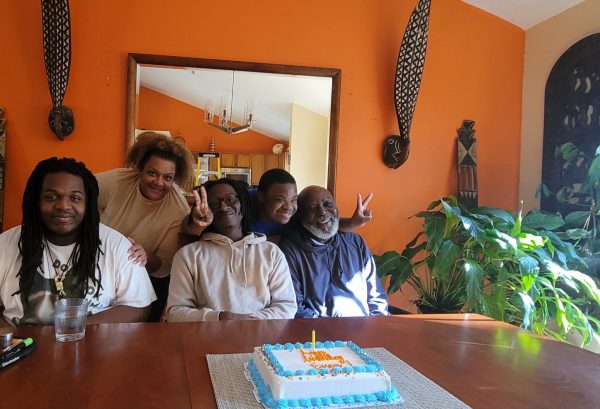
Jimenez-Banse emphasized that she has not walked this journey alone. “Family support has been number one,” she said. “I haven’t been alone.”
Evan is Zahid’s older brother and plays an important guiding role in his life. He serves as a source of support, direction, and influence, helping Zahid navigate challenges and make positive choices.
She also highlighted the importance of community and professional resources. “There’s always someone willing to help… to guide you and give you the right connection,” she said.
At the same time, she acknowledged that caregiving can feel isolating. “This path can be a lonely one… not everybody understands what one goes through.”
A call for inclusion and community
Looking forward, Jimenez-Banse hopes for more inclusive spaces and accessible services. “It’s not a one-size-fits-all,” she said. “Our kids are not always invited… socialization often comes with a cost.”
She also expressed a desire for more informal support networks. “I would love to find a hub where we can sit down and talk to each other… just to know there is a place where someone understands your daily life.”
A message to other parents
For families beginning a similar journey, her message is both simple and powerful: “Your child will go as far as you take them.”
She added, “You cannot put limits… they don’t have to learn the world—the world should learn them.”
Through her story, Adhara Jimenez-Banse offers a reminder that while the path of caregiving may be challenging and uncertain, it is also filled with growth, resilience, and moments of profound joy.