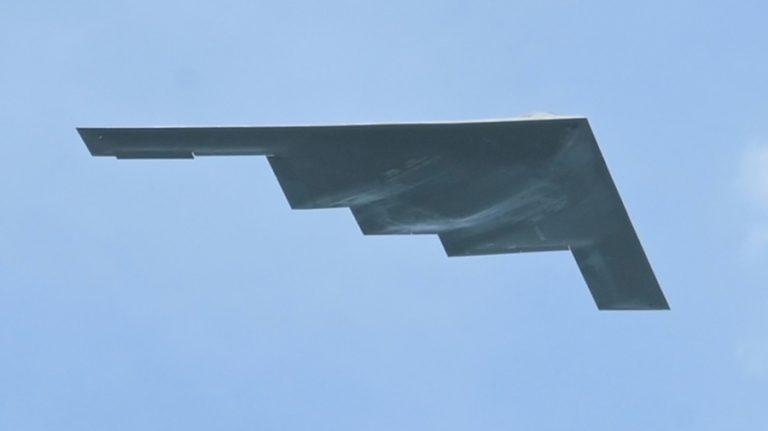
A report from Guessing Headlights on April 17 notes that wars often take place far away, until a single detail suddenly pushes perception beyond its limits. What drew attention this time was not simply the airstrike itself, but how it was carried out—U.S. B-2 “Spirit” stealth bombers flew from the continental United States to strike Iran, completing 18 round-trip missions under an operation code-named “Epic Fury.”
Rather than a conventional airstrike, this is better understood as a redefinition of “distance.”
Takeoff from the homeland: intercontinental strike becomes reality
The report states that these missions did not rely on Middle Eastern bases or carrier strike groups. Instead, aircraft took off directly from the U.S. mainland, crossed continents and oceans, carried out strikes, and then returned to their point of origin. Each mission lasted more than 30 hours.
In traditional military logic, forward deployment means efficiency. This operation, however, demonstrates another approach—substituting range for bases. It places extremely high demands on aerial refueling systems and requires precise global coordination across the entire operational chain.
The U.S. military disclosed that the airstrikes were part of a larger operation involving more than 60 bomber sorties, including aircraft launched from allied bases. However, the 18 “continental strikes” drew the most attention.
Success
You are now signed up for our newsletter
Success
Check your email to complete sign up
Three-bomber coordination: long-range strike system takes shape
Three main platforms were involved: the B-2 “Spirit,” B-1 “Lancer,” and B-52 “Stratofortress.” Together, they form the core of the U.S. long-range strike architecture.
Among them, the B-2 played the most critical role. Its stealth capability and long range allow it to penetrate heavily defended airspace. Targets reportedly included air defense systems, missile bases, drone facilities, and weapons production centers, indicating a clear objective of degrading military capabilities.
Notably, such intercontinental missions are not the result of a single aircraft’s capability, but of a system-of-systems approach—air refueling tankers, electronic warfare platforms, and support assets together form a global operational network.
30-hour flights: the overlooked human limits
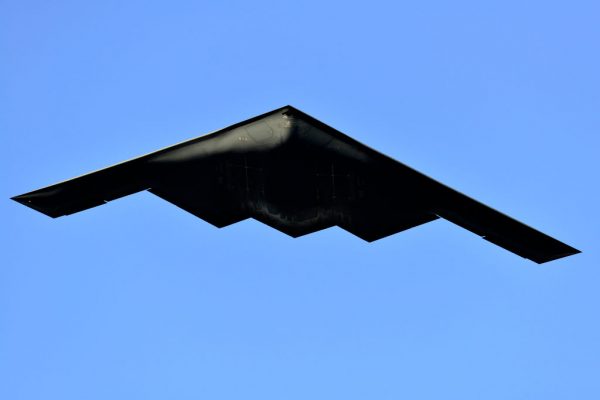
Beyond the mission data, the physical demands of flight are significant. Each sortie requires two pilots rotating control inside a cramped cockpit, coping with prolonged fatigue, darkness, and psychological strain from extended transoceanic flight.
Air refueling crews play another critical role, executing precise mid-air hookups within strict timing windows. The entire process depends on tight coordination and timing; any deviation can disrupt the mission chain.
The report notes that the operation lasted for weeks amid repeated regional power tensions. Although ceasefire signals later emerged, the situation did not fully stabilize.
Why take the ‘longer route:’ strategy over efficiency
Why abandon forward bases in favor of a more costly long-range approach? Analysts suggest both tactical and strategic motivations.
On one hand, relying on Middle Eastern bases increases exposure to missile threats and political constraints from host nations. On the other hand, continental launches reduce operational exposure while demonstrating strike capability without forward deployment.
More importantly, this approach sends a strategic signal: the United States can project combat power independently across hemispheres. For potential adversaries, such a method increases uncertainty and raises defensive costs.
Range and endurance define the B-2’s value
A separate Feb. 2 report from Simply Flying provides technical context. The B-2 Spirit, developed at the end of the Cold War, is designed not for speed but for range and stealth.
Public data indicates that without aerial refueling, the aircraft has a range of about 6,000 nautical miles (approximately 11,000 km), with flight endurance of about 12–15 hours—enough for basic intercontinental round trips.
In practice, however, aerial refueling is the key variable. With multiple refuelings, B-2 missions can extend beyond 40 hours, making the previously described 30-hour-plus sorties possible.
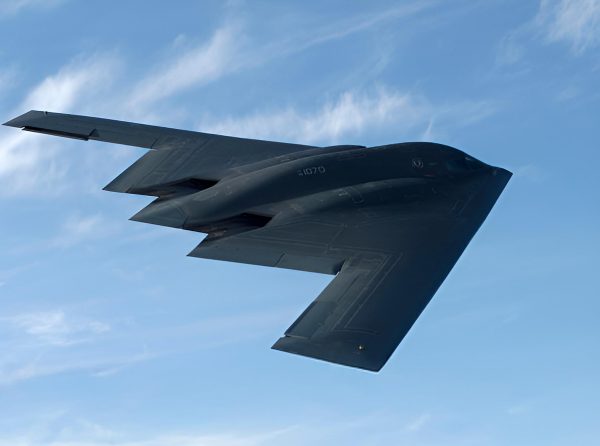
Structurally, the B-2 uses a flying-wing design to reduce drag and stores all fuel internally to preserve stealth characteristics. Its maximum payload is about 40,000 pounds, but increased load raises fuel consumption, requiring careful trade-offs between range and strike capability.
When ‘distance’ is no longer a constraint
The B-2’s core value lies not only in stealth or firepower, but in turning “distance” into a controllable variable.
From 12–15 hours of unrefueled flight to extended endurance enabled by aerial refueling, such capability makes intercontinental strikes a routine option rather than an exception. This is less about a single weapons platform and more about an integrated long-range warfare system.
For outside observers, the most striking aspect may be symbolic: a strike is executed on one continent by forces launched from another, returning more than a day later. In the process, geographic boundaries are effectively compressed.