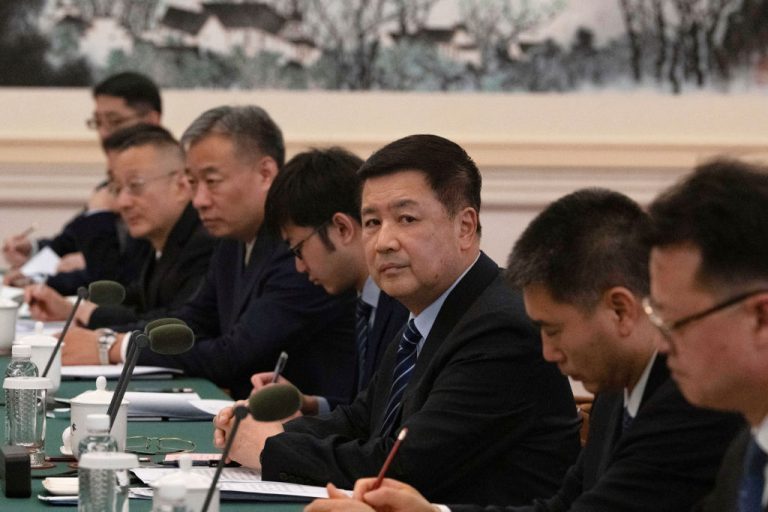
A wave of personnel reshuffles and disciplinary investigations across China’s political and security system has drawn attention to potential internal shifts within the Chinese Communist Party (CCP), with analysts pointing to signs of tightening control and possible factional realignment on the highest levels.
At the center of recent developments is Public Security Minister Wang Xiaohong, whose position has come under scrutiny following a series of unusual personnel changes within China’s Ministry of Public Security.
RELATED: Ma Xingrui’s Purge Casts Spotlight on ‘Cold Bench’ Government Post in China
A slew of purges
On April 21, Chinese authorities announced the appointment of Lu Wuqin as assistant minister of public security, filling a vacancy left by a recent retirement. While such appointments are routine, observers noted that Lu has no known prior working relationship with Wang.
Over the past year, several officials previously associated with Wang have been reassigned or removed, including former vice ministers and senior aides. In comparison, newly appointed figures appear to lack direct ties to him.
Success
You are now signed up for our newsletter
Success
Check your email to complete sign up
According to publicly-available information, Lu, a career official born in 1967, has held roles in auditing, criminal investigation, and public communications within the ministry. His background, analysts say, suggests a technocratic profile rather than affiliation with a specific political faction.
Absent from key meetings
Additional attention has focused on Wang’s absence from a recent high-level diplomatic-security meeting. While he participated in a March trilateral dialogue with Vietnam alongside Foreign Minister Wang Yi and Defense Minister Dong Jun, he did not attend a subsequent “2+2” strategic dialogue involving Cambodia and trade issues.
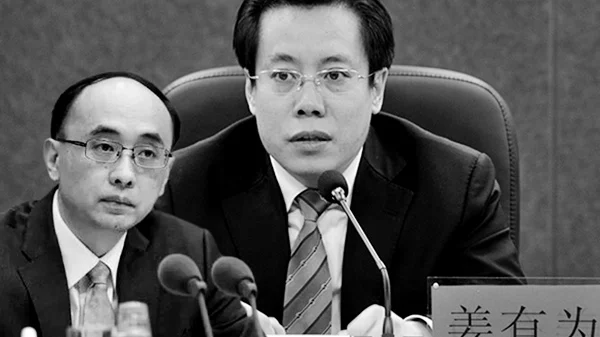
Analysts have pointed to this absence, combined with ongoing internal inspections, as part of a broader pattern. In mid-April, China’s top anti-corruption body announced that a central inspection team would be stationed within the Ministry of Public Security for approximately two and a half months. Such inspections typically target both disciplinary compliance and political alignment.
Developments within the security system coincide with high-profile cases involving other senior officials often described as political “gatekeepers,” figures responsible for managing administrative operations and resource flows, analysts say.
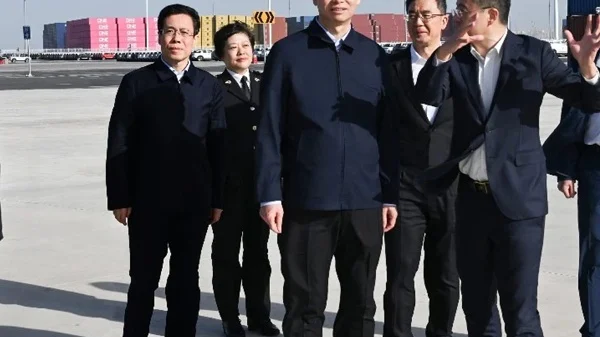
In Liaoning Province, reports have circulated regarding the case of Jiang Youwei, a senior provincial official who had recently appeared at multiple public events before abruptly disappearing from view. While no official announcement has confirmed details of his situation, the case has drawn attention due to its timing and unusual circumstances.
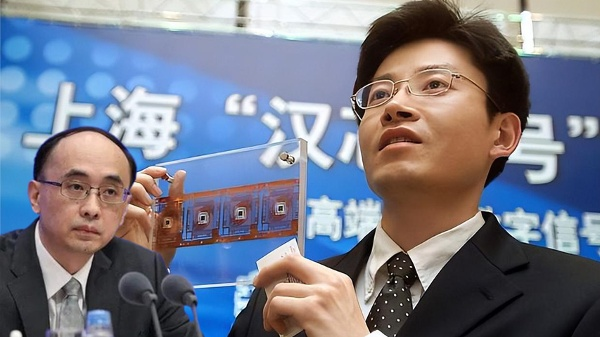
Separately, authorities announced that Wu Hao, a senior official formerly associated with China’s powerful economic planning system, is under investigation for “serious violations of discipline and law.” Wu previously served in key roles within the National Development and Reform Commission (NDRC), where he was involved in overseeing major investment and industrial policy initiatives.
Corruption in high-stakes sectors
The investigation into Wu has renewed focus on corruption risks in sectors tied to large-scale state investment, including technology, infrastructure, and energy. Observers note that agencies responsible for allocating funding to strategic industries, such as semiconductors, artificial intelligence, and biotechnology, control vast financial resources, making them particularly vulnerable to influence and misconduct.
One netizen described the environment as one in which “whoever controls project approvals controls the flow of billions,” highlighting the potential for abuse within complex bureaucratic systems.
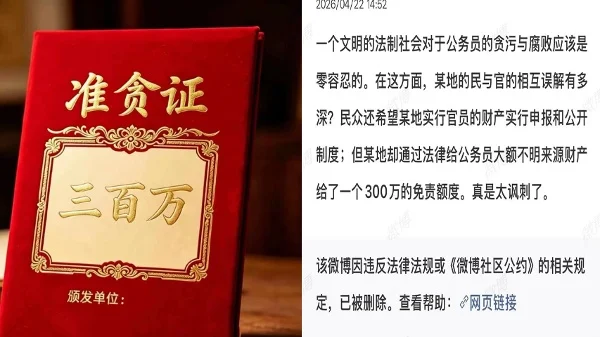
The convergence of personnel reshuffles, anti-corruption inspections, and high-profile investigations has fueled speculation about broader dynamics within China’s political system. Some analysts interpret these developments as part of ongoing efforts by CCP leadership to consolidate control and enforce discipline across key institutions. Others view them as evidence of internal tensions, particularly in areas where political authority intersects with economic power.
While official statements emphasize routine governance and anti-corruption enforcement, the timing and concentration of recent events have drawn heightened scrutiny.
Despite growing attention, many details surrounding these cases remain unclear. Chinese authorities have not publicly confirmed several of the more widely circulated claims, and independent verification remains limited. As developments continue, observers say the situation reflects both the scale of China’s internal governance challenges and the opacity of its political system.
Editorial note: This article is based on publicly circulating reports and commentary from independent analysts. The claims described have not been independently verified by Vision Times, and relevant authorities have not publicly confirmed the allegations.