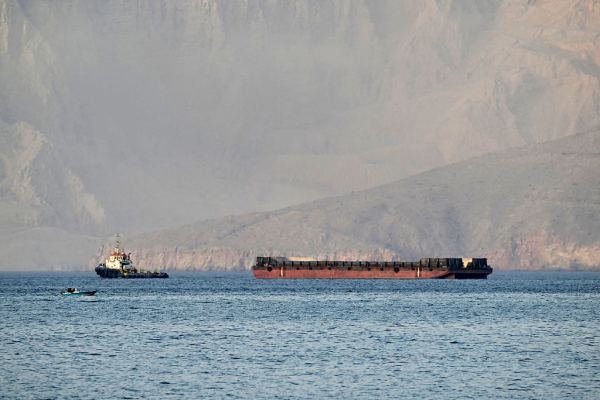
As tensions in the Middle East reach a boiling point, Washington is warning shipping companies worldwide against making payments to Iran for safe passage through the Strait of Hormuz, cautioning that such transactions could expose violators to punitive sanctions.
In a statement issued on May 1 (Friday), the U.S. Department of the Treasury, through its Office of Foreign Assets Control (OFAC), said that any fees paid to Iranian entities, regardless of how they are structured, may constitute sanctionable activity. This includes payments disguised as charitable donations.
The Treasury specifically noted that contributions to organizations such as the Iranian Red Crescent Society could still be deemed violations if linked to transit arrangements. The warning reflects growing concern in Washington over reports that Tehran has sought to impose transit charges on vessels navigating the strategic waterway.
RELATED: Iran Struggles With Surplus Oil as US Sanctions Disrupt Exports
A critical energy corridor
The Strait of Hormuz remains one of the world’s most vital energy chokepoints, with roughly 25 percent of global seaborne oil and liquefied natural gas shipments passing through it. Any disruption, or perceived attempt to control access, has immediate implications for global energy markets.
Success
You are now signed up for our newsletter
Success
Check your email to complete sign up
According to OFAC, the U.S. government is aware of Iranian efforts to require ships to pay for secure passage. Earlier in the week, the agency had already alerted businesses to the potential risks. Friday’s notice clarified that any form of payment, whether direct, indirect, or masked through intermediaries, could trigger sanctions.
“OFAC is issuing this alert to warn U.S. and non-U.S. persons about the sanctions risks of making these payments to, or soliciting guarantees from, the Iranian regime for safe passage,” it stated. “These risks exist regardless of payment method.”
The agency added that Iran has proposed a wide range of payment mechanisms, including traditional currencies, digital assets, barter arrangements, informal exchanges, and in-kind transfers. Some reported channels include transfers to organizations such as the Bonyad Mostazafan or accounts linked to Iranian embassies.
While the Treasury did not disclose which companies or countries may have engaged in such transactions, reports note that at least one vessel paid approximately $2 million for passage.
Sanctions and enforcement measures
Alongside the warning, the Treasury announced a new round of sanctions targeting three Iranian currency exchange firms accused of facilitating billions of dollars in transactions annually. Several associated shell companies were also designated. In addition, a Panama-flagged oil tanker, the NEW FUSION, was placed on the sanctions list.
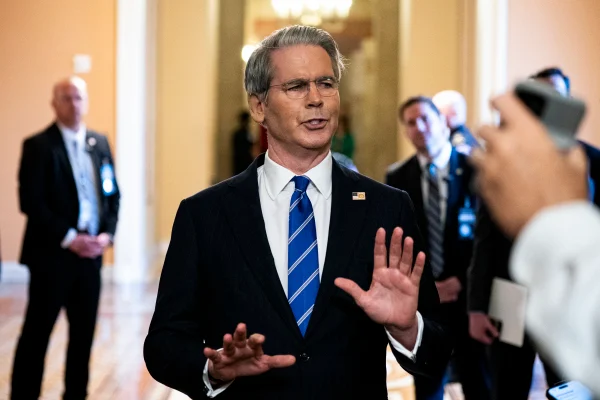
U.S. Treasury Secretary Scott Bessent said Washington would continue efforts to restrict Iran’s ability to generate and move funds, and would hold accountable those assisting in sanctions evasion. “Treasury is moving aggressively with Economic Fury by targeting regime elites like the Shamkhani family that attempt to profit at the expense of the Iranian people,” said Bessent, adding, “Under President Trump’s leadership, Treasury will continue to cut off Iran’s illicit smuggling and terror proxy networks.”
The warning comes amid heightened tensions between Iran, the U.S., and Israel, with the Strait of Hormuz viewed as a flashpoint in broader regional conflict. At the same time, diplomatic channels remain active. Iran reportedly submitted a new proposal to Washington through mediation by Pakistan, though it has received a cool response from U.S. President Donald Trump.
On April 29, Trump rejected the initial Iranian proposal and later dismissed revised versions, calling them “not satisfactory” and ultimately unacceptable.
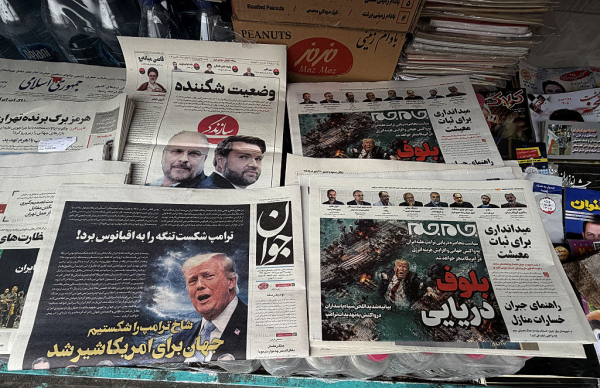
Trump has taken a hardline stance on Iran’s energy exports, suggesting that restricting its oil shipments through Hormuz could serve as a powerful tool of economic pressure. “The blockade is somewhat more effective than bombing. They are choking like a stuffed pig,” Trump said in an interview with Axios. “And it is going to be worse for them. They can’t have a nuclear weapon.”
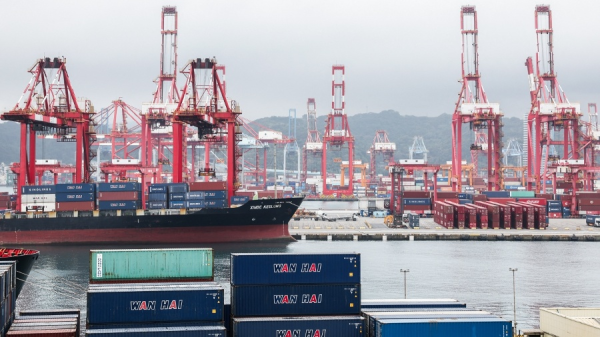
The inclusion of a Chinese oil terminal also highlights the growing complexity of enforcing sanctions in a globalized energy market, analysts note. China remains one of the largest importers of Iranian oil via indirect channels. The sanctions signal that Washington is increasingly willing to target third-country entities it believes are enabling Iran’s revenue streams. The timing of the move is also notable, coming just weeks before a planned visit between Trump and Chinese leader Xi Jinping.
A bottleneck for global shipping
The Strait of Hormuz remains a critical chokepoint for global shipping, particularly for energy markets. As tensions rise, the waterway has become central to broader geopolitical pressure strategies. Trump reiterated that Iran “must abandon” its nuclear ambitions as a condition for any normalization of relations moving forward.
“They cannot have nuclear weapons,” Trump said, adding that reconciliation would only be possible if Tehran permanently ended its nuclear program. “They don’t want me to continue the blockade; I don’t want to lift it, because I don’t want them to have nuclear weapons,” he told Axios.
Meanwhile, the U.S. warning underscores the growing complexity of operating in the region, where commercial shipping increasingly intersects with geopolitical tensions. With the Strait of Hormuz serving as a critical artery for global energy flows, even indirect financial interactions with sanctioned entities could carry significant consequences for companies.
As enforcement tightens, shipping firms and energy traders face mounting pressure to navigate not only physical risks in the region, but also the legal and financial challenges posed by evolving sanctions frameworks.