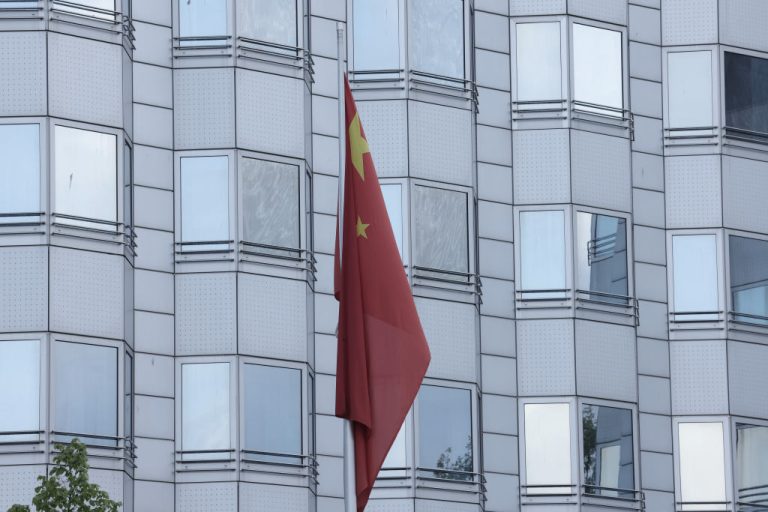
On April 28, China’s Ministry of State Security, the country’s powerful domestic and foreign intelligence agency, published a short video on social media with an extraordinary claim: young Chinese people are refusing to work, marry, or buy homes because foreign-backed media outlets and influencers have been systematically brainwashing them.
The video intercut footage of hundred-dollar bills with clips of young people embracing the “lying flat” (躺平, tǎng píng) lifestyle, a term that has become shorthand in China for opting out of the country’s brutal work culture, declining to pursue home ownership, marriage, or children, and accepting a quieter, lower-ambition life. The ministry framed this as a national security threat engineered from abroad.
Within hours, Chinese internet users turned the accusation into a joke that spread faster than any government-approved message could.
What ‘lying flat’ actually means, and why Beijing is scared of it
“Lying flat” entered Chinese popular culture around 2021 as a form of passive resistance to what many young people describe as a suffocating social contract: study relentlessly, work punishing hours, compete viciously for credentials, and still face vanishing prospects for home ownership or economic stability. The phrase carries no revolutionary ideology. It is, at its core, a shrug.
The CCP’s growth model depends on a young, striving, consuming population. Young people who stop buying apartments drag down a property sector already in deep crisis. Those who skip marriage and children accelerate a demographic collapse that Party planners have spent years trying to reverse. An entire generation quietly clocking out does not generate the GDP figures Beijing needs to project domestic legitimacy. The Ministry of State Security’s video made no mention of any of this. Instead, it blamed foreign enemies.

Success
You are now signed up for our newsletter
Success
Check your email to complete sign up
The numbers the ministry did not cite
China’s own National Bureau of Statistics tells a more straightforward story.
Youth unemployment among 16- to 24-year-olds, excluding students, rose to 16.9 percent in March 2026, reversing six consecutive months of decline and reaching its highest point since November 2025. The rate had peaked at 18.9 percent last August, when a record 12.2 million university graduates entered the job market simultaneously. The all-time high, recorded in June 2023, was 21.3 percent.
The structural pressures behind these figures are not mysterious. In 2003, fewer than one in five Chinese high school students went on to higher education. By 2023, that figure had risen to 60 percent, and annual university graduations swelled from 7.5 million to nearly 12 million in five years. The economy has not generated white-collar employment at anything close to that pace, leaving hundreds of thousands of graduates each year competing for a diminishing pool of professional jobs, or retreating into postgraduate study to delay the reckoning.
The real estate collapse has compounded the pressure. With home prices still elevated relative to income and the property sector shedding jobs and confidence, the traditional path of graduate, work hard, buy an apartment, and raise a family has become financially unreachable for much of China’s urban youth. Deflationary pressures across the broader economy have made private entrepreneurship, once a credible alternative, feel like a trap. One widely shared comment captured the mood: “I don’t want to lie flat. But with the economy this bad, who dares start a business? The harder you try, the more you lose.”
The propaganda backfire
The Ministry of State Security video drew mockery almost universally. Chinese internet users, operating under heavy censorship but skilled at finding the edges of it, responded with a wave of satirical posts.
Some users declared themselves proud agents of foreign subversion, inviting others to explain how they could collect their overseas handler payments. Others observed that the ministry had essentially confirmed what everyone already knew: the government cannot solve the problem, so it is finding someone else to blame.
“They can’t fix the problem, so they blame foreign organizations,” read one widely circulated comment. “The era when you can’t lie flat even if you want to, and lying flat somehow becomes someone’s conspiracy.”
Overseas, in screenshots circulating widely on X (blocked inside mainland China but accessible to the diaspora), satirists went further. The name “Xi Jinping” (习近平) was remixed into “Xi Tǎng Píng” (习躺平), meaning “Xi Lying Flat,” playing on the shared character. Wu Zuolai, a China scholar based in the United States, published a series of ink-wash paintings depicting a recumbent Xi Jinping, captioning them: “One man lies flat; all under heaven finds peace.” The phrase echoed a classical Chinese idiom about a wise ruler bringing tranquility, repurposed here as bleak political satire. Activist Yang Ruohui shared digital art imagining Xi in repose, writing: “Why not learn to lie flat? This is, after all, a form of nonviolent non-cooperation.”
A prominent commentator writing under the handle “New Highland” published a longer essay, widely shared in screenshots, arguing that “lying flat” has nothing to do with foreign manipulation. It is a rational response by ordinary people to a system that has stopped rewarding effort. The essay placed direct responsibility on Xi Jinping’s “political priorities, diplomatic approach, economic policies, and lifetime tenure arrangements,” arguing that these decisions have “created systemic despair” across Chinese society. The author concluded that solving the lying-flat problem requires, first, solving the Xi problem.
A government that has run out of answers
Governments with credible economic solutions announce them. Governments without credible solutions look for culprits.
Beijing’s official response to the youth employment crisis has been to pledge “support policies for college graduates and other young people” in its annual work report, without specifying mechanisms or timelines. Meanwhile, interest in civil service positions, with their comparatively stable salaries and state-backed security, has surged, as young graduates increasingly treat government jobs as the only reliable shelter in an uncertain economy.
That retreat toward “iron rice bowl” employment, as state jobs are traditionally called in China, is its own quiet rebuke to the ministry’s foreign-subversion thesis. If lying flat is a foreign conspiracy, what do you call fleeing the private sector for the state payroll? The ministry’s video cannot answer that, because answering it would require acknowledging that the market Xi Jinping claims to be modernizing is not working for the generation that is supposed to inherit it.
One mainland satirist drew the logical circle closed. Writing without naming names, he described a German man who refused to work, lived off a wealthy friend’s charity, spent his days writing books urging workers to fight their employers, and was therefore the original foreign instigator of lying flat. The comments section immediately identified the man as Karl Marx.