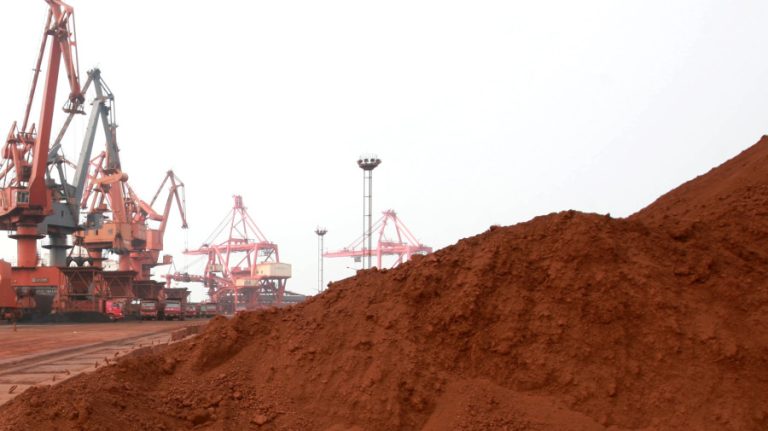
Communist China dominates the global supply of rare earths. In recent years, the Chinese Communist Party (CCP) has increasingly “weaponized” rare earth resources, prompting the United States and European countries to seek alternative supply chains.
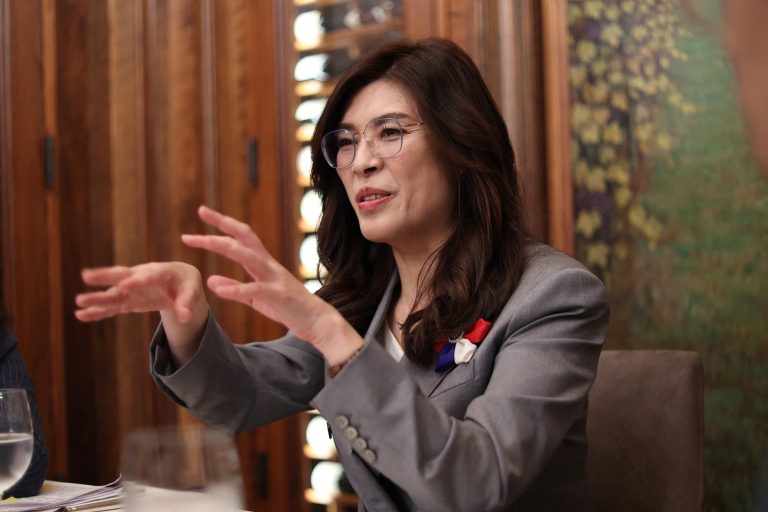
According to Hsu Tsun-tzu, director of the Taiwan-ASEAN Research Center at the Chung-Hua Institution for Economic Research, Taiwan’s Industrial Technology Research Institute (ITRI) has successfully developed rare earth extraction technology and hopes to cooperate with other countries to establish a non-China supply chain, the Taipei Times reported.
The disclosure was made at an online seminar titled “New Frontiers in the Trade-Economic Security Nexus in Asia” hosted by the Brookings Institution. Participants included Hsu Tsun-tzu and Kari Heerman, a senior fellow at the Brookings Institution, according to CNA, Taiwan’s state news agency.
Addressing the issue of rare earths, Hsu said that if countries consider a stable and secure supply of critical minerals to be essential, they should work together by pooling technology, capital, human resources, and natural resources to establish alternative supply systems.
She added that many people may not yet be aware that ITRI has already developed rare earth extraction technology. The United States is aware of this capability, she said, “but so far, we are still waiting for more countries to engage in discussions on mechanisms for this type of cooperation.”
Success
You are now signed up for our newsletter
Success
Check your email to complete sign up
Hsu Tsun-tzu noted that rare earth elements are indispensable raw materials for industries such as automotive manufacturing, electronics, and defense. Because China is the world’s leading producer of rare earths, the Chinese Communist Party’s use of rare earths as a means of coercion has prompted Western countries to reduce their dependence on Chinese supplies.
She said that the CCP is using rare earth resources as “a highly effective weapon,” making it essential for like-minded partners to work together to build a non-China supply chain, adding, “because we do not have much time left.”
Earlier this year, Kuo Jyh-huei, Taiwan’s Minister of Economic Affairs, said that the ministry is supporting the Industrial Technology Research Institute (ITRI) in conducting independent research and developing pilot-line technology for rare earth processing. The goal is to complete a pilot production line within three years to strengthen Taiwan’s self-reliance in critical materials, according to a March CNA report.
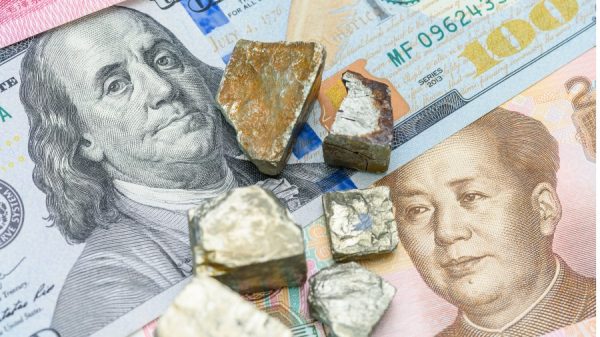
Taiwan and its allies build a ‘non-China supply chain’
In 2025, the Chinese Communist Party (CCP) tightened its export controls by introducing the “0.1 percent rule,” requiring exporters to obtain Chinese government approval if a product contains more than 0.1 percent Chinese-origin rare earth materials. The move heightened concerns in the United States and Europe over supply chain vulnerabilities and accelerated efforts to develop alternative supply chains.
Taiwan’s electronics and semiconductor industries have also reassessed their dependence on imported raw materials, as Taiwan has no significant rare earth deposits and relies heavily on imports from China.
According to Fengyun Academy (丰云学堂), Taiwan’s strengths in the rare earth industry are concentrated in the midstream and downstream segments of the supply chain.
- Midstream: Production of permanent magnet powders and magnetic materials, as well as recycling of rare metals such as tungsten and cobalt.
- Downstream: Application of rare earth magnets in electric vehicle motors, server cooling modules, power magnetic components, and wind power equipment.
Because most raw materials are imported from China, Taiwanese companies including China Steel Corporation, Lien Yeh Metal Co., and AcBel Polytech have invested in recycled metals and alternative material technologies to reduce supply chain risks.
Countries currently cooperating with Taiwan on rare earth and critical mineral supply chains include the United States, Japan, Australia, the European Union, and India. To safeguard critical materials for semiconductors and AI servers, the Taiwanese government is working with allies such as the United States and Japan to establish a “non-China supply chain” and explore the development of rare earth production and pilot manufacturing lines in third countries.
Australia possesses abundant mineral resources and is the world’s second-largest holder of rare earth reserves after China. It also has substantial deposits of nickel, cobalt, manganese, high-purity silica sand, and rare earth elements, making it a major supplier of battery metals and rare earths such as neodymium. The Australia–New Zealand Chamber of Commerce has called for the establishment of a “Taiwan–Australia–New Zealand Critical Minerals Partnership”to help address Taiwan’s shortage of upstream raw materials.
According to the Central News Agency, a white paper issued by the chamber recommends that Taiwan establish a critical minerals working group, deepen its critical minerals partnership with Australia, leverage the Australia–Japan minerals partnership, strengthen domestic investment in refining, processing, and recycling capabilities, and build strategic reserves of critical minerals.
Taiwan and the European Union are also exploring cooperation on rare earth substitute materials, refining technologies, and advanced recycling technologies under frameworks such as Horizon Europe. In addition, Taiwan and India have launched strategic dialogues to examine opportunities for combining Taiwan’s technological expertise with India’s undeveloped rare earth resources.
Although Taiwan lacks domestic rare earth deposits, its advanced research and development capabilities and expertise in recycling electronic waste could enable it to play a significant role in the development of a non-China rare earth supply chain in the future.