Hong Kong’s government has quietly allocated another HK$5 billion (US$640 million) in non-recurrent spending for national security operations, bringing total security-related funding under the city’s national security framework to HK$18 billion over the past six years.
The latest allocation was disclosed in Hong Kong’s newly-published quarterly government accounts covering April 2025 through March 2026. According to local media reports, this marks the third major national security appropriation since Beijing imposed the Hong Kong National Security Law in 2020.
Critics say the repeated funding injections underscore how deeply national security enforcement has become embedded in Hong Kong’s governance structure, while also raising growing concerns over transparency, oversight, and the expanding reach of the law.
RELATED: 250 People Arrested Under National Security Law Since 2020: Hong Kong Justice Chief
HK$18 billion allocated since 2020
Under Article 19 of the Hong Kong National Security Law, the city’s financial secretary may allocate dedicated funds from general government revenue for safeguarding national security once approved by the chief executive. The provision also exempts such expenditures from many existing local legal restrictions and oversight mechanisms.
Success
You are now signed up for our newsletter
Success
Check your email to complete sign up
According to Hong Kong government records, the latest HK$5 billion allocation follows previous appropriations of HK$8 billion in 2020 and HK$5 billion in 2023 by Financial Secretary Paul Chan Mo-po.
Local outlet Ming Pao reported that the new allocation was not previewed in the government’s annual budget and contained no indication of how long the funds are expected to last — a contrast with the initial 2020 appropriation, which explicitly referenced covering “future years of expenditure.”
The latest government gazette described the funds as “non-recurrent expenditure” intended to increase dedicated resources for safeguarding national security.
Observers also noted subtle wording changes between the Chinese and English versions of previous funding notices and this year’s announcement, fueling speculation that authorities are attempting to broaden the flexibility surrounding future security spending.
Lawmakers defend increased spending
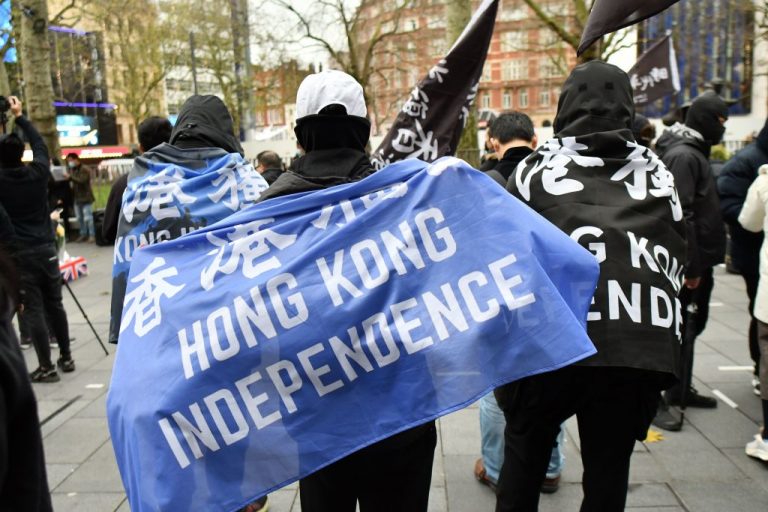
Pro-establishment lawmakers defended the latest allocation, arguing that continued national security funding is necessary to prevent unrest similar to the massive 2019 anti-government protests that erupted more than two decades after Hong Kong’s return from British to Chinese rule in 1997. The demonstrations, initially sparked by a proposed extradition bill, evolved into a broader pro-democracy movement that Beijing later used to justify imposing the sweeping national security law in 2020.
Shiu Ka-fai, chairman of the Legislative Council’s security panel, said stronger security spending was justified “to avoid a repeat of the 2019 situation,” adding that authorities should even increase funding further if risks rise.
Another lawmaker, So Siu-chung, described the HK$5 billion figure as “neither too much nor too little,” arguing that the absence of major recent unrest did not mean security investment should decline.
Critics warn of shrinking oversight
Former Hong Kong legislator Sin Chung-kai sharply criticized the lack of transparency surrounding the funding. “There is virtually no transparency,” Sin said, according to local reporting. “Not only does the public not dare ask questions, even lawmakers do not dare challenge it.”
Sin argued that while ordinary public expenditures are typically subject to audits, national security spending now operates under minimal scrutiny. “They can spend it however they want,” he said.
He further claimed that Hong Kong’s national security apparatus has increasingly expanded into areas beyond large-scale political protests, pointing to recent arrests involving public criticism and online speech.
Sin cited the case of a Chinese University student who was reportedly arrested after publicly commenting on a deadly residential fire and raising broader social demands. According to Sin, the incident reflected how authorities were applying national security mechanisms more broadly to justify their continued existence.
Concerns over extraterritorial enforcement
Human rights groups and overseas activists have increasingly raised alarm over the extraterritorial scope of Hong Kong’s national security law. Articles 37 and 38 of the legislation assert jurisdiction not only over Hong Kong residents but also over non-residents accused of violating the law outside Hong Kong territory. Authorities have also issued HK$1 million bounties for several overseas activists and former lawmakers accused of national security offenses after fleeing abroad.
Critics argue that the law’s broad wording has enabled authorities to extend pressure beyond Hong Kong itself, including through overseas surveillance, intimidation campaigns, and pressure targeting family members of exiled activists.
Sin described the government’s approach as “mercury spilling across the ground,” a Chinese idiom implying pervasive and difficult-to-contain penetration, warning that the expanding security system risks creating a climate of “white terror.”
The latest funding announcement comes as Hong Kong continues to face international scrutiny over the erosion of civil liberties, media freedom, and political opposition following the implementation of the national security law in 2020.