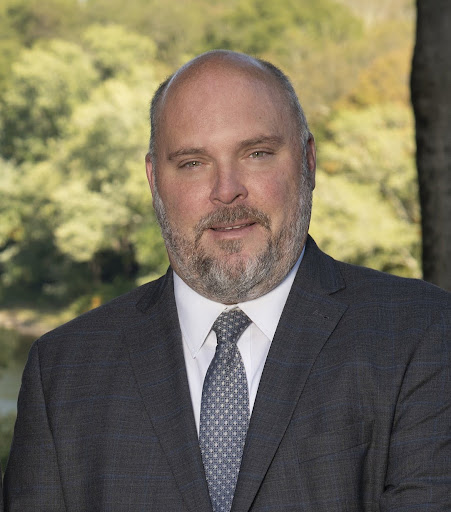
Hong Kong’s government has appointed retired former Deputy Police Commissioner (Operations) Yuan Yuk-kin as Director of the Food and Environmental Hygiene Department (FEHD), the latest in a series of senior civilian appointments filled by former police and disciplinary-services officials.
The appointment, announced on June 15 and effective the following day, has reignited chatter among netizens over the expanding role of security personnel in Hong Kong’s governing apparatus.
RELATED: Jimmy Lai Sentenced to 20 Years as Beijing ‘Settles Scores’ in Hong Kong
Taking the helm
The FEHD oversees food safety, public markets, environmental hygiene, and licensing matters across Hong Kong. In recent years, the department has also incorporated national security provisions into licensing requirements for restaurants, food manufacturers, swimming pools, and entertainment venues. Businesses found to have engaged in activities deemed harmful to national security can face suspension or revocation of their licenses.
Hong Kong authorities broke with convention this year by openly recruiting candidates for the FEHD director position. According to the government’s job description, the successful candidate would be expected to handle politically sensitive issues and drive organizational reform.
Success
You are now signed up for our newsletter
Success
Check your email to complete sign up
Yuan, who joined the Royal Hong Kong Police Force as an inspector trainee in 1986, spent nearly four decades in law enforcement before retiring in 2023 as Deputy Commissioner of Police (Operations). During his career, he held a range of senior positions involving criminal intelligence, organized crime investigations, commercial crime, and security operations.
Part of a broader trend
Yuan’s appointment follows another high-profile personnel move earlier this year. In May, former senior police officer Tse Chun-chung assumed the post of Director of Information Services, becoming the first person with a policing background to lead the department since Hong Kong’s 1997 handover.
The position had traditionally been held by Administrative Officers (AOs), the elite civil service corps that has historically supplied many of Hong Kong’s senior policymakers. The appointments are also part of a broader shift that has seen former police and disciplinary-services officials assume increasingly prominent roles throughout the government.
Chief Executive John Lee previously served as Deputy Commissioner of Police. Secretary for Security Chris Tang is a former Police Commissioner, while Chief Secretary Eric Chan rose through the Immigration Department before becoming one of the city’s highest-ranking officials.
Former police officials have also moved into leadership positions at public institutions. Kwok Yam-shu, a former Deputy Police Commissioner, now heads the Civil Service College, while other retired officers have taken senior posts in regulatory bodies and publicly funded institutions.
Concerns over security-oriented governance
The trend has drawn criticism from some former lawmakers and political observers who argue that security credentials are increasingly valued over traditional civil-service experience.
Speaking to Hong Kong media outlet Pulse HK, former legislator Sin Chung-kai said Yuan’s appointment reflected a broader trend in recent government personnel decisions rather than an isolated case. Sin argued that an increasing number of senior posts are being filled by former police and disciplinary-services officials, a development he described as “five guns governing Hong Kong.”
Sin argued that Yuan’s appointment should be viewed as part of a broader pattern rather than an isolated personnel decision. “Simply put, Hong Kong is now governed by ‘five guns,'” he said, referring to the number of top positions held by individuals with law-enforcement or disciplinary-services backgrounds.
According to Sin, Beijing has placed increasing emphasis on political reliability and obedience among officials. Members of disciplined services, he argued, are often viewed as particularly suited to that governing approach because of their professional training and command structure.
A changing model
Supporters of the appointments argue that experienced security officials bring leadership, crisis-management skills, and operational expertise to government departments facing increasingly complex challenges.
Critics, however, view the trend as evidence of a broader transformation in Hong Kong’s governance culture since the implementation of the city’s sweeping National Security Law (NSL) in 2020. Under the NSL, authorities were granted extensive new powers to investigate and prosecute acts deemed related to secession, subversion, terrorism, and collusion with foreign forces.
Since its enactment, opposition political parties have largely disbanded, while numerous activists and former lawmakers have been arrested or imprisoned, and civil society groups, labor unions, and independent media outlets have faced mounting pressure. Analysts say the growing appointment of former police and disciplinary-services officials to senior civilian posts reflects a governance model that places increasing emphasis on security, political loyalty, and administrative control.
Whether the appointments represent administrative reform or the growing influence of security institutions remains up for debate. But what’s clear is that former police and disciplinary-services officials now occupy an expanding number of influential positions across Hong Kong’s government, signaling a notable shift in how the city recruits and promotes its senior leadership.