If you haven’t seen it trailing over fences, climbing trees, and occupying the edges and understories of forests, you’ve probably at least caught a whiff of its heavenly scent. Japanese honeysuckle is a vigorous, woody vine with fragrant, white flowers that quickly fade to yellow. In China it is called jin yin hua, or “gold and silver flower,” and it is treasured for its medicinal qualities.
Across much of North America, however, it is an aggressive, invasive plant.
Native to Eastern Asia, Japanese honeysuckle (Lonicera japonica), was first introduced to the U.S. in 1806, as an attractive solution for erosion control. Ironically, this plant is now out of our control.
Not only is Japanese honeysuckle highly adaptable and enduring, its seeds are readily consumed and spread by birds and small mammals. The vast root system can extend eight feet laterally from the crown, and to depths exceeding three feet in dry soil. That is to say, once it takes hold, it is very difficult to get rid of.
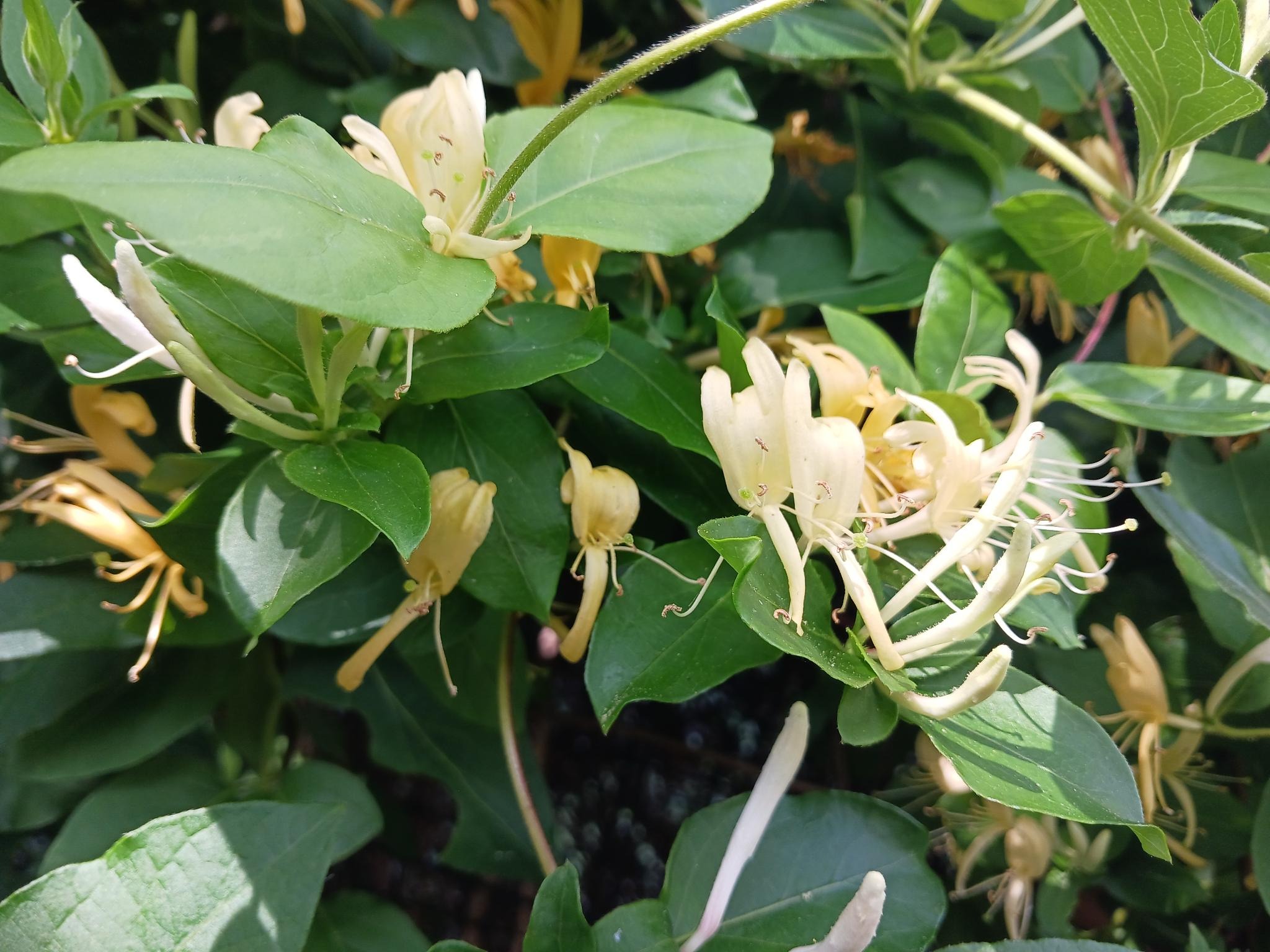
As the saying goes, “When life gives you lemons, make lemonade.” Perhaps it’s time to look at how this plant can redeem itself. The widespread use of honeysuckle in traditional Chinese medicine (TCM) may be a key component in keeping it from taking over its native lands.
Traditional use of Japanese honeysuckle
Success
You are now signed up for our newsletter
Success
Check your email to complete sign up
Honeysuckle has a long history of use in China. It is listed in the ancient herbal compendium Shennong Bencao Jing as one of the top herbs for clearing heat and eliminating toxins.
According to traditional Chinese medicine, jin yin hua is said to enter the meridians of the large intestine, lung and stomach, making it a versatile herb for both therapeutic and preventative purposes. It is often included in formulas addressing fever, inflammation, respiratory ailments, and toxicity.
As a stand-alone herb, honeysuckle tea is commonly consumed during the summer months for its cooling and detoxifying effects. Honeysuckle infusions are also used in soups or combined with other herbs to promote balance during seasonal transitions.
In Western herbal medicine, Locinera japonica is recognized for its disease-fighting antibacterial, antiviral and antiseptic properties; calming antispasmodic effects; cooling astringent, febrifuge, and refrigerant properties; and cleansing diuretic and diaphoretic properties.
- A syrup made from honeysuckle flowers, leaves, stems, and additional, optional herbs (like plantain or violet) is said to be effective in soothing coughs and colds.
- An infusion (steeped) of leaves, flowers and stems has been used against dysentery and pneumonia, as well as other respiratory infections.
- A decoction (simmered) of honeysuckle stems has been taken internally to treat arthritis, hepatitis and mumps.
- Honeysuckle decoctions have also been used as a wash to clean wounds, reduce swelling, and soothe skin irritations.
What science says about Japanese honeysuckle
Scientists have identified bioactive compounds in Lonicera japonica that may account for the plant’s medicinal properties, including:
- Luteolin, a flavonoid with anti-inflammatory, antihistamine, antioxidant, and antibacterial properties. It can reduce swelling by suppressing inflammatory signaling molecules.
- Chlorogenic acid, which demonstrates antiviral activity against pathogens such as syncytial virus (which causes respiratory infection), coxsackievirus (which causes hand, foot, and mouth disease), and cytomegalovirus (a common herpes virus). It also serves to reduce inflammation.
- Honeysuckle glycosides, which have powerful antibacterial properties. They can inhibit the growth of bacteria even at a very low concentration.
- Honeysuckle also contains a number of alkaloids with astringent properties.
Making use of Japanese honeysuckle
By harvesting honeysuckle, you can harness its natural healing power and help put the brakes on a botanical bully at the same time. You probably have an abundant source nearby that is free to pick — just be sure that it is neither growing in contaminated soil nor being sprayed with chemicals, and always obtain proper permission if it is on someone else’s property.

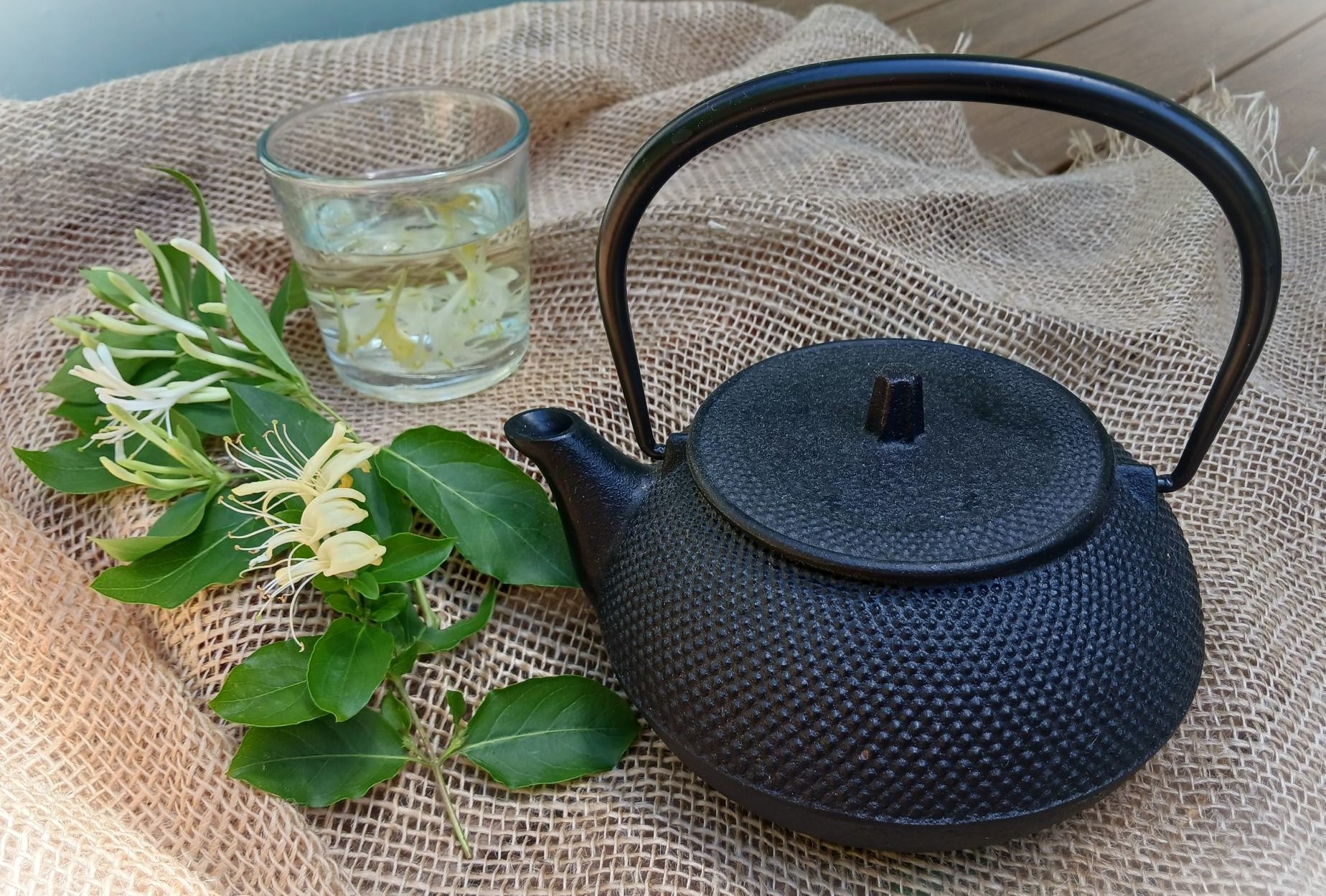
Honeysuckle flower tea
The safest and simplest way to enjoy the benefits of Japanese honeysuckle is to make an herbal infusion (tea) from its fragrant flowers. These appear in pairs of pairs and are easy to pick by hand. They should be harvested on the first day of blooming, when they are still white. As the color fades, so does the medicinal value.
The flowers can be used fresh, or sun dried for later use. Steep a small handful of fresh flowers (about four grams of dried flowers) in a cup of boiled water for about 10 minutes.
Although it does not taste as sweet as it smells, honeysuckle tea has a pleasant, fresh, floral flavor that feels bright and clean. Honeysuckle flower tea is generally considered safe for most adults, but children and pregnant or breastfeeding women are advised against it unless prescribed by a doctor.
Honeysuckle syrup
If you have a sweet tooth, or just aren’t a tea person, try honeysuckle syrup.
- Gently simmer one generous cup full of fresh flowers in two cups of water until the volume of water is reduced to half.
- Strain the liquid off, then add an equal amount of honey or sugar while it is still warm.
- Stir until the sweetener is completely dissolved, then transfer the syrup to a clean jar with a tight-fitting lid.
- Allow the jar to cool completely, and store it in the refrigerator for up to six months.
Use honeysuckle syrup directly to soothe coughs and sore throats, add it to other herbal teas as a sweetener, or drizzle it on yogurt or pancakes, as you would use other syrups.
Honeysuckle decoction
The leaves and stems of honeysuckle offer more potent medicinal properties and yield a decidedly green and mildly-bitter, earthy flavor when simmered. Consult your physician before taking large or strong doses internally. To stay on the safe side, use your honeysuckle decoction externally as an antiseptic wash to soothe irritated skin or reduce inflammation.
Honeysuckle Infused oil
If you prefer the idea of an external application, make an infused oil for a ready-made remedy any time of the year.
- First, collect and dry a quantity of honeysuckle flowers, then stuff them into a clean, glass jar.
- Cover the flowers with a skin-friendly carrier oil (like olive oil, sweet almond oil, avocado oil, or jojoba oil) and secure the lid.
- Place the jar in a sunny window for two to three weeks, shaking the contents whenever you remember.
- Strain off the infused oil through a fine sieve, and return it to the clean, dry, jar.
- Store the infusion in a cool, dark place.
- Honeysuckle-infused oil can be used as-is, or as a base for a thicker salve.
Honeysuckle vine crafts
Honeysuckle uses are not limited to herbal remedies. The Cherokee People used our native honeysuckle vines for making useful crafts like baskets and mats. If you are very handy, you might even try making a honeysuckle sunhat out of the young and flexible stems.
Picture yourself sporting a unique honeysuckle creation on your head, with a cup of honeysuckle tea in your hand… you’ll be as cool as a cucumber when summer cranks up the heat!