According to The Epoch Times, in the early hours of May 31, intruders broke into the June 4th Museum in El Monte, a city in Los Angeles County, spray-painting walls and exhibition displays and causing significant property damage. The museum, which commemorates the 1989 Tiananmen Square pro-democracy movement and the military crackdown that ended it, issued a statement on Monday condemning the attack and the parties behind it, describing it as the latest instance of transnational repression targeting the overseas Chinese democracy movement.
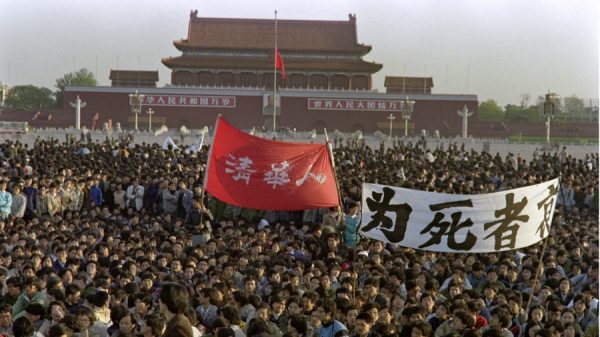
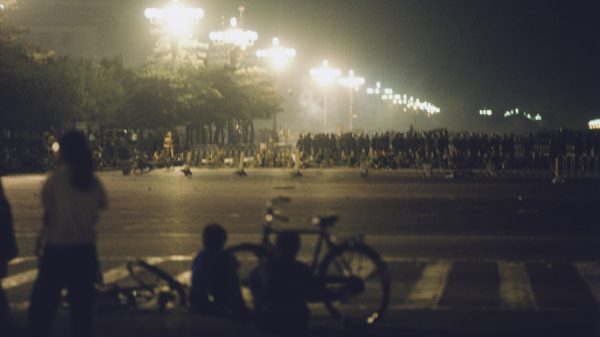
The timing was deliberate. The attack came three days before the 37th anniversary of June 4th, the date Chinese Communist Party troops opened fire on protesters gathered in Tiananmen Square, killing hundreds, possibly thousands, in what remains one of the most suppressed events in modern Chinese history.
Museum co-founder: No one wants June 4th forgotten more than the CCP
Wang Dan, a student leader during the 1989 protests who went on to become one of the most prominent overseas Chinese democracy advocates, told Voice of America (VOA) that the attack was an unmistakable act of intimidation.
“This is a very obvious act of intimidation,” Wang Dan said. “I think the main purpose is to threaten and frighten people, in the hope that you won’t make a big deal out of commemorating June 4th.”
Wang drew a direct line between this attack and a series of similar incidents in recent years: the vandalism of the Liberty Sculpture Park in Los Angeles, physical assaults on overseas dissidents, and now the museum break-in.
Success
You are now signed up for our newsletter
Success
Check your email to complete sign up
“The party that least wants us to commemorate June 4th is the CCP,” he said. “But this kind of intimidation and threat will not truly work. We will not submit to it.”
Museum volunteers reported the break-in to the El Monte Police Department the morning it was discovered. Wang confirmed that the museum’s surveillance system had been damaged during the attack but was subsequently repaired, and that partial footage had been recovered and handed to police.
Wang also said he had informed the FBI and relevant congressional offices of the incident and was awaiting their response.
Sergeant Andrew Mora of the El Monte Police Department confirmed by email that the department had opened a criminal investigation, classifying the case as a hate crime and stating that it would notify the FBI in accordance with applicable hate crime statutes.
“The investigation is ongoing,” Mora wrote. “To ensure the completeness of the investigation, our department will not release any information at this time regarding the suspect’s identity, potential associates, investigative leads, or evidence. We have obtained surveillance footage from the crime scene and are reviewing it,” Sergeant Mora wrote in an email according to VOA.
The department did not respond to questions about whether the attack was being examined as a possible act of transnational repression.
Over the past several years, Beijing’s practice of extending its surveillance, censorship, and intimidation apparatus beyond China’s borders has drawn growing attention from Western governments and security agencies. The pattern has a name: transnational repression, the use of harassment, threats, and sometimes violence to silence dissidents, activists, and ethnic minorities living abroad.
Critics, including legal scholars, human rights lawyers, and international advocacy organizations, have repeatedly argued that democratic countries’ law enforcement agencies tend to process these incidents as isolated criminal matters, missing the state-directed coordination behind them.
Human Rights Watch, the New York-based advocacy group that has tracked transnational repression cases across multiple countries for more than a decade, has documented hundreds of incidents since 2014. In many of those cases, local police initially treated the events as standalone crimes with no apparent political context.
Attack backfired: Vandalism drew larger crowds to the Tiananmen anniversary forum
The break-in did not interrupt the museum’s programming. The same day the damage was discovered, the June 4th Museum held the second session of its “China Forum,” a discussion series. The forum’s theme, “Cross-Generational Cooperation in the Political Opposition Movement,” drew a standing-room crowd, with supporters queuing outside the entrance. One person messaged Wang directly offering an $800 donation toward repairs.
Wang was unsparing in his assessment of the miscalculation.
“Suppression only garners us more support,” he wrote on Instagram. “The CCP’s stupidity is utterly incomprehensible.”
The museum will restore damaged exhibits where possible. Where restoration is not feasible, Wang said the museum intends to display the vandalized pieces in their damaged state. The destruction itself, he argued, has become part of the historical record.
Wang confirmed that all scheduled anniversary events would proceed as planned.
The June 4th Museum was founded in Hong Kong in 2014, conceived as a permanent institution dedicated to preserving the memory of the Tiananmen pro-democracy movement and the massacre that ended it. In 2021, as the CCP systematically dismantled Hong Kong’s civil society under the national security law imposed the previous year, the museum was forced to close. It reopened in New York in 2023, then relocated to Los Angeles in 2025.