What was June Fourth?
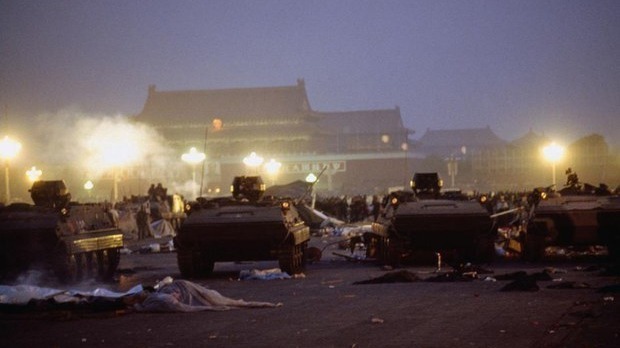
June Fourth was not the suppression of a riot, not a crowd-clearing operation, and not merely the enforcement of martial law. Rather, the author argues that June Fourth consisted of the Tiananmen Massacre combined with a nationwide campaign of repression.
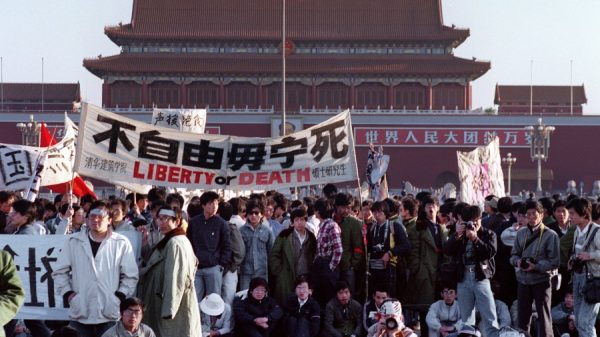
The Chinese Communist Party (CCP) has long maintained that June Fourth was an operation to quell a “counterrevolutionary riot.” The author rejects this characterization, arguing that the 1989 democracy movement was fundamentally a peaceful protest movement rather than a violent uprising.
The article contends that during the 1989 movement, Beijing experienced an unusual degree of public order. According to contemporary accounts cited by the author, there were no significant acts of violence initiated by protesters, and after martial law was declared and police presence was reduced, students and residents organized themselves to maintain order. The author notes that some of these developments were reported even in official Chinese media at the time.
The CCP has argued that the military intervention became necessary because a “counterrevolutionary riot” had emerged in Beijing. Some people accept this narrative because soldiers were indeed killed during the events. However, the author cites historian Wu Renhua, a former lecturer at the China University of Political Science and Law, who argues that the crucial question is one of chronology: Did violence against soldiers occur before or after troops opened fire on civilians?
Success
You are now signed up for our newsletter
Success
Check your email to complete sign up
According to Wu’s research, based on reconstruction of timelines and documented incidents, soldiers opened fire on civilians first, while attacks on military personnel occurred later. In this interpretation, the military shootings were the cause and subsequent civilian resistance was the consequence. Wu argues that troops were already firing on civilians before 10:00 p.m. on June 3, whereas no soldiers are known to have died before approximately 1:00 a.m. on June 4.
As cited in the article, Wu states: “Refuting the CCP’s narrative is simple: provide an example of a soldier who died before 10:00 p.m. on June 3.”
The article then addresses another argument frequently made about June Fourth: that it was essentially a military operation to clear protesters from Tiananmen Square.
Shortly after the events, Henry Kissinger remarked that no government would tolerate demonstrators occupying the capital’s principal square for eight weeks. He also compared the situation to the 1932 dispersal of the Bonus Army protest in Washington.
The article further notes that in 2005, Taiwanese writer and commentator Li Ao gave a speech at Peking University in which he cited examples since 1932—including actions by governments in the United States and Germany—to argue that governments generally do not tolerate prolonged occupations of central government plazas.
Li was quoted as saying: “Any government in the world would be a bastard at that moment.”
According to the article, some interpreted this statement as an implicit criticism of the CCP’s handling of June Fourth. Others argued that by comparing the crackdown to crowd-control operations carried out by democratic governments, Li was effectively providing a defense of Beijing’s actions. In this view, equating all governments’ responses risks minimizing the unique circumstances and consequences of the events of June 1989.
June Fourth was not a ‘crowd-clearing operation’
The author argues that June Fourth should not be characterized as a military operation to clear protesters from Tiananmen Square. Instead, he contends that the Chinese authorities employed tanks and other heavy weapons against unarmed students and civilians, including the use of live ammunition and armored vehicles. In his view, the scale and nature of the violence constitute a massacre.
The article cites several estimates of casualties. It references an early internal estimate reportedly associated with the Chinese Red Cross that placed the death toll at approximately 2,600–2,700, with around 30,000 injured, though these figures were later withdrawn or denied by Chinese authorities. The author also points to declassified British and American documents that have suggested significantly higher casualty estimates, in some cases exceeding 10,000 deaths.
Beyond Tiananmen: A nationwide crackdown
The author further argues that June Fourth should not be understood solely as the events that occurred in and around Tiananmen Square and Chang’an Avenue.
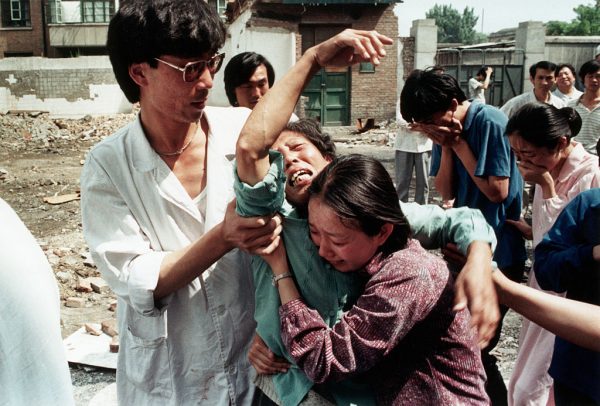
According to the article, authorities not only used force against demonstrators in Beijing but also launched widespread arrests, investigations, and detentions targeting individuals who had not been present at the scene. While martial law formally applied to specific areas of Beijing, the subsequent political campaign extended nationwide.
The author describes a broad crackdown affecting cities and rural areas throughout China, including coastal and inland regions. He notes that violence and fatalities also occurred in places such as Chengdu.
For this reason, the author argues that describing June Fourth solely as the “Tiananmen Massacre” captures only part of the story. In his view, the events also included a nationwide campaign of arrests, imprisonment, political purges, and repression.
Arrests, purges, and political consequences
Citing investigations by international human rights organizations and figures compiled from various sources, including Wikipedia, the article claims that authorities arrested tens of thousands, and possibly hundreds of thousands, of people across China. Those targeted reportedly included students, intellectuals, reform-minded officials, workers, and ordinary citizens.
The author further states that approximately four million people were subjected to political investigations or scrutiny, with many facing disciplinary measures such as transfers, demotions, expulsion from the Communist Party, expulsion from educational institutions, dismissal from public-sector positions, or other penalties.
The article also highlights the fate of Zhao Ziyang, who was removed from power and remained under house arrest for roughly fifteen years until his death.
The author’s conclusion is unequivocal:
June Fourth was not the suppression of a riot, nor was it merely a crowd-clearing operation. It was both the Tiananmen Massacre and a nationwide campaign of political repression.
The views expressed are solely those of the author and do not necessarily represent those of Vision Times.