
On June 4, Argentine President Javier Milei published an op-ed in the Financial Times outlining a bold strategy for Argentina’s adoption and positioning in artificial intelligence (AI), advocating a minimal-regulation approach, the creation of a new corporate category and the promotion of a “competitive fiscal environment.”
“As much as the industrial revolution freed us from the constraints of the human muscle, AI will free us from the constraints of the human brain, pushing productivity beyond our wildest dreams,” Milei wrote.
He argued that just like the founding of the Dutch East India Company in 1602 which “gave the world the limited liability company,” the emergence of AI presents markets with a similar transition, a transition that requires a new legal framework.
He wrote that AI needs to remain unregulated so that it is “free to be developed without the deadly hand of premature and poorly understood regulation.”
He also advocates for the creation of an entirely new corporate category in Argentine law: the “non-human corporation.”
Success
You are now signed up for our newsletter
Success
Check your email to complete sign up
What Milei envisions are entities operated solely by AI agents and robots. He says these AI-operated entities must receive protection through limited liability frameworks, arguing that when systems are allowed to make independent decisions in “unpredictable environments,” some form of legal shielding is necessary to contain risk and encourage innovation without exposing human participants or investors to unlimited personal liability.
The third component of his plan is to create a competitive tax environment where these AI driven companies receive preferential corporate tax rates, while shareholders remain free to choose the corporate governance regime that best suits their business needs.
He stressed that beneficial owners would still need to be disclosed, as “Argentina has no interest in becoming a haven for illicit capital,” and that all legitimate commercial activity would enjoy “unmatched terms” in Argentina.
“We are open for business,” Milei wrote. “In the spirit of the Dutch merchants who made Amsterdam the financial capital of the 17th century, we intend to offer the most attractive legal and fiscal environment for the AI companies that will define the 21st.”

‘We must not grant AI agents legal personhood’
On June 8, Yuval Noah Harari, an Israeli historian and author known for popular books exploring the past, present and future of humanity, penned his own op-ed in the Financial Times titled “We must not grant AI agents legal personhood,” in opposition to Milei’s vision.
Harari argues that AI agents are wildly different from humans and would have different incentives driving their actions.
He wrote, “Granting AIs corporate legal personhood would allow AI agents to take numerous new initiatives, potentially generating enormous new wealth. But legal personhood is an all-purpose key that would also allow AIs access to our financial, economic and political systems. This raises many concerns.”
He argues that, historically, corporations have been led by human executives who balance different sets of interests compared to AI agents. As corporate human agents, they are focused on the success and survival of the company, including avoiding outcomes such as bankruptcy.
At the same time, human CEOs are biological individuals with personal incentives and constraints, including a strong preference for personal freedom and wellbeing, and an aversion to penalties such as imprisonment.
By contrast, an AI CEO would operate purely as a corporate agent free of these constraints, raising questions about what kinds of constraints or sanctions could effectively govern its behaviour. For instance, if bankruptcy represents its equivalent of “death,” it may be incentivised to take extreme measures to avoid that outcome.
Harari fears should AI agents receive personhood, as Milei implies, then humanity risks being ruled by non-human corporations, or an “AI state,” against which “it might be even more difficult to rebel.”
Argentina’s economic experiment
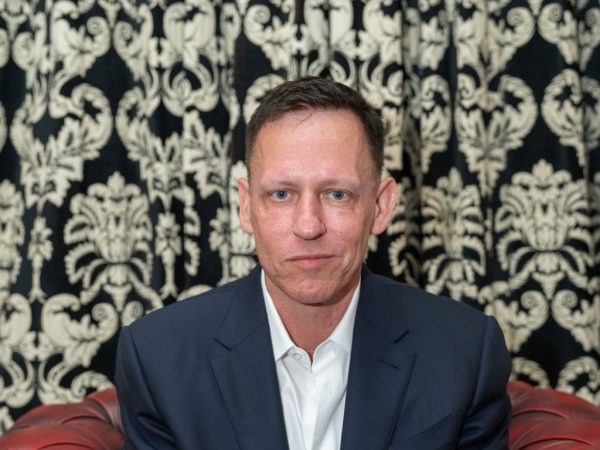
The debate is unfolding alongside growing interest from global tech investors in Argentina’s economic experiment. Among them is tech billionaire Peter Thiel, who according to the New York Times, has spent extended periods in Buenos Aires, purchased property in the city, temporarily relocated his family there and met with senior officials in Milei’s government, including the president himself.
Thiel’s presence has been widely interpreted as part of a broader trend among ultra-wealthy individuals pursuing so-called “Plan B” jurisdictions — countries offering lower regulation, favourable tax environments and political alternatives to the United States and Europe.
In Argentina, Milei’s sweeping deregulation agenda and pro-market reforms have positioned the country as an unusual testing ground for this vision of economic and technological governance.
Thiel’s engagement and Milei’s proposals highlight how Argentina is becoming a focal point for a broader global conversation: whether emerging technologies like artificial intelligence should be tightly regulated within existing legal systems, or allowed to develop within radically new corporate and fiscal frameworks.