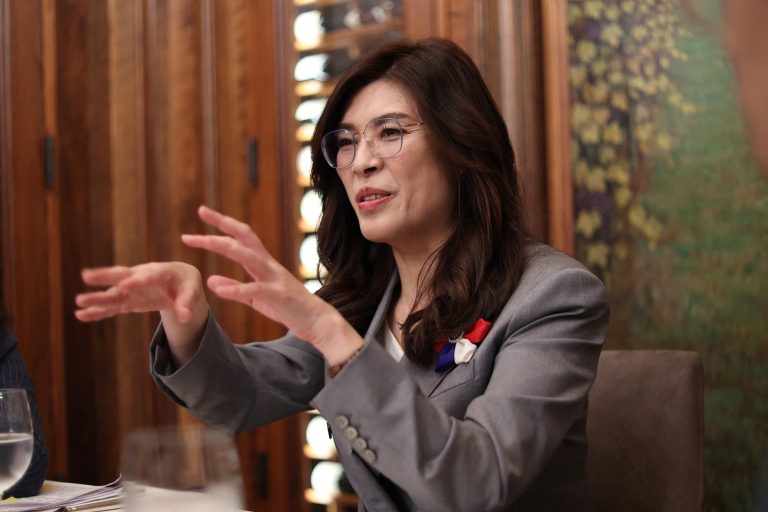
In June, with just five months remaining before Taiwan’s local elections, Kuomintang (KMT) Chair Cheng Li-wen embarked on what was expected to be a carefully orchestrated visit to the United States. The trip is believed to have been designed as a major diplomatic showcase to bolster both her personal profile and that of the KMT.
Ahead of the visit, KMT officials had publicly promoted the trip, claiming Cheng would “enter the White House in grand fashion” and hold a key closed-door meeting with senior officials from the U.S. National Security Council (NSC).
However, on the afternoon of June 10, after Taiwanese media crews waited outside the White House in Washington for hours with cameras ready, the delegation never appeared. At the last moment, the U.S. side reportedly canceled the meeting outright, the Taipei Times reported.
Before the cancellation, the meeting was initially scheduled to be held at the Eisenhower Executive Office Building, a high-level site near the White House with quasi-official significance. It was then downgraded by U.S. officials to the Washington headquarters of the American Institute in Taiwan (AIT), a less formal setting. According to the Taipei Times, the visit was ultimately canceled entirely, including the option of meeting at AIT headquarters.
The visit also suffered setbacks on the U.S. side of the Capitol, where seven bipartisan senators and representatives who had reportedly been scheduled to meet Cheng canceled their appointments one after another before her arrival, citing various reasons.
Success
You are now signed up for our newsletter
Success
Check your email to complete sign up
This incident is highly unusual in the history of U.S.–Taiwan relations. It raises questions about what may have prompted such a response from Washington.
Strategic credibility and the cost of defense budget cuts
International politics is shaped less by rhetoric about being “pro-U.S.” and more by concrete strategic commitments backed by credibility and trust.
In recent years, the Kuomintang (KMT) launched a comprehensive campaign in the Legislative Yuan against a special defense budget totaling NT$1.25 trillion over eight years, which it describes as critical to Taiwan’s security. The KMT characterized the proposal as a “blank check” for the Democratic Progressive Party (DPP), accusing it of involving significant corruption and opaque decision-making, while also promoting the claim that the United States was “forcing weapons sales” on Taiwan.
In pursuit of short-term domestic political gains, KMT strategists appear to have overlooked a key strategic reality: the NT$1.25 trillion defense budget was not merely a DPP initiative, but the result of extensive military planning, intelligence sharing, and strategic consultations between senior U.S. and Taiwanese defense and national security officials. It is described as forming a core foundation of Taiwan’s self-defense capabilities.
The package included funding for Taiwan’s indigenous submarine program, as well as the procurement of asymmetric warfare capabilities such as precision anti-ship missiles, FIM-92 Stinger missiles, and unmanned aerial defense systems. It states that the KMT reduced the proposed budget from NT$1.25 trillion to NT$780 billion during legislative deliberations.
Some believe from Washington’s perspective, such reductions amount to accusing the U.S. military and political leadership of engaging in improper arms sales and corrupt dealings with Taiwan.
While U.S. defense officials and members of Congress have faced significant diplomatic pressure from Beijing for supporting arms sales to Taiwan, the KMT’s actions in cutting the defense budget were viewed in Washington as undermining Taiwan’s defense posture and, by extension, the U.S.-Taiwan strategic partnership. This perception can be seen as the KMT turning into an unreliable strategic partner.
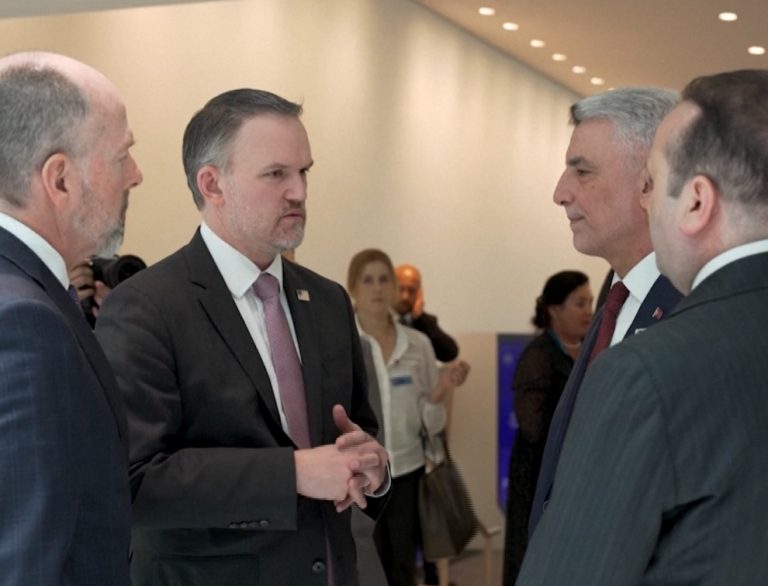
According to Focus Taiwan, both former and current American Institute in Taiwan (AIT) officials have issued warnings about the Kuomintang’s recent positions. In May 2026, current AIT Director Raymond Greene stated publicly: “In recent months, however, international media reports have created the impression that the KMT has started to adopt or emulate CCP positions on key diplomatic and security issues,” while not considering the interests of the U.S. or Japan.
While Cheng Li-wen publicly proclaims herself to be “pro-U.S.,” her defense policies have, in practice, aligned with Beijing by seeking to weaken Taiwan’s military capabilities. It contends that, because of what it describes as a deficit of strategic credibility, the United States responded by refusing meetings and giving her what it characterizes as a diplomatic cold shoulder.
The ‘pro-Beijing’ label
The most damaging blow to Cheng’s U.S. visit came from American mainstream media.
During a geopolitical discussion on Fox Business Network, host Maria Bartiromo and several East Asia defense experts discussed China’s influence operations and cognitive warfare against Taiwan. Reportedly, Bartiromo referred to Cheng as “Beijing’s person in Taiwan.”
Fox has traditionally maintained a relatively moderate stance toward Taiwan’s mainstream opposition and describes Bartiromo as an influential commentator with extensive connections in Washington’s political, intelligence, and defense communities. Such remarks, made on a nationally televised program, indicate that Cheng has already been viewed within Washington’s national security circles as a “Beijing proxy,” leaving little room to rehabilitate her reputation.
The Wall Street Journal reported that Beijing is secretly cultivating future “proxies” in Taiwan in an effort to circumvent Taiwan’s defense establishment and influence sensitive elections. It argues that the U.S. government’s alleged downgrading of contacts across the executive branch, Congress, and the media reflects the conclusions of U.S. national security agencies regarding Chinese influence operations and efforts to obstruct Taiwan’s defense development.
‘Good actress’
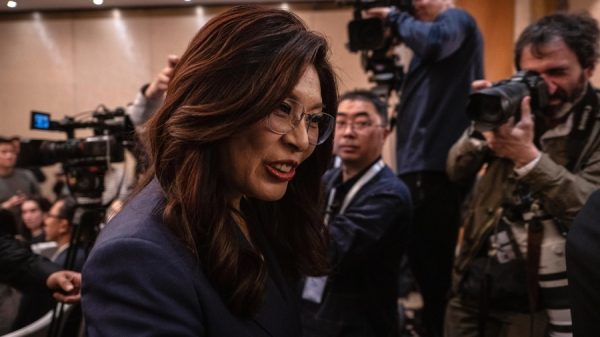
Cheng has attempted to present herself publicly as a defender of U.S.-Taiwan trusts by professing to be “pro-U.S.,” while simultaneously pursuing policies that align with Beijing by weakening Taiwan’s defense and undermining mutual trust between Taipei and Washington.
This perceived contradiction was exposed during the U.S. national security review process and resulted in a public diplomatic setback for Cheng outside the White House. It also raises questions about how she will manage her political positioning during the upcoming election campaign.
The political fallout from Cheng Li-wen’s “major setback” is that it completely shattered the opposition’s attempt to portray her as someone who could maintain friendly relations with China while remaining close to the United States. When the United States, through what it describes as a clear, bipartisan refusal to engage, signaled its position by effectively leaving meeting requests unanswered, it sent a powerful warning to the Taiwanese public.
The opposition’s effort to cultivate Cheng’s image as both “pro-China” and “pro-U.S.” amounted, in essence, to trying to have it both ways or straddling both sides. Many clever politicians, such as Lee Jae-myung, have attempted a similar strategy.
But Lee is currently facing significant political difficulties and states that he recently acknowledged in an interview that it is possible he could face sanctions or even imprisonment.
The views expressed in this article are solely those of the author and do not necessarily reflect the views of Vision Times.