Across China, local governments and Party-connected developers routinely force residents from their homes under relocation programs that promise fair compensation but deliver organized theft.
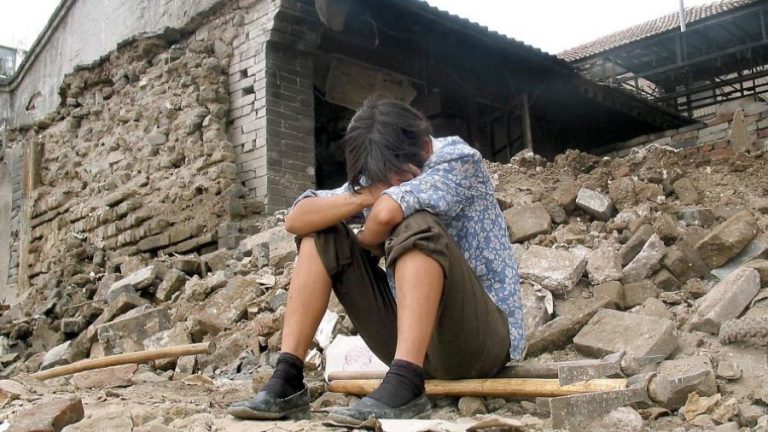
Her home is gone. The author’s cousin grew up in a residential complex in a small county in China’s northeast. The government demolished it in 2011.
She later described the ordeal in three sentences: the government had taken the building, she had had nowhere to live, and in the end even a roof over her head had disappeared.
By 2026, the apartment she had grown up in was long rubble. She still rents, still moves between borrowed rooms, and still carries the receipts of a process that stripped her family of everything it had accumulated.
Hired thugs and coerced signatures forced out residents who refused to leave
Her building was only 10 years old when the demolition orders arrived, well within its structural prime. The apartments were well-built and centrally located, close to jobs, schools, and services, and residents had invested heavily in renovation.
Success
You are now signed up for our newsletter
Success
Check your email to complete sign up
The relocation authority’s offer moved them to the urban fringe, to undeveloped land far from all of that.
The compensation formula buried its cruelty in fine print. The scheme was presented as a one-for-one area exchange, but the underlying arithmetic was designed to extract money from residents at every turn. Anyone who wanted even one additional square meter had to pay a surcharge of more than 3,000 yuan per square meter. Anyone who wanted to downsize and receive a cash difference got roughly 1,000 yuan per square meter back. The gap between those two figures, three to one in favor of the developer, ensured that whatever the resident chose, money flowed away from them and toward the Party-connected interests running the project.
Most residents refused to sign.
Hired thugs began a sustained harassment campaign against holdout families. When a local schoolteacher emerged as a vocal critic of the compensation terms, publicly questioning the formula at community meetings, he was arrested on fabricated charges and held in a detention center. Enforcers then visited his family with a direct ultimatum: sign the relocation agreement, or he would never be released. Under that pressure, his family pressed their fingerprints to the contract.

A well-built central apartment traded for cheap construction on the outskirts
Her father worked for the Agricultural Bank of China. Decades earlier, a construction company had paid off a debt to the bank by building staff housing in lieu of cash. Because the bank’s own management had supervised construction, the materials were genuine and the walls were thick; the building held warmth through the brutal winters of the northeast in a way that newer construction rarely did. In a county where quality housing was scarce, it was the address people envied.
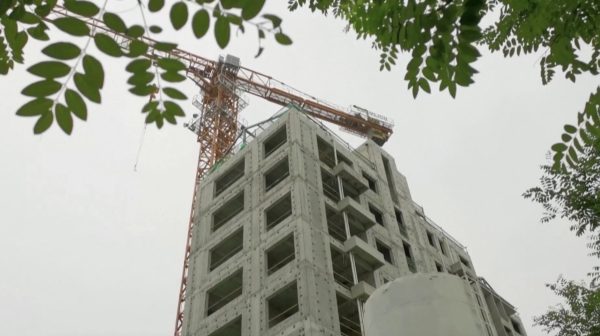
The replacement building stood on the outskirts of town, surrounded by scrubland. The construction quality was as low as the location was remote. Walls developed cracks and hollow patches within months of completion. The name of the resettlement complex became shorthand, across the whole county, for substandard housing.
Residents took possession of bare concrete with no partition walls, no toilets, no kitchens
When residents finally took possession, they found bare concrete carcasses. Interior partition walls had not been built. Floors and walls had been coated with a single thin layer of rough cement that had already begun to crumble. Bathrooms contained no toilets, no tiles, and no fixtures; only a raw drainage pipe jutting from the floor. Kitchens had no countertops, no appliances, and no infrastructure beyond an exposed gas pipe protruding from the wall.
China’s national construction standards require that resettlement housing be delivered in a state fit for basic habitation. What residents received was unlivable by any measure. When they organized and brought complaints to the municipal government and the relocation authority, developers and officials responded with a line that has since acquired notoriety across the county: “You were going to renovate anyway. We left it bare so you wouldn’t have to tear anything down. We did you a favor.”
Anyone who pushed back was warned that continued protest constituted “disrupting social stability,” the standard bureaucratic label used across China to suppress grievances against local government and Party-connected developers.
READ MORE:
- China Is Not Becoming North Korea — It Already Is One on a Global Scale
- Bill to Sanction Forced Organ Harvesting in China Clears Senate Committee
- Xi Jinping’s Secret War: How China Is Bankrolling Russia’s Assault on Ukraine
Unable to renovate or sell, she sold off the unit at a fraction of its value
Making a shell unit livable requires tens of thousands of yuan, sometimes more than 100,000: partition walls, plumbing, flooring, fixtures. Her family had exhausted their savings over years of displacement and temporary rentals. They could not afford to move in and could not afford to stay in their rental. The only exit was a distressed sale.
That exit, too, was blocked. The developer had not processed the property titles. Without a registered title certificate, the unit was legally murky; banks would not accept it as collateral and most buyers would not touch it. After multiple rounds of price cutting, she sold in 2015 for 110,000 yuan, a fraction of what even a modest apartment in the county center would have fetched. The buyer promised an additional 10,000 yuan once the property certificate was eventually issued.
Several people she knows were displaced years before the demolition was even complete, then watched the developer abscond with the project funds. Their buildings became abandoned construction sites, foundations rusting in the rain. A decade later, those residents have received nothing, every legal banner they raised was confiscated by authorities, and no official has acknowledged any responsibility.
A property certificate 15 years in the making, still blocked by a bureaucratic clerical error
Since 2015, the relocation authority and the developer traded responsibility for issuing property certificates back and forth, invoking procedural disputes and administrative technicalities to delay. By 2025, some residents had finally begun to receive their certificates after more than a decade of failed appeals.
Her parents never saw theirs. Both died waiting. After their deaths, her siblings hired a notary, completed succession documentation, and transferred all inherited shares into her name alone. The relocation authority’s staff, working from outdated procedures, recorded the ownership transfer with a clerical error: the title was entered under both her father’s name and her own, listing a deceased person as a co-owner.
When 2026 brought her turn at the property registry window, the clerk pushed the documents back across the counter. A property certificate cannot be issued to a deceased person and a living person jointly, she was told. Return to the relocation authority, have the record corrected, then bring every surviving sibling back to a notary to re-execute waivers of inheritance. Start over.
She carried her rejected documents from office to office through the winter cold of the county seat. The property registry was categorical: the error originated with the relocation authority’s filing system, and the registry’s database could not accept the corrupted entry. The relocation authority was equally categorical: the format had been set by a directive from senior leadership years ago, and no staff member at the operational level had the authority to alter a single comma.
After more than two weeks of circular appeals, the two bureaucratic units occupying the same government building had still not resolved a formatting error between themselves. A woman whose home was demolished by Party-connected interests 15 years earlier remained caught between two agencies, each insisting the problem belonged to the other.