News analysis
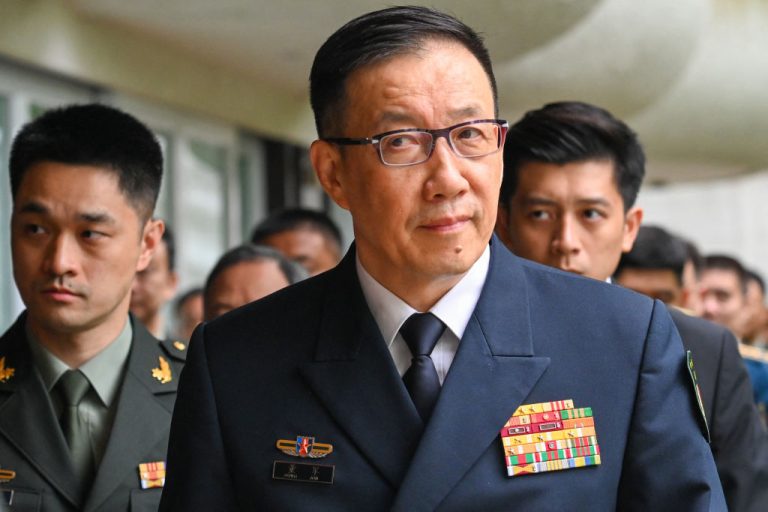
Chinese Defense Minister Dong Jun, unlike many of his counterparts in Western governments, is not China’s top defense decision-maker. In fact, he is not even a member of the Central Military Commission (CMC), the Chinese Communist Party’s highest military leadership body. Yet Dong’s recent absences from major international security forums—and appearances at selected events—have attracted widespread attention.
Are these selective appearances tied to what China’s National Defense Law and Reuters describe as China’s “military diplomacy” — a term that reflects the CCP’s distinctive approach to military engagement — or are they another sign of the continuing political purges within China’s elite leadership?
Those purges have particularly shaken China’s defense establishment, making it increasingly important for senior military officials to maintain a low public profile while internal political investigations are underway.
On May 7, Dong’s predecessor, Li Shangfu, and Li’s predecessor, Wei Fenghe, were both given suspended death sentences on corruption charges.
Success
You are now signed up for our newsletter
Success
Check your email to complete sign up
During such investigations, senior military officials are expected to demonstrate loyalty to the Party leadership and often avoid public appearances while political scrutiny continues.
In late 2024, the Financial Times, citing current and former U.S. officials, reported that Dong himself was under investigation for corruption. Chinese authorities publicly denied the claim.
Whether Dong’s carefully managed public appearances reflect political caution, Beijing’s diplomatic strategy, or a combination of both remains unclear.
Dong Jun’s appearances reflect CCP diplomatic priorities
China’s diplomacy is carefully choreographed. Because the country’s military remains firmly under the control of the Central Military Commission, which itself is headed by CCP chief Xi Jinping, Beijing dispatches Dong selectively in line with the Xi leadership’s broader foreign policy objectives.
To understand the significance of where China’s defense minister appears, it is equally important to consider where he does not. Absences from major international forums can serve several purposes, including avoiding sensitive unscripted questions, limiting media scrutiny, and reducing political risk at a time when his two predecessors have both been caught up in Xi’s sweeping anti-corruption campaigns.
RECENT COVERAGE
- The Losses, Gains, and Lasting Consequences of the US-Iran War
- Cuba’s Reform Agenda Faces New US Pressure After Latest Sanctions
- Indonesia and China Expand Push to Reduce US Dollar Dependence, Tout Program’s Success
The most widely reported absence this year was from the International Institute for Strategic Studies’ (IISS) Shangri-La Dialogue, an annual security forum held in Singapore that draws prime ministers, defense ministers, military leaders, and senior officials from more than 40 countries across the Asia-Pacific, North America, Europe, and the Middle East. This year’s meeting was held from May 29 to May 31. Instead of Dong, China sent a lower-level defense delegation.
The decision drew criticism from many European and U.S. participants, while prompting others to argue that Beijing no longer viewed the forum as strategically important.
Germany’s Chief of Defense, General Carsten Breuer, said China was “losing a chance” by not sending a ministerial-level delegation to the forum. He also called the absence “dangerous,” as it signalled that Communist China was less interested in dialogue with foreign powers.
Philippines Defense Secretary Gilberto Teodoro likewise pointed to the absence of a senior Chinese delegation during an interview with CNBC.
“I feel that as a value proposition, their presence here is reduced to a minimum…which is to promote the party line rather than to engage constructively,” Teodoro told the media.
Deng Yuwen, a Chinese writer and scholar, argued in an analysis for Foreign Policy that Dong’s absence became a bigger story than the conference itself, shifting global attention from the dialogue to why China had “snubbed” it. In his op-ed, “China Is Too Big for Shangri-La,” Deng argued that Beijing’s decision reflected its “new confidence,” suggesting it no longer needed a Western platform to communicate its policies.
“Maintaining a minimal presence is enough; there is no need to give the Shangri-La Dialogue the endorsement of a defense-minister-level appearance,” wrote Deng.
In addition to the Shangri-La Dialogue, Dong was also absent from this year’s ASEAN Defense Ministers’ Meeting and the Shanghai Cooperation Organization defense ministers’ meeting.
Perhaps the most notable absence came when Pakistani Prime Minister Shehbaz Sharif and Field Marshal Asim Munir visited Beijing from May 23 to May 26 and met Xi Jinping and Premier Li Qiang.
The visit came just weeks after Pakistan helped mediate between the United States and Iran and brokered a two-week ceasefire in Islamabad. While Dong’s absence could fit the broader pattern of his reduced public profile in 2026 — or simply reflect Beijing’s decision to conduct the meetings through top-level leadership as China and Pakistan marked the 75th anniversary of diplomatic ties — it may also underscore the limited institutional role of the Chinese defense minister under Xi’s centralized military command.
Top-level diplomacy may reflect Beijing’s broader strategy
Beijing’s preference for handling sensitive security diplomacy through Xi Jinping and other senior leaders may also reflect its effort to present itself as a responsible international actor at a time of growing global instability.
As Reuters reported about China’s Xiangshan Forum in 2024 — the year Dong last attended the Shangri-La Dialogue — “China is eager to promote itself as a responsible player in international conflicts, despite being entangled in territorial spats in its back yard.”
Against that backdrop, the question remains: how much has the continuing anti-corruption purge contributed to Dong Jun’s widely reported absences from public events this year?
The purge in China’s defense establishment has been too dramatic to be not considered a cause that contributed to the Defense minister’s low profile status. It could also reflect the general state of affairs within China’s defense ranks which the Defense minister, a former naval commander, might be facing. But it’s very unlikely the only factor causing his selective absence or presence in public.