A law passed by the Chinese Communist Party (CCP) in March this year, the Law on Promoting Ethnic Unity and Progress, is set to take effect on July 1.
Article 63, an “extraterritorial application” provision, extends the law to organizations and individuals outside China. Under the provision, overseas organizations or individuals deemed to have “undermined ethnic unity” or “incited ethnic division” may be held legally liable, Taiwan’s Central News Agency reported.
The law’s imminent implementation has raised concern and attracted international attention.
A scholar, Hung Pu-chao, the Deputy Executive Director of the Research Center for China and Regional Development at Tunghai University as per a Taipei Times report has warned that the CCP is extending its long-arm jurisdiction to encompass expressions of Taiwanese identity, arguing that if Taiwanese people begin to censor themselves out of fear, then Beijing’s legal warfare will already have achieved its objective.
Article 63’s ‘extraterritorial application’ draws particular controversy
The CCP passed the Law on Promoting Ethnic Unity and Progress in March. The law contains 65 articles covering areas such as education, language, and religion, and places Hong Kong, Macau, Taiwan, and overseas Chinese communities within what it describes as the framework of the “Chinese national community” (中华民族共同体), reported Reuters.
Success
You are now signed up for our newsletter
Success
Check your email to complete sign up
The most controversial provision is Article 63, which states: “Organizations and individuals outside the territory of the People’s Republic of China that engage in acts against the People’s Republic of China which undermine ethnic unity and progress or create ethnic division shall be investigated and held legally accountable in accordance with the law.”
Under this provision, organizations and individuals outside China who are found to have engaged in acts that the Chinese authorities determine undermine ethnic unity or promote ethnic separatism may be subject to legal liability under Chinese law.
According to the Liberty Times, Taiwan national security officials assess that the Chinese Communist Party (CCP) is attempting to extend its domestic political red lines beyond China’s borders, requiring foreign citizens, media organizations, academics, and businesses to conform to Beijing’s preferred narrative while creating a chilling effect on free expression.
The officials said that individuals targeted under the law could face consequences if they travel to China, Hong Kong, or Macau, or even transit through countries with close ties to China. They may be denied entry, subjected to questioning, barred from leaving, detained, or required to cooperate with investigations. Beijing could also employ measures such as issuing wanted notices, imposing sanctions, restricting visas, exerting commercial pressure, or placing pressure on family members, thereby encouraging people outside China to self-censor before speaking publicly.
The national security officials added that authoritarian governments are increasingly using legal, technological, informational, and economic tools to extend repression beyond their borders. In doing so, they seek to force individuals, businesses, and organizations in other countries to choose between freedom of expression and pressure from China, testing whether democratic nations can collectively uphold the fundamental principles of free speech, academic freedom, human rights, and national sovereignty.
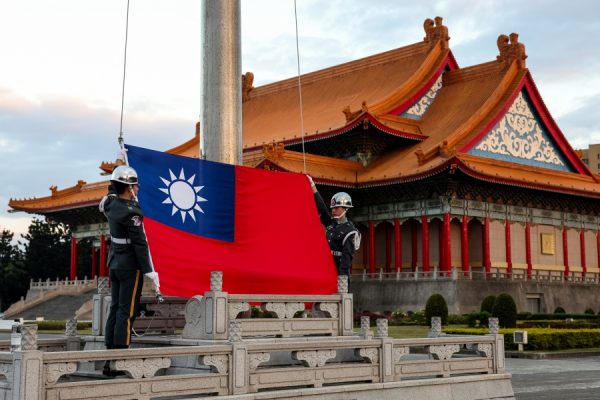
Targeting Taiwan’s identity and encouraging self-censorship
Hung Pu-chao said the CCP maintains that both sides of the Taiwan Strait belong to the Chinese nation and has made fostering a “sense of community for the Chinese nation” one of its core political objectives, reported Taipei Times.
He said that, in the past, Beijing promoted this narrative through propaganda, education, and united front work. Now, by codifying it into law, the CCP is signaling that those who reject this narrative will face consequences.
Hung noted that while the CCP cannot directly enforce its laws in Taiwan or other democratic countries, it can create pressure through measures such as entry bans, administrative sanctions, public denunciations, and commercial coercion. Taiwanese who frequently travel across the Taiwan Strait or who have jobs, investments, or family members in China are likely to be the first affected. He added that Beijing may also pressure academics, journalists, civil society organizations, and public commentators.
Hung further said that Article 63 expands the law’s scope to cover organizations and individuals outside China, reflecting Beijing’s attempt to bring Taiwan-related issues under its long-arm jurisdiction. He argued that, from the Hong Kong National Security Law to the Law on Promoting Ethnic Unity and Progress, the CCP is increasingly bringing expressions of Taiwan’s separate identity within the scope of legal accountability.
According to Hung, if people become afraid of being publicly named, denied entry to China, or having their work or personal lives affected and therefore choose to remain silent, then Beijing will have already achieved the objective of this legal campaign—without needing to prosecute large numbers of Taiwanese.
CCP has no authority to regulate the thoughts of foreign citizens through domestic law
The Taiwan Statebuilding Party Alliance (台派聯盟) said in a statement issued on June 23 that political commentary made by anyone in Taiwan, Japan, the United States, or any other democratic country is protected under the laws of those jurisdictions, according to the Central News Agency (CNA).
The alliance said that the Chinese Communist Party (CCP) has no authority to use its domestic laws to regulate the thoughts or speech of people in other countries, nor does it have the right to require the international community to accept its standards of political censorship.
The alliance said the CCP is deliberately creating uncertainty through vaguely defined laws and highly politicized enforcement, with the aim of causing Taiwanese people, overseas Chinese communities, academics, journalists, and businesspeople to self-censor out of fear of retaliation. It said that using fear to suppress freedom is fundamentally incompatible with the principles of modern democracy and the rule of law.
The alliance called on the Taiwanese government to continue strengthening risk disclosure and travel safety advisories for citizens traveling to China and countries that it said closely align themselves with the CCP, including Russia, Iran, and North Korea, in order to protect the safety of Taiwanese citizens and their property.
It said political parties across the spectrum and civil society should jointly defend democratic freedoms and reject all forms of cross-border political intimidation. It also called upon the democratic countries to pay close attention to China’s expanding claims of extraterritorial legal jurisdiction and prevent authoritarian governments from using legal tools to erode the global liberal democratic order.

Law has drawn serious international concern
The law sparked widespread international concern when it was passed during the National People’s Congress in March. Western governments, along with overseas Tibetan and Uyghur groups, criticized the legislation as providing the CCP with a new justification for transnational repression.
United Nations High Commissioner for Human Rights Volker Türk previously expressed concern over the legislation, saying it formally codifies into national law the CCP’s long-standing policies of assimilation and political repression.
On April 16, eight United Nations Special Rapporteurs issued a joint statement expressing serious concern about the law. They warned that several provisions—including Articles 10, 14, 20, and 31—could unduly restrict freedom of expression, cultural rights, freedom of religion, and the right of ethnic minorities to education in their own languages.
They also highlighted Article 46, which requires religious organizations to “adhere to the direction of the Sinicization of religion” and adapt to socialist society, arguing that the provision constitutes a direct interference with religious autonomy.
The UN Special Rapporteurs criticized the law for lacking clear definitions, arguing that concepts such as “undermining ethnic unity and progress” are vague and ambiguous, making the law susceptible to arbitrary enforcement, selective targeting, and increased surveillance of communities.