Former Acting U.S. Secretary of Homeland Security Chad Wolf warned on July 7 that some Chinese-linked criminal organizations are exploiting regulatory loopholes in the U.S. industrial cannabis industry to expand illegal cannabis cultivation, processing, and distribution operations. He said these groups have been accused of maintaining ties to the Chinese Communist Party (CCP).
Wolf urged Congress to investigate whether these criminal networks are generating illicit profits through the industrial cannabis and hemp-derived THC (tetrahydrocannabinol) supply chain, while also examining money laundering, financial flows, and the broader impact on U.S. public safety.
Chad Wolf sends letter to House Select Committee on the Chinese Communist Party
According to Fox News, in a letter to the U.S. House Select Committee on the Chinese Communist Party, Wolf called for an investigation into Chinese-linked criminal networks operating within the U.S. cannabis industry.
The letter was addressed to Committee Chairman John Moolenaar and Ranking Member Ro Khanna.
Wolf urged Congress to investigate:
- Whether Chinese-linked funding has entered the U.S. industrial hemp industry.
- Whether criminal organizations are using agriculture, real estate, and other industries to conceal illegal proceeds.
- Whether illegal cannabis grow operations involve labor exploitation or human trafficking.
- Whether regulatory loopholes exist in the production and distribution of THC products.
Success
You are now signed up for our newsletter
Success
Check your email to complete sign up
Cannabis legalization fueled rapid growth of THC products
The 2018 U.S. Farm Bill legalized industrial hemp, allowing cultivation of low-THC cannabis plants and accelerating the CBD (cannabidiol) industry.
In recent years, the market has seen rapid growth in hemp-derived psychoactive products, including THC gummies, THC-infused beverages, and THC vape products.
Wolf said some of these products have entered the marketplace by exploiting legal gray areas, while inconsistent state regulations have created opportunities for illegal operators.
An earlier investigation by the nonprofit news organization ProPublica found that Chinese criminal networks have significantly expanded their presence in the U.S. illegal marijuana market.
According to the report, organized crime groups operate large-scale illegal cultivation sites in several states, including Oklahoma, California, and Oregon.
Unlike traditional small-scale grow operations, these organizations exhibit a higher degree of coordination, including centralized management, interstate transportation, and sophisticated financial operations.
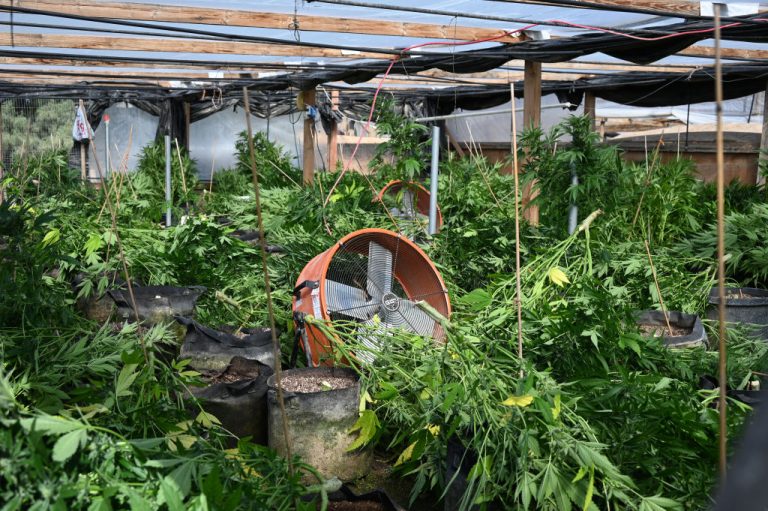
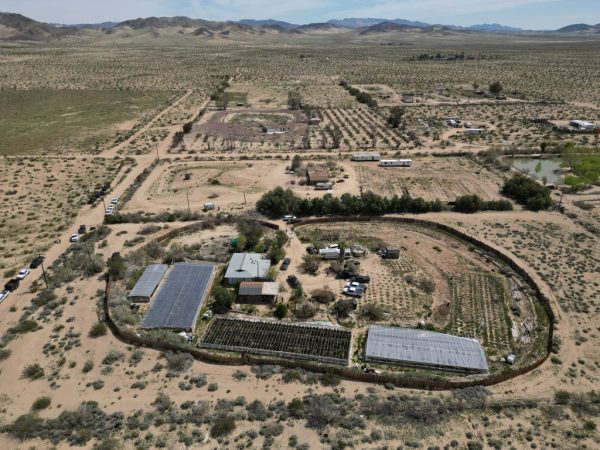
Investigators found that some criminal groups purchase or lease homes, farms, and commercial properties before converting them into illegal marijuana cultivation facilities. Many of these sites consume unusually large amounts of electricity and contain illegally modified infrastructure, creating safety concerns for surrounding communities.
According to ProPublica the groups operate as loosely connected but highly disciplined alliances directed by Chinese organized crime figures with roots in southern China and leadership based in New York. These organizations, commonly referred to as triads because of their historical symbols, wield significant influence both inside China and within overseas Chinese communities. Authorities allege they also maintain relationships with the Chinese government.
By the end of 2021, Oklahoma had nearly 10,000 licensed marijuana farms—the highest number on record. Authorities suspected that many were involved in black-market activity.
Investigators at ProPublica said one Chinese criminal organization controlled at least 400 grow sites. Another group reportedly smuggled truckloads of marijuana to the U.S. East Coast each week, with each shipment valued at more than US$20 million, before law enforcement dismantled the operation.
According to law enforcement officials and court records, most newcomers involved in the trade—both leaders and lower-level participants—arrived from New York. Authorities said New York-based organized crime groups controlled much of Oklahoma’s illegal marijuana industry, periodically appearing to collect profits.
In the March 14, 2024, article “Gangsters, Money and Murder: How Chinese Organized Crime Is Dominating America’s Illegal Marijuana Market,” Oklahoma Bureau of Narcotics Director Donnie Anderson is quoted as saying: “Chinese organized crime has taken over marijuana in Oklahoma and the United States.”
The rapid expansion of illegal cannabis drove cannabis prices sharply lower, hurting legitimate businesses while contributing to rising crime. Law enforcement officials reported frequently encountering Chinese migrant workers carrying backpacks through airports. Human traffickers were also allegedly transporting women to brothels established for supervisors of marijuana grow operations.
Court records and law enforcement officials said illegal casinos proliferated, ketamine seizures increased sharply, and robberies and violent crimes became increasingly common, targeting grow sites, dispensaries, and stash houses.
Investigators also uncovered increasingly sophisticated criminal methods. In one FBI investigation, a Chinese criminal organization operating in New York and Oklahoma allegedly used cryptocurrency fraud schemes to steal more than US$10 million from banks and other financial institutions.
By 2024, Oklahoma investigators said they had linked more than 3,000 illegal grow sites to foreign organized crime groups, with over 80 percent allegedly connected to Chinese criminal organizations.
The expansion into the marijuana market has also strengthened the global reach of Chinese organized crime, investigators said. Over the past decade, Chinese money laundering networks have become major financial facilitators for Latin American drug cartels trafficking narcotics including fentanyl, which has contributed to hundreds of thousands of overdose deaths in the United States.
Former senior Drug Enforcement Administration official Donald Im said marijuana profits have helped finance what he described as “the world’s largest underground banking network.”
Alleged links to the Chinese government
ProPublica reported that the Chinese government remains a central concern throughout these investigations. According to Western national security officials, court records, Chinese dissidents, and human rights organizations, Chinese organized crime groups allegedly maintain a mutually beneficial relationship with Beijing.
In exchange for protection, authorities allege these organizations assist Chinese officials by moving illicit funds overseas and helping monitor, intimidate, or pressure members of overseas Chinese communities.
State and federal officials warned that the expansion of Chinese organized crime into Oklahoma and other states may also pose a national security concern, given China’s status as America’s principal geopolitical rival and longstanding concerns over espionage and influence operations.
Investigators also found that leaders of several Chinese cultural associations in Oklahoma and elsewhere were allegedly connected to both the illegal cannabis trade and Chinese government officials. Some prominent individuals have been charged with or convicted of crimes including drug offenses and witness intimidation.
Money laundering and labor exploitation
ProPublica reported that the illegal marijuana industry generates large volumes of cash requiring sophisticated laundering methods.
Investigators believe some criminal networks conceal illegal proceeds through real estate investments, corporate accounts, cash transactions, and cross-border financial transfers.
The investigation also examined labor conditions at some illegal marijuana farms. Authorities found Chinese workers allegedly subjected to unusually harsh working conditions, including excessive hours, restricted freedom of movement, and substandard housing.
Law enforcement believes some of these cases may be connected to broader transnational organized crime and human trafficking operations.
Federal law enforcement agencies have increasingly focused on transnational criminal organizations that use legitimate industries to conceal illegal activity.
Officials said the rapid growth of the cannabis industry, differing state laws, and the sector’s heavy reliance on cash transactions have created opportunities for criminal exploitation.
Wolf called on Congress to strengthen financial investigations, tighten industry oversight, improve interagency law enforcement cooperation, and expand efforts to track international criminal networks in order to reduce risks to U.S. public safety.