After the Chinese Communist Party (CCP) began implementing the Law on Promoting Ethnic Unity and Progress (民族團結進步促進法) on July 1—a measure critics say institutionalizes transnational repression—Taiwan’s ruling Democratic Progressive Party (DPP) proposed a legislative resolution earlier this month condemning the law.
The proposal was initially blocked by opposition parties, which argued that it was “maliciously premised on a predetermined political conclusion.” However, the situation changed during the Legislative Yuan session held on July 14.
Following negotiations between the ruling and opposition parties, lawmakers unanimously agreed to place the condemnation resolution on the legislative agenda, advance it directly to a second reading, and refer it for cross-party negotiations, Taipei Times reported on Wednesday.
Resolution condemning the CCP’s ‘Ethnic Unity Law’ advanced to second reading
The CCP’s Law on Promoting Ethnic Unity and Progress stipulates that individuals or organizations, including those outside mainland China, who engage in acts deemed to undermine ethnic unity or promote ethnic separatism may be held legally liable. The provision has drawn widespread attention and concern.
According to Taiwan’s Central News Agency (CNA), the DPP’s proposed resolution seeks to protect the safety of Taiwan’s citizens by urging the Legislative Yuan to adopt three resolutions. One of them states: “In response to the Chinese (CCP) government’s attempt to use legislation as a means of intimidation, creating a chilling effect within the international community and threatening the personal safety of the people of Taiwan, the Legislative Yuan, regardless of party affiliation, expresses its strongest condemnation and pledges to jointly safeguard the security of our citizens.”
Success
You are now signed up for our newsletter
Success
Check your email to complete sign up
The proposed resolution also states: “Given that the law substantially increases the risks faced by Taiwanese citizens when traveling, conducting business, or engaging in academic exchanges overseas, the government should proactively adopt appropriate countermeasures. These should include reviewing and revising relevant laws and regulations, imposing strict penalties on those who assist such unlawful activities, strengthening risk warning mechanisms for travel to China and other overseas destinations, and helping Taiwanese citizens, businesses, academic institutions, and civil society organizations enhance their risk awareness and security preparedness.”
The third resolution states that China’s ethnic Unity law has provided the CCP’s law enforcement authorities with “virtually unlimited discretionary powers of interpretation” and by doing so has created an international scenario of “long-arm repression.”
To safeguard human rights, the resolution calls on like-minded countries around the world to deepen cooperation in jointly resisting the expansion of authoritarian influence, preventing any actions that violate the sovereignty of other nations, and defending universal human rights values.
Earlier, on July 3, the Democratic Progressive Party (DPP) introduced a motion condemning what it described as the CCP’s use of legislation as a tool of intimidation to create a chilling effect internationally and threaten the personal safety of Taiwan’s citizens, reported Taipei Times.
However, when the proposal was put to a vote in the Legislative Yuan, it was defeated procedurally. All 60 legislators from the opposition Kuomintang (KMT) and Taiwan People’s Party (TPP) voted against it, while 48 DPP legislators voted in favor, preventing the motion from advancing at that time.
During the Legislative Yuan session on July 14, the Democratic Progressive Party (DPP) caucus reintroduced the proposal. After discussions between the ruling and opposition parties, a consensus was reached not to put the measure to a vote. Instead, lawmakers agreed to advance it directly to the second reading and refer it for cross-party negotiations, with the DPP caucus designated to convene the consultations.
Assault on Akio Yaita suspected to be linked to ‘transnational repression’
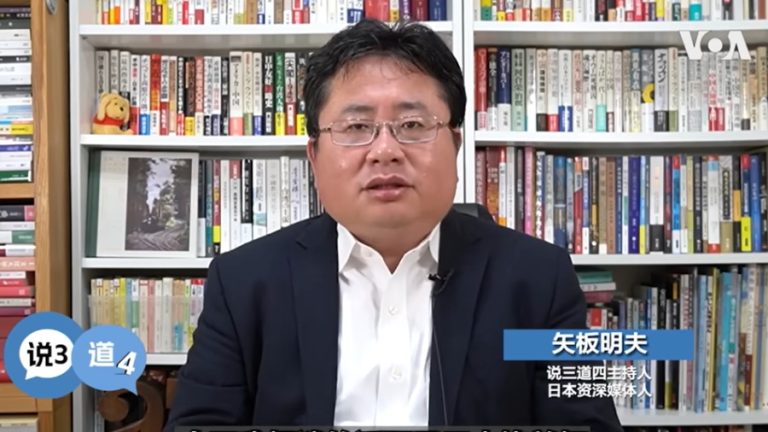
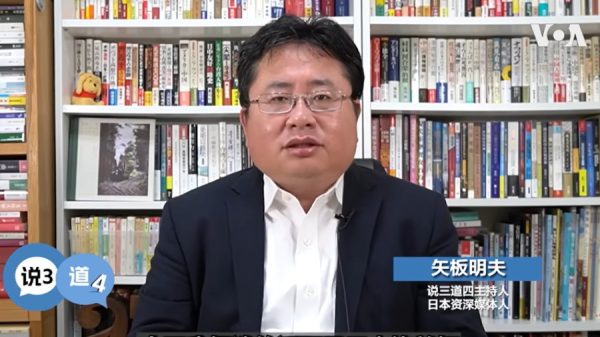
Less than a week after the CCP’s Law on Promoting Ethnic Unity and Progress came into effect, Japanese-born Akio Yaita, Executive Director of the Indo-Pacific Strategic Think Tank, was assaulted.
Yaita had been invited to Taichung in Central Taiwan to deliver a speech last week. As he was leaving the Tempus Hotel (永豐棧酒店), he was attacked by a Chinese national surnamed Liao, who was traveling on a Hong Kong passport, triggering widespread public attention. The suspect was arrested by police at Taichung Airport later the same day while allegedly attempting to flee Taiwan.
Investigators have made a preliminary assessment, and media outlets in Taiwan have reported that the attack was highly likely directed by officials of the Chinese Communist Party (CCP). Authorities are continuing to investigate the case and determine the motive.
RELATED:
- Taiwan Investigates Attack on Akio Yaita as Possible Case of Transnational Repression
- Taiwan Condemns CCP Response After Attack on Akio Yaita, Plans Tougher Anti-Repression Laws
According to Mirror Weekly, the incident was more than an isolated assault. The magazine alleged that the operation was orchestrated by a Hong Kong triad operative surnamed Chen from Wo Shing Wo, who allegedly paid HK$50,000 to recruit Liao to carry out a cross-border terrorist attack against Yaita. The report further claimed that Chen arranged for five additional associates to travel to Taiwan and coordinated the operation—including reconnaissance, the assault itself, and the escape—through a WhatsApp group.
Wo Shing Wo (和勝和) is one of Hong Kong’s largest triad organizations and has been associated with a wide range of alleged criminal activities, including violent intimidation, illicit economic enterprises, and cross-border violent crimes.
By contrast, China’s Taiwan Affairs Office (TAO) characterized the assault as an act committed by the suspect “out of righteous indignation” (义愤) and described it as an ordinary public security case that occurred purely by chance.
The attack drew widespread condemnation across Taiwan.
According to Mirror Media, Robert Tsao (曹興誠), founder of United Microelectronics Corporation (UMC), appeared at a press conference on July 9 to express support for Akio Yaita and sharply criticized the Taiwan Affairs Office, calling its response “despicable.” Tsao said:
“If we don’t stand up for him today, who will stand up for us when we’re the ones being attacked tomorrow?”
He added that violence is “one of the CCP’s most practiced methods” and warned that the assault on Yaita should not be dismissed as an isolated incident.
Taiwan’s Ministry of Foreign Affairs (MOFA) also issued a statement saying that the attack on Yaita “highlights China’s ongoing transnational repression against people around the world, as it seeks to expand its authoritarian influence through acts of violence.” The ministry strongly condemned the incident.
According to CNA, on July 14, Presidential Office spokesperson Karen Kuo (郭雅慧) said prosecutors and police would investigate the case in accordance with the law. She stated that the government takes any transnational repression carried out by authoritarian groups very seriously, fully supports law enforcement agencies in conducting a comprehensive investigation, and is working with like-minded countries to combat transnational crime.
By Li Jingyao, Vision Times