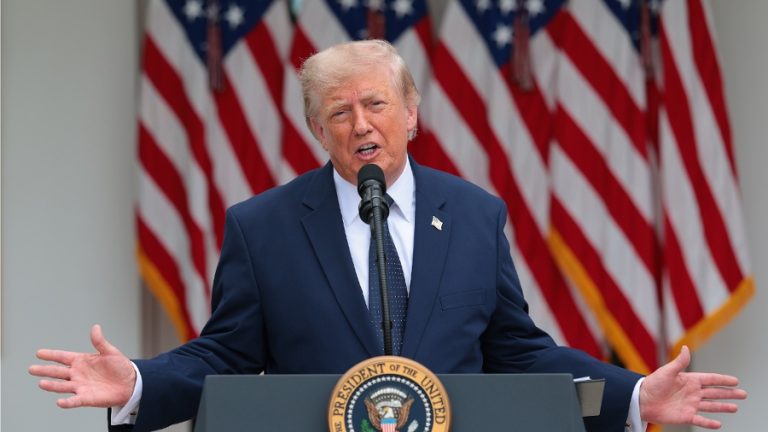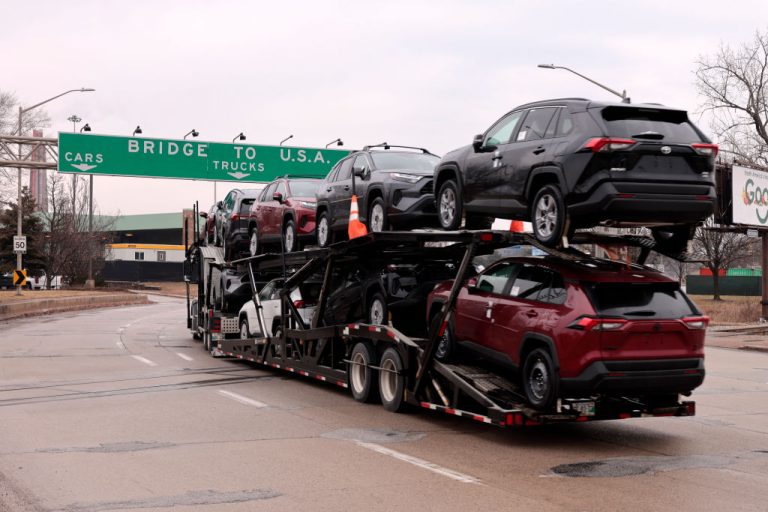
On Feb. 3 following a private conversation with Canada’s Prime Minister, Justin Trudeau, President Donald Trump said he would delay imposing 25 percent tariffs on Canadian imports and 10 percent tariffs on Canadian energy imports after Trudeau agreed to a number of concessions targeting border security and the fentanyl crisis including a pledge to work collaboratively with the U.S. to secure the shared border.
“Canada is implementing our $1.3 billion border plan — reinforcing the border with new choppers, technology and personnel, enhanced coordination with our American partners, and increased resources to stop the flow of fentanyl. Nearly 10,000 frontline personnel are and will be working on protecting the border,” Trudeau announced in a statement on X.
Additionally, Trudeau said Canada will be appointing a Fentanyl Czar, will list cartels as terrorist organizations, ensure constant surveillance of the border, launch a Canada/U.S. joint strike force and will be investing upwards of $200 milliontowards the efforts.
The negotiations have bought Canada a 30 day reprieve from tariff action, however Trump says he may move forward with the tariffs in future if he is not satisfied with actions by Canada.
“As president, it is my responsibility to ensure the safety of ALL Americans, and I am doing just that. I am very pleased with this initial outcome, and the Tariffs announced on Saturday will be paused for a 30 day period to see whether or not a final Economic deal with Canada can be structured,” Trump posted to X, adding, “FAIRNESS FOR ALL!”
Success
You are now signed up for our newsletter
Success
Check your email to complete sign up
Canada’s concessions mirror those of Mexico’s. Mexico was facing similar tariff action however the country’s president, Claudia Sheinbaum, negotiated a last minute deal.
Mexico has pledged to send 10,000 troops to its shared border with the U.S. to address illegal border crossings and the flow of fentanyl and according to a statement posted to X by Trump further negotiations will be carried out by Secretary of State, Marco Rubio, Secretary of Treasury, Scott Bessent, and Secretary of Commerce, Howard Lutnik.
READ MORE:
- China’s DeepSeek AI Raises Alarms Over Privacy Breaches and Censorship
- Communist China Aims for a ‘Fatal Blow’ Against Falun Gong on US Soil
- Why the CCP Fears Truthfulness: Sheng Xue on Shen Yun, Falun Gong, and Their Values
Joint Border Security Efforts
A number of these actions pledged by Canada have been in the works since late last year and mid-January in anticipation of Trump’s presidency, including the U.S.-Canada Joint Task Force.
The government of Canada published its plan for a joint task force in mid January.
Outcomes Canada wants to see include eliminating sources of illegal southbound movements and border crossings through real-time surveillance, and being able to detect and disrupt fentanyl trade by using more technology, tools, intelligence and cross-border collaboration
Canada also hopes to improve border security through cross-border information and intelligence sharing with its counterparts in the U.S., by integrating border enforcement teams in order to “disrupt transnational organized crime and illegal drug and firearms trafficking.”
In comments on Tuesday, Peter Navarro, Trump’s Director of the White House National Trade Council, said, “The president is fighting a drug war, not a trade war,” reiterating one of Trump’s ultimate goals; eliminating the scourge of fentanyl that has killed hundreds of thousands of Americans.
By designating Mexican drug cartels as terrorist organizations, both Canada and the U.S. can now employ more stringent legal measures and international cooperation frameworks to combat these groups and the drugs they produce and smuggle into both countries.
READ MORE:
- Move Over Pleather, Here Comes Cactus Leather!
- Timeless Elegance: The Enduring Fashion Influence of Jackie, Diana, and Melania
- A Hidden Gem: ‘That Supper Club’ Dazzles With an Unforgettable Dining Experience
Trade war averted
With these developments, an all out international trade war has been averted, at least temporarily.
As such, a number of retaliatory measures Canada had been threatening have been taken off the table, including cutting off electricity exports to the U.S., removing American alcohol products from some Canadian shelves, limiting critical mineral exports, placing counter tariffs on billions worth of American products and placing restrictions on American companies that want to bid for Canadian government contracts.
On Tuesday, Ontario Premier, Doug Ford, said he had ripped up a $100 million contract with Elon Musk’s Starlink as retaliation for the threatened American tariffs, something he quickly walked back following news of successful negotiations.
Some Canadians have called for a boycott of American products in Canada, and many retail outlets have taken steps to make it easier for Canadian consumers to identify Canadian made products available for purchase.
It remains to be seen what effects these retaliatory efforts would have on the U.S. economy, since the American economy is significantly larger than Canada’s.
The United States and Canada have one of the world’s largest bilateral trade relationships, with goods and services exchanged amounting to roughly $908.9 billion in 2022. This trade dynamic supports millions of jobs on both sides of the border, with U.S. exports to Canada reaching $427.7 billion and imports from Canada totaling $481.2 billion in the same year, according to the Office of the United States Trade Representative (USTR).