“I can no longer trust anyone.”
These were the words of a young Chinese student living in the UK, who once believed he was safe beyond the reach of his homeland’s authoritarian regime. However, he — like many others — now lives in constant fear of the Chinese Communist Party (CCP).
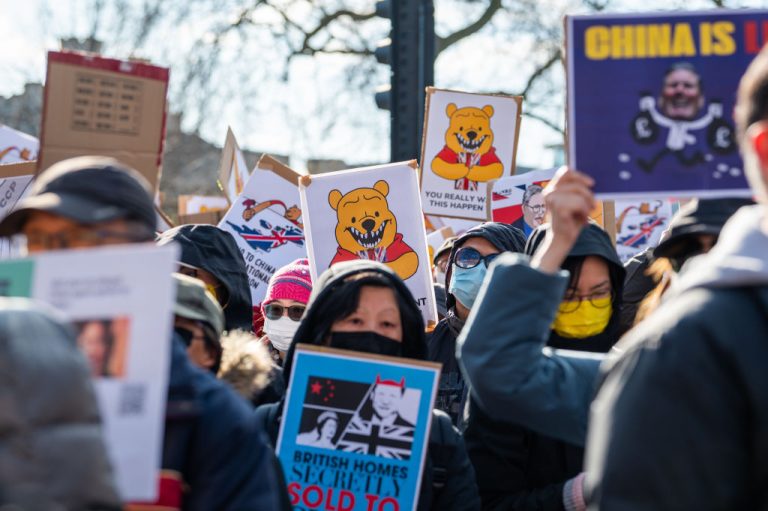
The student — who gave only his first name Haoyu to protect his identity — was an undergraduate at a prestigious British university when he joined hundreds of protesters outside the Chinese embassy in London in late 2022, condemning Beijing’s COVID-19 policies, The Telegraph wrote.
The rally was part of the White Paper Movement, a series of protests in China and among overseas Chinese against the CCP’s draconian “zero-COVID” lockdowns of 2020-2022.
After the protest, Haoyu received a call from a member of the Chinese Students and Scholars Association (CSSA); a student-led network that claims to represent Chinese nationals studying overseas. The voice warned him of the consequences, revealing that he knew the whereabouts of Haoyu and his parents back home.
Success
You are now signed up for our newsletter
Success
Check your email to complete sign up
After the call, Haoyu moved in with a friend. Soon after, his parents called, revealing that word of his activism seemed to have reached China.
“They told me they had been questioned by the administrative police in China, in my hometown,” he told The Telegraph. “[The police] asked them if I had done something abroad, so they felt very scared.”
In 2023, Haoyu flew home after a family member fell ill. However, upon landing, he was detained by Chinese border officials. For 14 days, he was handcuffed and pulled into an interrogation room, forced to recite the national security law. Authorities pressed him for names of fellow protesters, but he knew none.
“They said if I confessed I would have a relatively un-severe punishment, but I didn’t recognize them [the protestors],” he said.
Haoyu endured sleepless nights in a windowless room with only a hard board for a bed.
“There is no window, so you have no [natural] light, but I also couldn’t sleep because they kept the lights on,” he added.
Pushed to “hopelessness,” Haoyu was allowed a single call to his parents on the third or fourth day.
Eventually, he was released after signing a “repentance letter” and reunited with his family. Weeks later, he returned to the UK for his university exams. By that time, fear consumed him so much that he could no longer look at another Chinese person without anxiety.
Yet another blow came when he received an email with a screenshot of a “successful report” filed by fellow students on a whistleblowing website that rewarded Chinese citizens for exposing dissidents. As a consequence, his parents were questioned again.
“Once I received the threat from the CSSA, I can no longer trust anyone,” he said. “I can’t fall asleep and I have flashbacks and nightmares… I’m just a dissident, I’m not someone who’s committed a crime. But when I hear the sound of a police car now, I feel scared. I always feel like someone is following you.”
READ MORE:
- Protests Erupt in London Against Beijing’s ‘Mega-Embassy’
- Spouses of Taiwanese Citizens Deported to Mainland China for Advocating Communist Invasion
- Journalists Face Death Threats for Exposing Forced Labor in Chinese Factory
Students at risk
Haoyu was one of many students living in the UK who told The Telegraph about the dangers of speaking out against Beijing.
Following Haoyu’s case, there have been growing concerns that UK universities are failing to protect their students because they fear the loss of valuable ties with Beijing. Hundreds of thousands of Chinese students are currently enrolled at British universities, providing a sizable income and attendance records for each school.
Prominent critics of Beijing believed that Chinese embassies “regularly threaten” universities by pulling back Chinese students should they fail to abide by embassy “guidance”.
The Telegraph reviewed a letter — signed by some of the significant critics — to Education Secretary Bridget Phillipson, warning that Chinese students are being “systematically silenced” on UK campuses amid concerns of surveillance, harassment, intimidation, and even violence for engaging in political issues.
The CSSA’s role
Although they claim to support Chinese students in the UK, members of the CSSA are reportedly heavily involved in reporting dissidents to the embassy and authorities. They are also believed to offer financial rewards for successful reports submitted through the same Chinese government website used against Haoyu, often based on “clues” of alleged opposition that could “split the country.” The rewards range from around 1,000 pounds (US $1,296) to more than 10,000 pounds (US $12,960).
The British government plans to crack down on Chinese pressure with its upcoming Foreign Influence Registration Scheme, which has been delayed as the Labor Party formulates its stance on China.
Academics have called on Secretary Phillipson for new free speech laws to counter Beijing’s influence. However, she recently delayed a decision on stricter oversight of overseas university funding, citing concerns about burdening institutions. This led to accusations that she was undermining protections for Chinese students.
Regardless, a spokesman for the UK’s Department for Education expressed its commitment to tackle “foreign interference” and protect the rights and safety of students against other nations’ intimidation.
Another spokesman for the Office for Students emphasized the importance of free speech in English universities and colleges without fear of retribution.