According to exclusive reporting by the New York Post, air traffic controllers in the United States are dealing with tens of thousands of equipment failures every year due to obsolete tech, and without a massive overhaul, things are set to get even worse.
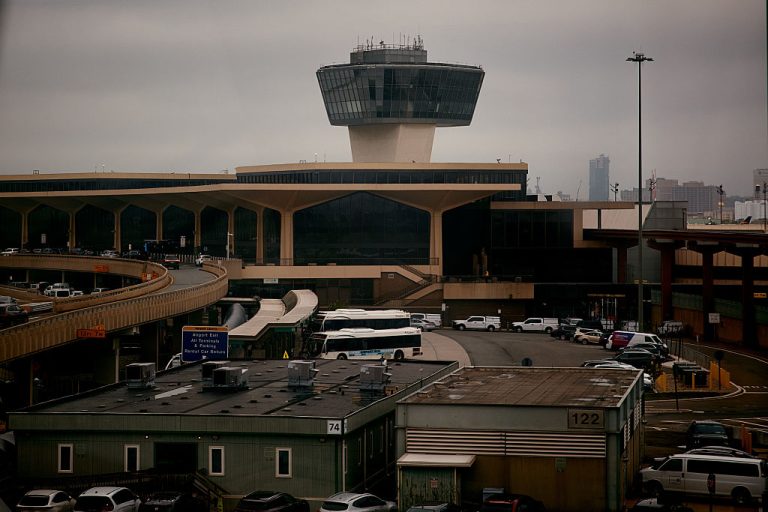
The report comes after controllers overseeing Newark Liberty International Airport had to manage through a 90-second radar and comms blackout which resulted in a cascade of flight cancellations and delays that lasted for more than a week.
The April 28 outage was traced back to a fried piece of copper wire.
The incident led to five FAA workers in a Philadelphia-based control center taking “trauma leave” of up to 45 days, CNN reported.
According to the NY Post, one airline industry official said, “This is a copper wire system, and frankly the FAA is experiencing almost 1,000 outages a week. Some outages are worse than others — but the bad thing about them is you can’t predict them.”
Success
You are now signed up for our newsletter
Success
Check your email to complete sign up
At the core of the issue are miles of telecommunications wire that stretch from New York to California being overloaded by tens of thousands of flights everyday, in addition to a historic lack of certified professional controllers (CPCs) responsible for guiding the planes in a safe manner.
READ MORE:
- Falun Gong Commemorates 26 Years Since Appeal in Beijing That Prefaced CCP Persecution
- 54 Virginia Lawmakers Demand Stronger US Action Against CCP’s Persecution of Falun Gong
‘Increasingly urgent’ problem
The insiders insisted that the problem is becoming “increasingly urgent.”
Another industry insider told The Post that the technology currently being used was first put in place in the 1980s and at best the early 1990s, and called it a “top priority” for lawmakers to address in upcoming legislation if possible.
David Grizzle, former president Barack Obama’s FAA chief counsel, acting deputy administrator and chief operating officer of its Air Traffic Organization, said the crisis is the result of a number of things, including “archaic” equipment, a severe shortage of air traffic controllers, and “inadequate and inconsistent” funding from Congress.
“Historically, we have assured safety by trading off inefficiency, and so we would just slow the traffic down more and more to keep it safe,” Grizzle said.
“[But], when you start having unscheduled outages like what happened at Newark — you can’t do the safety-for-efficiency tradeoff like we’ve been doing,” Grizzle said.
“Today at Newark the average flight is four hours delayed,” he continued. “The FAA is holding planes on the ground all over the country in order to meter the number of arrivals down to a small enough number to safely manage it with the staffing and the unreliable equipment that they have.”
READ MORE:
- Flags of China and Philippines Planted in Disputed Territory in South China Sea
- MSU Study Reveals Growing Trend of Adults Opting Out of Parenthood
- Is Uranium Obsolete? China’s Thorium Reactor Achieves Continuous Operation
Historic lack of controllers
As of October, 2024, there were nine percent fewer certified professional controllers in the industry compared to 2012 and only 34 new controllers were added to the pool throughout 2024.
In total, the FAA has 10,791 certified controllers across 300 facilities which monitor an astounding 50,000 flights per day in the United States.
Grizzle described the most recent outage in Newark as the most “dramatic” incident in recent memory and that these types of “unscheduled outages” will likely occur “more and more” often.
“The nature of an unscheduled outage is you don’t know where it’s going to happen,” he said, and despite the outage only being 90-seconds, “if a plane is traveling at 555 miles per hour, a few seconds is significant.”
Despite this, Grizzle said passengers can still feel safe due to other guidelines the agency has implemented across the country.
“They can still assume that this is a very safe system, but the margin of safety is declining and the level of delays and cancellations that are being required to maintain this level of safety is completely unacceptable for a modern country like the United States,” he explained.
“We’re having to cancel hundreds of flights because we simply don’t have the technology and staffing to manage them.”