Civil servants and educators in multiple provinces across China are suffering from unpaid or delayed wages, as well as reductions in employment benefits as the economy sputters and local government revenues continue to fall.
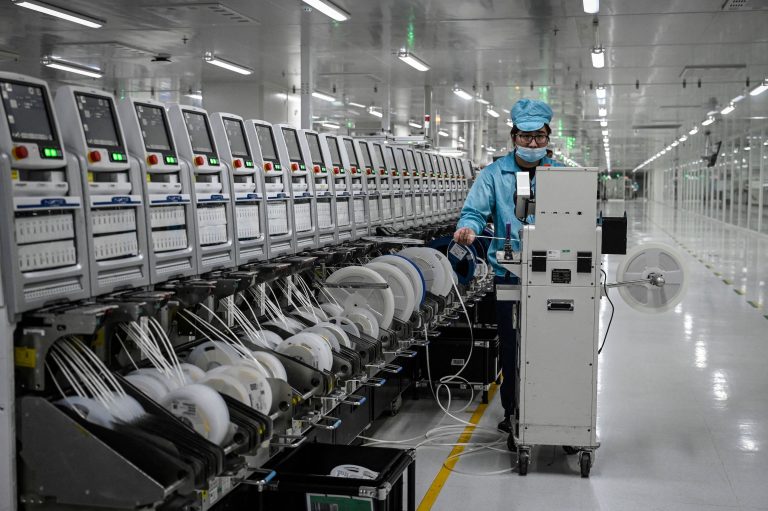
Since the U.S.-China tariff hikes, many export companies have seen American orders abruptly stop, forcing them to suspend operations and send workers on leave. Unpaid wages have in recent months led to frequent worker protests, and strikes.
In Chinese, a job in the government or in a state-owned enterprise is often called an “iron rice bowl” — that is, a guaranteed living — due to the benefits and unlikelihood of being let go. However, with the recent economic downturn, even the “iron rice bowls” are showing signs of rust.
As reported by Radio Free Asia, teachers in Zhengzhou, provincial capital of Henan in central China, have seen their salaries reduced to the “base level” and welfare benefits cut. Similar situations were reported in the neighboring province of Shandong, as well as in Guangdong in southern China.
In the comment section of a post of Chinese social media site RedNote (also called Xiaohongshu), teachers gave replies like “Salaries have been delayed for two months”; “Performance bonuses are also delayed”; and “Class advisor fees have gone unpaid.”
Local governments in arrears
Success
You are now signed up for our newsletter
Success
Check your email to complete sign up
On May 9, Jia Lingmin, a retired teacher in Henan, told RFA that fiscal strain was the main cause for the reduced or delayed pay and benefits.
“The government has been under financial pressure since last year,” Jia said. “Some civil servants were already complaining that they only had their base salary left… Now all their benefits are gone. The base salary is just two or three thousand yuan [about US$275 to US$415].”
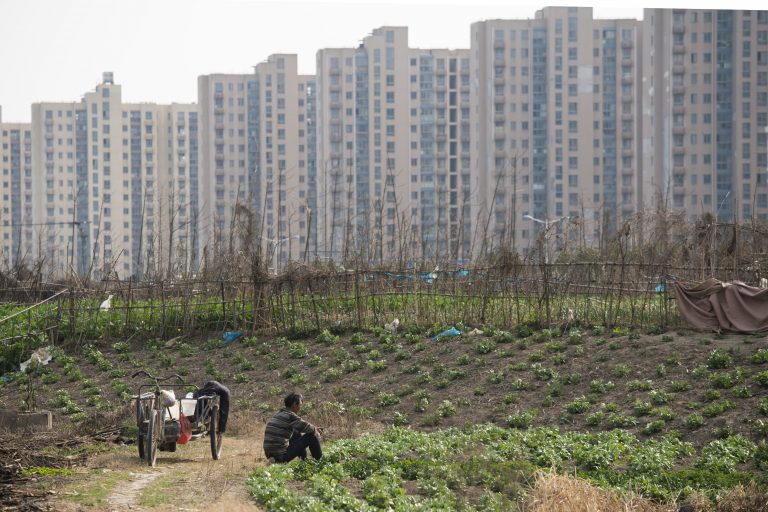
According to Jia, the lack of public funding is largely the result of China’s sharply worsening real estate market. “Once land financing dried up and the real estate market weakened, local government finances became extremely strained.”
In Shandong, a resident called Li Xia told RFA that many government employees have had their wages delayed by up to half a month. “Some counties are behind on salaries, others are delaying them. Many towns are seriously behind on wages now,” she said.
According to Li, many civil servants who could once expect to make about 5,000 yuan a month are now only receiving 3,000 or 4,000 yuan.
As with Jia, the retired teacher in Henan, Li said that the reduced and deferred salaries began sometime in 2024.
Growing unrest among employees
Zhang Cheng, a construction worker in Dongguan, a major manufacturing city in Guangdong Province, said that wage arrears were common problems in both state-owned and private companies.
“Even back when the economy wasn’t this bad, teacher wages were already being delayed. Now with the economy so poor, salary cuts are happening everywhere in the country, with annual incomes reduced by tens of thousands of yuan,” he told RFA.
Starting April 28, over 1,000 employees of Shengdi Optoelectronics Technology Co., Ltd., held a two-day strike due to wage arrears. They gathered at the factory and in front of the Wuzhen town government to demand payment of wages unpaid since January 2024.
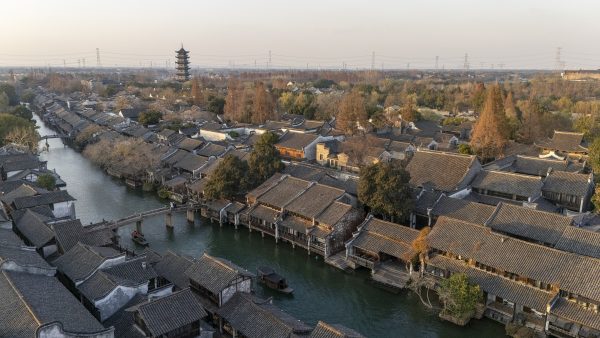
Wuzhen is a town known for its classic architecture along scenic waterways, located in the city of Tongxiang in Zhejiang Province, eastern China.
Several employees revealed that Shengdi Optoelectronics has not paid wages for three consecutive months since the beginning of the year. Workers’ dissatisfaction gradually built up, eventually erupting into a large-scale strike on April 28. The next day, workers collectively went to the Wuzhen town government to protest and continued to demand a resolution.
Speaking with overseas Chinese outlet Dajiyuan (The Epoch Times), one Shengdi employee commented on the protest: “Workers haven’t been paid in half a year. The factory boss owes the government too much; this plant should have shut down long ago.”
The worker added that over the past two years, while many Chinese factories have reported severe losses that should have put them out of business, the local authorities do not allow them to officially file for bankruptcy or shut down, leaving them trapped into losing even more money.
Nationwide economic troubles
In recent years, especially since the outbreak of COVID-19 and now the trade disputes with the U.S., China’s economic situation has become increasingly severe.
In Kunming, the capital of China’s southwestern Yunnan Province, certain district-level government offices have failed to fully pay wages and year-end bonuses for three consecutive months. Allowances and overtime pay have been almost entirely eliminated, as reported by The Epoch Times on May 9.
Mr. Shi, an employee at a private company in Tai’an, Shandong, told The Epoch Times that wage arrears are common: “Some factories haven’t paid wages for several months. Our company has already delayed salaries for three months.”
A laborer from Sichuan surnamed Wang said that wage arrears are widespread: bosses are struggling, and so are workers. He survives by doing odd jobs. “Now no industry is easy to make a living in; no matter what business you do, it’s tough.” He added that there are some things he doesn’t dare say.
Zhang Wei, the pseudonym of a municipal engineer in Kunshan, Jiangsu Province, described the local economic situation as “very bad.”
He told The Epoch Times, “Many Taiwanese-invested companies have closed or relocated; about 40 percent have left. Factory rentals have no takers. Kunshan’s population has dropped from 3.2 million to 2 million. That’s 1.2 million people gone in a single year.”