Cancer treatment for rural Americans is becoming increasingly difficult to obtain because newly trained oncologists are choosing to work in metropolitan areas rather than in rural locations, a new study says.
The study revealed that only about four percent of new oncologists — doctors who treat cancer with radiation — are accepting a first job in a rural location, and if they do choose a rural location they are choosing ones that are typically just outside major population centers.
Dr. Kunai Sindhu, an assistant professor of radiation oncology at the Icahn School of Medicine at Mount Sinai in New York City said in a news release, “Cancer affects people everywhere, not just in big cities. We need to make sure that patients in rural areas can get high-quality care without having to travel long distances.”
The study analyzed data on around 1,400 new U.S. radiation oncology residents who graduated between 2015 and 2022.
The researchers found that 4.3 percent, or 60 residents, accepted first jobs in “nonmetro counties” despite nearly 14 percent of the U.S. population living in rural areas.
Success
You are now signed up for our newsletter
Success
Check your email to complete sign up
The data revealed that most new doctors prefer to work in counties with higher populations, wealthier households and where there are more hospitals and primary doctors.
Of the 60 doctors who did choose to work in a rural area, only 40 percent of them decided to settle somewhere that was nowhere near a major population center.
“It is known that patients living in more rural ares of the United States face significant obstacles in obtaining radiation oncology services and often suffer inferior cancer outcomes,” researchers wrote.
This means that rural Americans have to travel longer and further to obtain treatment, can experience delays in treatment and are provided fewer options for care, researchers say.
“Our results suggest that geographic disparities in radiation oncology accessibility for non-metro counties may persist into the future,” researchers concluded.
READ MORE:
- ‘I choose to live as a true Chinese!’: Statements by Chinese Quitting the Communist Party (May 31, 2025
- ‘Rather Be Ashes Than Dust’: Director Alan Lau Captures Hong Kong’s Battle for Freedom
Rural hospital closures
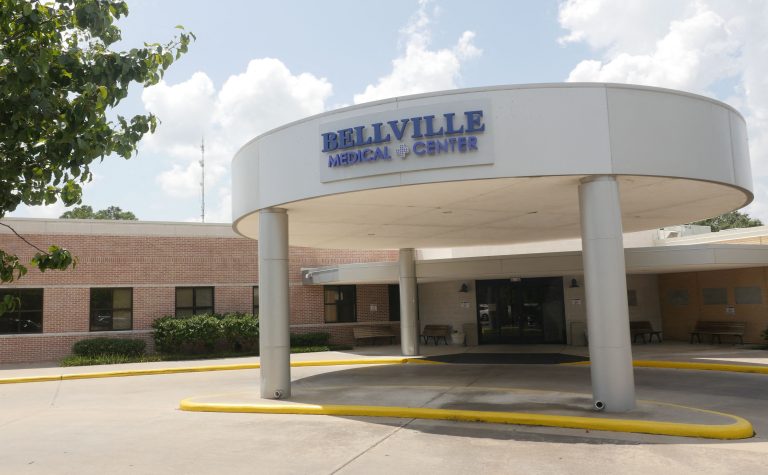
Compounding the issue, hundreds of hospitals in rural America are at risk of closing due to financial constraints according to a new report from the Center for Healthcare Quality and Payment Reform.
The financial strain on these hospitals is largely driven by insurance companies reimbursing them at lower rates than their urban counterparts, CBS News reported.
Recently, in Trinity, Texas, situated around 90 miles north of Houston, Midcoast Medical Center closed down.
Marjory Pulvino, who sits on the hospital’s board, told CBS News, “It has a huge impact on the community. We will lose lives. Four hundred people a month come here.”
Officials from the hospital told CBS News that the closure was driven by low reimbursement rates from elderly patients’ Medicare and Medicaid coverage which were the main contributors to the hospital’s budget.
Hospitals in urban areas however receive significantly more reimbursement from their patients who tend to have private insurance, which typically pays more.
The report, published by the Center for Healthcare Quality and Payment Reform, says that 742 rural hospitals across the country are at risk of closing, with over 300 of those classified as being at “immediate risk.”