Commentary
A seismic shift may be underway at the highest levels of the Chinese Communist Party (CCP). After more than a decade of consolidating power, leader Xi Jinping’s grip on the country appears to be slipping — and fast. Now, insiders and analysts alike are pointing to signs that Xi’s departure is not just possible, but inevitable. So, the question is: who’s stepping in to take his place?
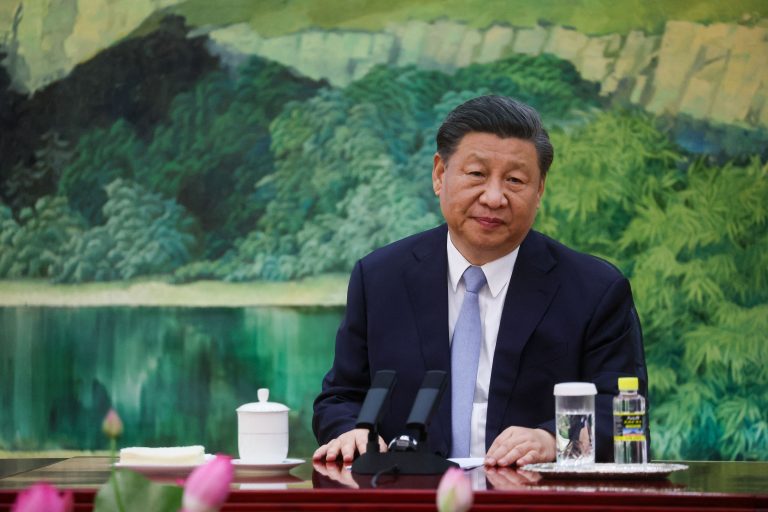
On June 4th, Xi finally resurfaced after a mysterious two-week absence. He appeared in a highly unusual meeting with Belarusian President Lukashenko — but not at the Diaoyutai State Guesthouse, the traditional venue for foreign diplomacy.
RELATED: Trump Accuses China of Breaking Trade Deal, Fires Back With Sanctions and Student Visa Bans
House of cards
Instead, the meeting took place at Zhongnanhai, a lower-profile location within the CCP’s inner compound. But even more strangely, when Chinese state media aired footage of the event, Xi’s voice was conspicuously absent. Viewers were left with silent video of him mouthing words while the anchor read a scripted summary. Russian state media’s coverage only included Lukashenko’s voice.
Success
You are now signed up for our newsletter
Success
Check your email to complete sign up
As “Final War” host Katherine Hu asks: “A lot of folks online are wondering: was that even the real Xi, or maybe a double?”
Xi’s apparent reappearance hasn’t quieted the growing rumors — in fact, it’s only added fuel to the fire. According to multiple sources, his name has now been missing from the front page of the CCP’s official newspaper, “People’s Daily,” for three days in a row — a significant absence that hasn’t occurred since Xi was elevated to top leadership in 2018.
The whispers of regime change are quickly being replaced by louder, more coordinated leaks from inside the party. The consensus among party insiders? Xi Jinping stepping down is “pretty much a done deal.”
Enter Wang Yang: The heir apparent
At the center of this political storm is Wang Yang, a seasoned party veteran known for his reformist instincts and administrative savvy. Born in 1955 in Anhui Province, Wang’s early rise began after marrying the daughter of a local official. He quickly gained a reputation as an effective technocrat and earned the attention of reform-era leader Deng Xiaoping. By 38, he was China’s youngest vice governor.
Wang later rose through the ranks to become a Vice Premier in 2013 and then joined the Politburo Standing Committee in 2017, where he headed China’s top political advisory body, the Chinese People’s Political Consultative Conference (CPPCC). Though he was sidelined in the last reshuffle — reportedly due to Xi’s distrust — his return now appears not only likely but imminent.
“Some reports even say Xi himself has supported Wang Yang taking over,” Hu notes. “Why? Because Xi really doesn’t trust Hu Chunhua — he’s worried Hu would go after him if he got power, since Xi had worked so hard to sideline Hu before. So Xi insists on Wang Yang as the safer option.”
The propaganda clues
The CCP rarely announces leadership transitions outright. Instead, it hints. In that light, many are reading between the lines of recent “People’s Daily” coverage. On June 2, the paper featured a prominent report on poverty alleviation in Guizhou — a region and policy area closely tied to Wang Yang’s legacy. As Hu explains, “This isn’t really about some small county’s poverty program — it’s about Wang Yang himself getting the spotlight.”
She adds, “In the CCP’s playbook, before a big leadership shakeup, they always frame it as ‘following the will of the people’ and ‘moral righteousness’ to make it look clean and legitimate.”
A return to collective leadership?
According to insiders cited by Hu, the Politburo Standing Committee has “basically stopped functioning.” A new leadership lineup is expected to be announced during the Fourth Plenum — anticipated in July or August. The most likely interim arrangement? Wang Yang will serve as Acting General Secretary overseeing party affairs, while Hu Chunhua, another seasoned official, is expected to be named Premier.
Backing them from behind the curtain is a familiar figure: former Premier Wen Jiabao.
Even more remarkably, insiders say the CCP is creating a “temporary party central leadership group” to manage the transition. The team will include one representative from each Central Committee going back to the 15th — essentially bringing back Deng Xiaoping’s old model of collective leadership. “So it’s a return to the old ‘collective leadership’ system,” Hu notes.
Among the names floated for the group:
- Wang Yang (19th Central Committee)
- Wang Qishan (18th)
- Wen Jiabao (17th)
- Hu Jintao (16th)
- Possibly Li Ruihuan (15th)
One figure rumored to survive the current political purges? Ding Xuexiang, a close Xi ally. Two regional party secretaries — Yuan Jiajun (Chongqing) and Chen Jining (Shanghai) — are also believed to be contenders for spots in the new leadership configuration.
A symbolic showdown
The clearest visual clue of this political realignment may have come in 2024. During that year’s National Day reception, all of China’s elder statesmen were seated at the same table with Xi — a highly symbolic gesture. Hu interprets it as “a pretty clear signal: the elders are in charge now, and there’s a new kind of power-sharing happening.”
That symbolism runs deep in Chinese political culture, where televised images and public seating arrangements can signal shifts in dominance and control.
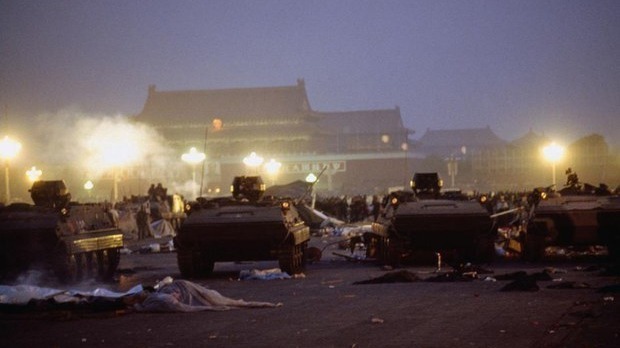
While the arrangement appears carefully negotiated, the risks are enormous. Xi’s departure would be the most dramatic power shift since the post-Tiananmen era. Hu is skeptical of any long-term stability under the new structure, warning that whoever steps up may be inheriting more than they bargained for.
“But here’s the real kicker: no matter who steps up as the new General Secretary, as long as they’re still clinging to this system, they’re basically signing up to hold a ticking time bomb,” says Hu, adding, “And that fuse is already lit. Honestly? Whoever takes this job might not even survive a full term.”
In short, the post-Xi era may not mark a smooth transition — but rather the beginning of a larger unraveling.
To see the original video, please visit the Final War’s YouTube channel here.